Call us (863) 858-5554
HealthFlex
×
  • Home
  • About Us
    • Check Your Coverage
    • Insurance & Self-pay Options
    • Client-Centered Therapy
    • Sidebar – Blog
    • Crisis and After-Hours Care
    • Privacy Policy
  • Specializing In
    • Specializing In
    • Metabolic Psychiatry
    • Weight Management & Binge Eating
  • Services
    • Services
    • Medication Management for Mental Health
    • Telehealth
    • Client-Centered Therapy
    • Metabolic Psychiatry
  • Book An Appointment
  • Contact Us
    • Mental Health Crisis

Group Psychology Can Change Society

Group Psychology Can Change Society

In today’s world, people are more connected digitally than at any other point in history—yet many individuals feel increasingly anxious, polarized, isolated, and emotionally overwhelmed.

Two influential works that explore these dynamics are:

The Psychology of Totalitarianism by Mattias Desmet and Group Psychology and the Analysis of the Ego by Sigmund Freud.

Although written generations apart, both books explore an important psychological question:

At CareSync Psych, we believe psychological insight can empower individuals to better understand themselves, their relationships, and the world around them.

Without self-awareness, people may mistake emotional intensity for truth.

How does group influence shape individual thinking, emotions, identity, and behavior?

The Human Need for Belonging

Humans are social beings. We naturally seek:

  • Connection
  • Meaning
  • Identity
  • Safety
  • Community

When people feel disconnected, fearful, uncertain, or emotionally distressed, group dynamics can become incredibly powerful.

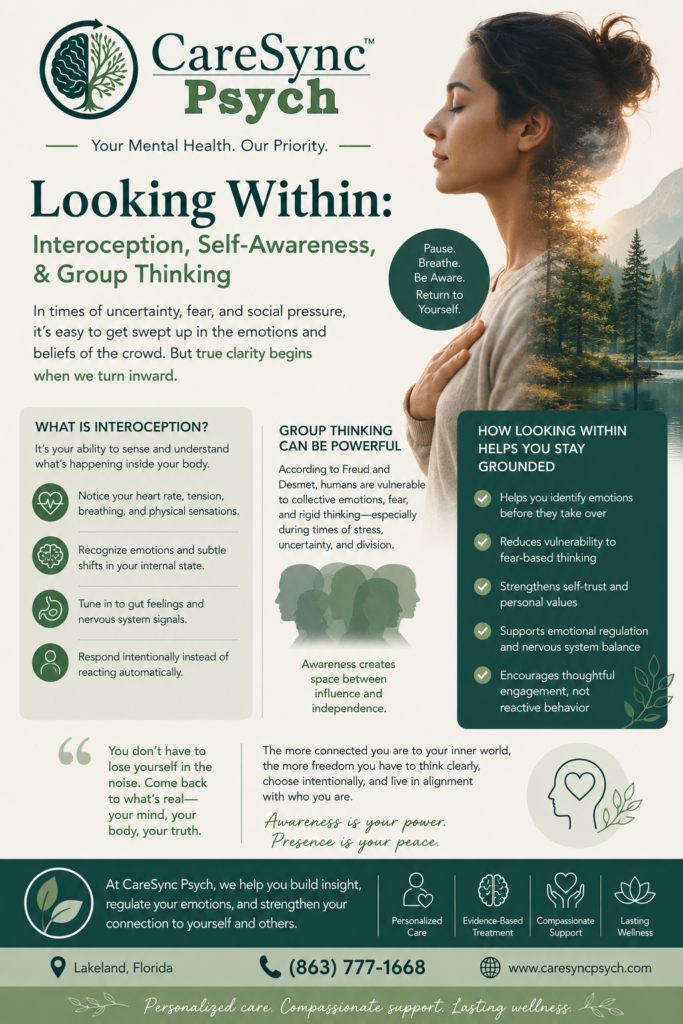
Freud discussed how individuals in groups may unconsciously shift parts of their identity toward the group itself, sometimes leading emotions and collective thinking to overpower individual reasoning.

Desmet expands on this concept by exploring how fear, chronic stress, loneliness, uncertainty, and social fragmentation may increase susceptibility to rigid collective thinking and emotional contagion.

Mental health does not exist in isolation from society.

When individuals are chronically stressed, isolated, sleep-deprived, overstimulated, or emotionally dysregulated, they may become more vulnerable to external emotional influence and black-and-white thinking.

Chronic stress, fear, social division, and constant exposure to emotionally charged information can affect:

  • Anxiety levels
  • Emotional regulation
  • Critical thinking
  • Relationships
  • Sense of identity
  • Nervous system activation

Many people today report feeling:

  • Emotionally exhausted
  • Hypervigilant
  • Disconnected
  • Angry or fearful
  • Overstimulated by media and social conflict

Understanding group psychology can help individuals become more aware of:
✔ Emotional influence
✔ Cognitive bias
✔ Fear-based thinking
✔ Social pressure
✔ Identity and belonging needs
✔ The impact of chronic societal stress on mental health

At CareSync Psych, we believe psychological insight can empower individuals to better understand themselves, their relationships, and the world around them.

Without self-awareness, people may mistake emotional intensity for truth.

Awareness Is Protective

Awareness can help people:

  • Pause before reacting emotionally
  • Think more independently
  • Build healthier relationships
  • Reduce black-and-white thinking
  • Stay grounded during uncertainty
  • Strengthen emotional resilience

Mental wellness includes not only caring for ourselves individually, but also understanding the environments and systems that influence how we think, feel, and relate to others.

Social Anxiety

Understanding Political Beliefs & The Psychology of Politics

Understanding Panic Disorder: Breaking the Cycle of Fear

Humans are neurologically wired for connection. Emotions spread socially.

When emotions run high in groups, people may:

  • React impulsively
  • Adopt beliefs without reflection
  • Feel pressured to conform
  • Seek safety in certainty
  • Lose connection with their individual emotional awareness

This is where introspection and interoception become deeply important.

The ability to ask ourselves:

  • “What am I actually feeling right now?”
  • “Is this fear mine, or am I absorbing collective fear?”
  • “Am I reacting emotionally or thoughtfully?”
  • “What is happening in my body as I consume this information?”
  • “Am I grounded, or emotionally overwhelmed?”

can create space between emotional contagion and conscious decision-making.
The more connected we become to our inner world, the less likely we are to lose ourselves completely in external noise.

At CareSync Psych, we believe psychological insight can empower individuals to better understand themselves, their relationships, and the world around them.

The Nervous System and Emotional Contagion

Fear spreads.
Anger spreads.
Panic spreads.
Calm spreads too.

At CareSync Psych, we believe emotional insight and self-awareness are essential components of mental wellness

When individuals are chronically stressed, isolated, sleep-deprived, overstimulated, or emotionally dysregulated, they may become more vulnerable to external emotional influence and black-and-white thinking.

References Desmet, M. (2022). The psychology of totalitarianism. Chelsea Green Publishing. Freud, S., & Strachey, J. (2024). Group psychology and the analysis of the ego: Illustrated & psychology glossary & index added inside. E-Kitap Projesi & Cheapest Books.

Why Propranolol Is One of My Favorite Medications in Psychiatry

Why Propranolol Is One of My Favorite Medications in Psychiatry

Mental health symptoms are real. Physical symptoms are real. And patients deserve thoughtful, individualized care that considers both the mind and the body.

At CareSync Psych, one medication I frequently discuss with patients is Propranolol—a medication that has actually existed for decades, yet many people are surprised to learn it can play a role in psychiatric treatment.

At CareSync Psych, one medication I often find surprisingly underutilized is Propranolol.

Many people think anxiety is only emotional—but for a lot of patients, anxiety feels intensely physical:

• Racing heart
• Shaking or trembling
• Sweating
• Chest tightness
• Feeling “on edge”
• Panic symptoms before presentations, social situations, or stressful events

“My mind wants to calm down, but my body won’t.”

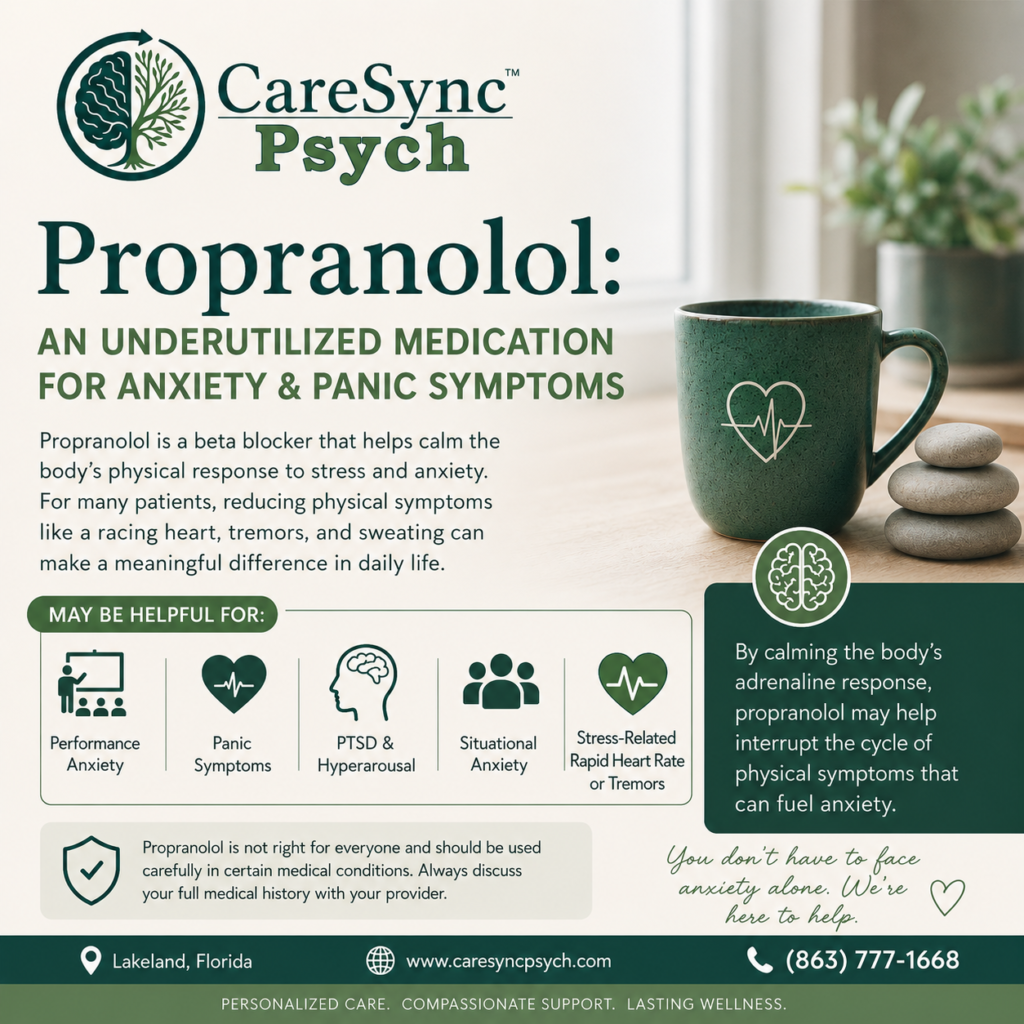
Propranolol works differently than many traditional psychiatric medications. Instead of directly targeting mood, it helps calm the body’s adrenaline response. For some patients, this can make a huge difference in reducing the physical sensations that fuel anxiety and panic.

When most people think of anxiety, they think of excessive worrying, overthinking, or feeling emotionally overwhelmed. But anxiety is often just as physical as it is mental.

For many individuals, anxiety can feel like:

  • A racing or pounding heart
  • Trembling or shaky hands
  • Sweating
  • Chest tightness
  • A sensation of adrenaline surging through the body
  • Feeling “frozen” during social situations or public speaking
  • Panic attacks that seem to come out of nowhere
  • Difficulty calming down after stress

It may be helpful for:
✔ Performance anxiety
✔ Panic symptoms
✔ PTSD-related hyperarousal
✔ Situational anxiety
✔ Stress-related rapid heart rate or tremors

BOOK AN APPOINTMENT

What Is Propranolol?

Propranolol is classified as a beta blocker, meaning it blocks the effects of adrenaline (epinephrine) on certain receptors in the body.

Originally developed for cardiovascular conditions, propranolol has long been used for:

  • High blood pressure
  • Rapid heart rate
  • Tremors
  • Migraine prevention
  • Cardiac conditions

Over time, clinicians also recognized that it could help reduce the physical symptoms associated with anxiety.

Unlike many psychiatric medications, propranolol does not primarily work by increasing serotonin or changing mood directly. Instead, it helps reduce the body’s fight-or-flight response.

Why Physical Anxiety Matters

One of the most overlooked aspects of anxiety treatment is the connection between the body and the brain.

Physical symptoms can actually reinforce emotional anxiety. For example:

  1. A stressful situation triggers adrenaline
  2. The heart begins racing
  3. The patient notices the racing heart
  4. The body interprets this as danger
  5. Anxiety escalates further
  6. Panic symptoms intensify

This cycle can become exhausting.

By reducing some of the body’s adrenaline response, propranolol may help interrupt that feedback loop in certain patients.

For some individuals, simply decreasing the intensity of the physical symptoms allows them to think more clearly and feel more in control.

Panic Symptoms

For some individuals with panic attacks, propranolol may reduce:

  • Heart pounding
  • Trembling
  • Internal shaking
  • Physical hyperarousal

It is not typically considered a first-line standalone treatment for panic disorder, but it may be helpful as part of a broader treatment plan.

BOOK AN APPOINTMENT

PTSD and Hyperarousal

Patients with trauma-related disorders sometimes experience chronic hypervigilance and heightened physiologic arousal.

Emerging research has explored propranolol’s possible role in trauma-related symptoms and autonomic overactivation.

Some patients describe constantly feeling:

  • “On edge”
  • Easily startled
  • Physically tense
  • Unable to relax

Reducing sympathetic nervous system activation may help some individuals feel calmer in chaos.

If you are struggling with anxiety, panic symptoms, or stress-related physical symptoms, know that there are multiple evidence-based treatment options available—and treatment should be tailored to your unique needs.

Panic Attacks: The Attack on Your Brain & Body and Finding Treatment

Reducing sympathetic nervous system activation may help some individuals feel calmer physically.

I am promo text. Click edit button to change this text. Lorem ipsum dolor sit amet, consectetur adipiscing elit. Ut elit tellus, luctus nec ullamcorper mattis, pulvinar dapibus leo.

Understanding Panic Disorder: Breaking the Cycle of Fear

Anxiety Treatment at CareSync Psych

Some reasons I appreciate propranolol include:

  • It directly targets physical anxiety symptoms
  • It is generally non-habit forming
  • It may avoid some sedation seen with other medications
  • It can sometimes reduce reliance on more sedating agents
  • It may work relatively quickly for situational symptoms
  • Some patients feel empowered when they understand the body’s stress response

Of course, no medication is perfect, and propranolol is not a cure-all.

Important Safety Considerations

Propranolol is not safe or appropriate for everyone.

Patients should discuss their medical history thoroughly with a qualified healthcare professional because propranolol may not be appropriate in individuals with:

  • Asthma or certain lung diseases
  • Low blood pressure
  • Certain heart rhythm conditions
  • Diabetes (can mask low blood sugar symptoms)
  • Certain circulation problems
  • Some medication interactions

Possible side effects can include:

  • Fatigue
  • Dizziness
  • Low heart rate
  • Cold hands/feet
  • Lightheadedness

This is why individualized assessment matters.

Anxiety Treatment Should Be Personalized

Important Safety Considerations

One of the most important things I try to remind patients is that mental health treatment is highly individualized.

Some people benefit most from:

  • Therapy
  • Lifestyle changes
  • Trauma work
  • Sleep optimization
  • SSRIs or SNRIs
  • Nervous system regulation strategies
  • Mindfulness techniques
  • Medication combinations
  • Or sometimes medications like propranolol that are not discussed as often

The goal is not simply to “numb” emotions. The goal is to help patients function better, feel safer in their bodies, and improve quality of life.

Final Thoughts

Sometimes the most effective psychiatric tools are not always the newest or most talked about.

Propranolol continues to stand out to me because of how impactful it can be for certain patients struggling with physical manifestations of anxiety

BOOK AN APPOINTMENT

One of the most important things I try to remind patients is that mental health treatment is highly individualized.

Some people benefit most from:

  • Therapy
  • Lifestyle changes
  • Trauma work
  • Sleep optimization
  • SSRIs or SNRIs
  • Nervous system regulation strategies
  • Mindfulness techniques
  • Medication combinations
  • Or sometimes medications like propranolol that are not discussed as often

Mental health symptoms are real. Physical symptoms are real. And patients deserve thoughtful, individualized care that considers both the mind and the body.

If you are struggling with anxiety, panic symptoms, or stress-related physical symptoms, know that there are multiple evidence-based treatment options available—and treatment should be tailored to your unique needs.

Evidence Over Fear: Understanding Antidepressant Withdrawal

Evidence Over Fear: Understanding Antidepressant Withdrawal

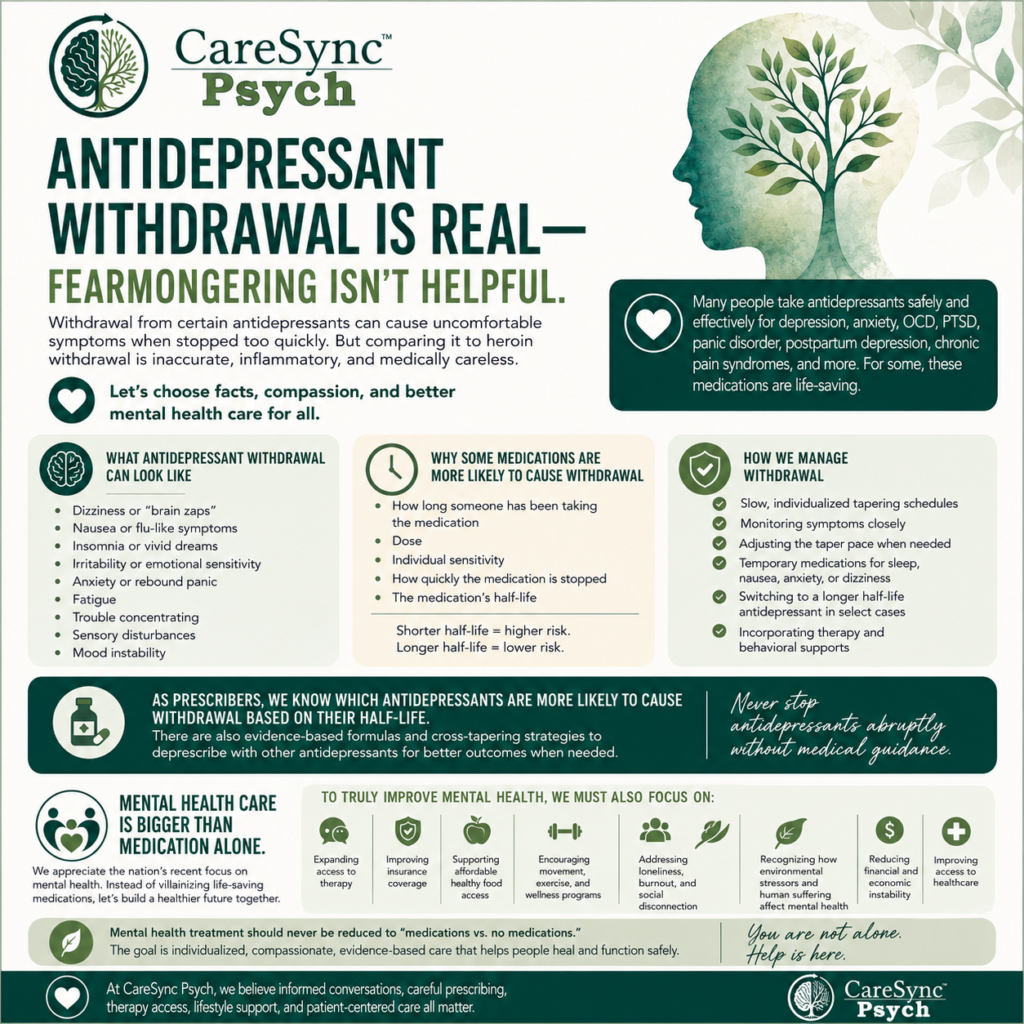
Antidepressant withdrawal is real, clinically recognized, and something responsible prescribers take seriously. Research over the last several years has shown that stopping certain antidepressants too quickly can lead to significant discontinuation symptoms in some individuals, especially with medications that have shorter half-lives.

At the same time, comparing antidepressant withdrawal to heroin withdrawal is medically inaccurate, inflammatory, and potentially harmful. These are fundamentally different substances with different mechanisms, risks, and patterns of dependence. Oversimplified comparisons can increase fear, stigma, and misinformation — especially for patients who genuinely benefit from treatment.

Many people take antidepressants safely and effectively for depression, anxiety, OCD, PTSD, panic disorder, postpartum depression, chronic pain syndromes, and other conditions. For some, these medications are life-saving.

What antidepressant withdrawal can look like:

  • Dizziness or “brain zaps”
  • Nausea or flu-like symptoms
  • Insomnia or vivid dreams
  • Irritability or emotional sensitivity
  • Anxiety or rebound panic
  • Fatigue
  • Trouble concentrating
  • Sensory disturbances
  • Mood instability

Withdrawal risk often depends on:

  • How long someone has been taking the medication
  • Dose
  • Individual sensitivity
  • How quickly the medication is stopped
  • The medication’s half-life

As prescribers, we know some antidepressants are much more likely to cause discontinuation symptoms than others. Medications with shorter half-lives are generally associated with higher withdrawal risk, while medications with longer half-lives tend to leave the body more gradually and may be easier to taper. Evidence-based deprescribing strategies, cross-tapering approaches, and individualized taper schedules can significantly reduce discomfort and improve outcomes.

This is why antidepressants should never be abruptly stopped without medical guidance.

Services

Weight Loss Management & Control

In clinical practice, withdrawal is commonly managed by:

  • Slow, individualized tapering schedules
  • Monitoring symptoms closely
  • Adjusting the taper pace when needed
  • Temporary supportive medications for sleep, nausea, anxiety, or dizziness
  • Switching to a longer half-life antidepressant in select cases
  • Incorporating psychotherapy and behavioral supports during medication transitions

Mental health care deserves nuance — not fear-based headlines.

We appreciate the growing national focus on mental health and the broader conversation happening across the country. But improving mental health outcomes means addressing the full picture, not vilifying medications that help many people survive and function.

Medication is only one piece of care for those who need it.

If we truly want better mental health outcomes in America, we should also focus on:

  • Expanding access to therapy
  • Improving insurance coverage for mental health treatment
  • Supporting affordable healthy food access
  • Encouraging movement, exercise, and wellness programs
  • Reducing financial and economic instability
  • Improving access to healthcare
  • Addressing loneliness, burnout, and social disconnection
  • Supporting families and communities under chronic stress
  • Recognizing how environmental stressors and human suffering affect mental health

Medication is only one piece of care for those who need it.

Mental health treatment should never be reduced to “medications vs no medications.” The goal is individualized, compassionate, evidence-based care that helps people heal and function safely.

Medication is only one piece of care for those who need it.

At CareSync Psych, we believe informed conversations, careful prescribing, therapy access, lifestyle support, and patient-centered care all matter.

Panic Attacks: The Attack on Your Brain & Body and Finding Treatment

Panic Attacks: The Attack on Your Brain & Body and Finding Treatment

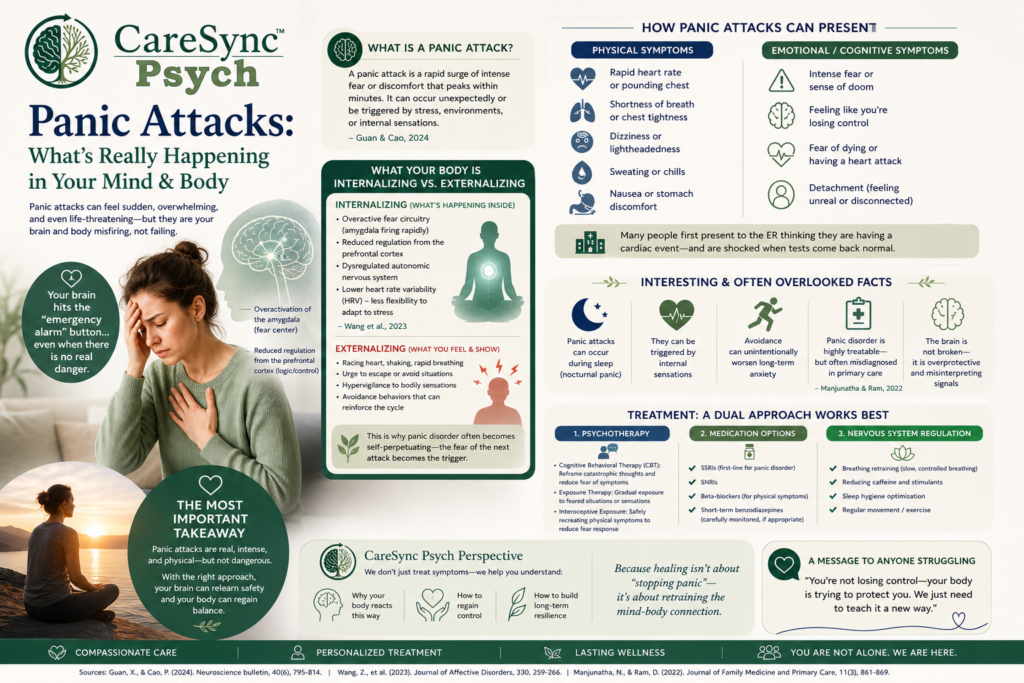
Panic attacks can feel sudden, overwhelming, and even life-threatening—but they are your brain and body misfiring, not failing.

What is a Panic Attack?

A panic attack is a rapid surge of intense fear or discomfort that peaks within minutes. It can occur unexpectedly or be triggered by stress, environments, or internal sensations.

At the neurobiological level, research by Guan & Cao (2024) shows that panic attacks involve hyperactivation of the amygdala (fear center) and dysregulation between the prefrontal cortex (logic/control) and limbic system (emotion).

👉 In simple terms:
Your brain hits the “emergency alarm” button… even when there is no real danger.

Check Out CareSync Psych

How Panic Attacks Can Present

Panic attacks are not “just anxiety”—they are full-body experiences:

Physical symptoms:

  • Rapid heart rate or pounding chest
  • Shortness of breath or chest tightness
  • Dizziness or lightheadedness
  • Sweating or chills
  • Nausea or stomach discomfort

Emotional/cognitive symptoms:

  • Intense fear or sense of doom
  • Feeling like you’re losing control
  • Fear of dying or having a heart attack
  • Detachment (feeling unreal or disconnected)

💡 Many people first present to the ER thinking they are having a cardiac event—and are shocked when tests come back normal.

BOOK AN APPOINTMENT

What Your Body is Internalizing vs. Externalizing

Internalizing (what’s happening inside):

  • Overactive fear circuitry (amygdala firing rapidly)
  • Reduced regulation from the prefrontal cortex
  • Dysregulated autonomic nervous system
  • Lower heart rate variability (HRV)—meaning the body has less flexibility to adapt to stress (Wang et al., 2023)

👉 Low HRV = the nervous system is “stuck” in fight-or-flight mode

Externalizing (what you feel and show):

  • Racing heart, shaking, rapid breathing
  • Urge to escape or avoid situations
  • Hypervigilance to bodily sensations
  • Avoidance behaviors that can reinforce the cycle

This is why panic disorder often becomes self-perpetuating—the fear of the next attack becomes the trigger.

Interesting & Often Overlooked Facts

✨ Panic attacks can occur during sleep (nocturnal panic)
✨ They can be triggered by internal sensations, like slight changes in breathing or heart rate
✨ Avoidance (e.g., skipping places, activities) can unintentionally worsen long-term anxiety
✨ Panic disorder is highly treatable—but often misdiagnosed in primary care (Manjunatha & Ram, 2022)
✨ The brain is not broken—it is overprotective and misinterpreting signals

Anxiety Treatment at CareSync Psych

Understanding Panic Disorder: Breaking the Cycle of Fear

BOOK AN APPOINTMENT

Panic Attacks and Treatment: A Dual Approach Works Best

At CareSync Psych, we focus on treating both the brain AND the body.

1. Psychotherapy (First-Line)

  • Cognitive Behavioral Therapy (CBT):
    Helps reframe catastrophic thoughts and reduce fear of symptoms
  • Exposure Therapy:
    Gradual exposure to feared sensations or situations
  • Interoceptive Exposure:
    Safely recreating physical symptoms (like increased heart rate) to reduce fear response

2. Medication for Panic Disorder

  • SSRIs (first-line for panic disorder)
  • SNRIs
  • Beta-blockers (for physical symptoms)
  • Short-term benzodiazepines (carefully monitored, if appropriate)

Panic attacks are real, intense, and physical—but not dangerous.

With the right approach, your brain can relearn safety and your body can regain balance.

3. Nervous System Regulation with Panic Attacks

  • Breathing retraining (slow, controlled breathing)
  • Reducing caffeine and stimulants
  • Sleep hygiene optimization
  • Regular movement/exercise

The Most Important Takeaway

Panic attacks are real, intense, and physical—but not dangerous.

With the right approach, your brain can relearn safety and your body can regain balance.

BOOK AN APPOINTMENT

CareSync Psych Perspective

We don’t just treat symptoms—we help you understand:

  • Why your body reacts this way
  • How to regain control
  • How to build long-term resilience

Because healing isn’t about “stopping panic”—
it’s about retraining the mind-body connection.

A Message to Anyone Struggling

“You’re not losing control—your body is trying to protect you.
We just need to teach it a new way.”

References

Guan, X., & Cao, P. (2024). Brain mechanisms underlying panic attack and panic disorder.     Neuroscience Bulletin, 40(6), 795–814. https://doi.org/10.1007/s12264-024-01123-3

Manjunatha, N., & Ram, D. (2022). Panic disorder in general medical practice: A narrative   review. Journal of Family Medicine and Primary Care, 11(3), 861–869.   https://doi.org/10.4103/jfmpc.jfmpc_1440_21

Wang, Z., Luo, Y., Zhang, Y., Chen, L., Zou, Y., Xiao, J., … Zou, Z. (2023). Heart rate variability   in generalized anxiety disorder, major depressive disorder and panic disorder: A network   meta-analysis and systematic review. Journal of Affective Disorders, 330, 259–266.   https://doi.org/10.1016/j.jad.2023.02.021

Mental Health Awareness

Mental Health Awareness

 Mental Health Awareness Month 2026: Where We Started, Where We Are, and Where We’re Going

Each May, we recognize Mental Health Awareness Month—a movement that began in 1949, initiated by what is now the Mental Health America. The goal was simple but powerful: reduce stigma, educate the public, and promote mental wellness for all.

Where We Are Now

Fast forward to 2026, and mental health has become a central part of overall health. The World Health Organization emphasizes that mental health is essential to well-being, yet millions worldwide still lack access to care (WHO, 2022).

At CareSync Psych, we believe mental health care should be accessible, personalized, and free of judgment. Mental Health Awareness Month is more than a campaign—it’s a reminder that seeking support is a sign of strength, not weakness.

You don’t have to wait until things feel overwhelming.
You deserve support, clarity, and a path forward—every single day.

Some important realities:

  • 1 in 8 people globally live with a mental health condition (WHO, 2022)

  • Anxiety and depression remain among the most common disorders

  • Access to care continues to be a major barrier, especially in underserved communities

Book an Appointment Now

At the same time, we’ve made some progress:

  • Increased openness in discussing mental health
  • Integration of mental health into primary care
  • Expansion of telehealth and digital services
  • Greater use of social media to spread awareness and education

Research shows that social media can be used for wellness andsignificantly improve awareness, reduce stigma, and encourage help-seeking behaviors when used responsibly (Latha et al., 2020).

Interesting Shifts in Mental Health Awareness

  • Mental health is now viewed as part of whole-person care, not separate from physical health
  • Younger generations are more likely to seek help and talk openly about struggles
  • Preventative mental health (stress management, therapy, lifestyle changes) is gaining attention—not just crisis care

How We Can Improve as a Society

  • 1. Normalize Mental Health Conversations
    Talking about mental health should feel as natural as discussing physical health. Reducing stigma starts with everyday conversations.

    2. Improve Access to Care
    Expanding affordable, accessible services—including telehealth—can help reach more individuals in need.

    3. Focus on Early Intervention
    Addressing symptoms early can prevent worsening conditions and improve long-term outcomes.

    4. Use Social Media Intentionally
    Social platforms can be powerful tools for education, connection, and support—but should promote accurate, evidence-based information.

    5. Embrace a Whole-Person Approach
    Mental health is influenced by biology, environment, relationships, and lifestyle. Effective care considers all of these factors.

Book an Appointment Now

Mental Wellness

A Message from CareSync Psych

At CareSync Psych, we believe mental health care should be accessible, personalized, and free of judgment. Mental Health Awareness Month is more than a campaign—it’s a reminder that seeking support is a sign of strength, not weakness.

You don’t have to wait until things feel overwhelming.
You deserve support, clarity, and a path forward—every single day.

References

Latha, K., Meena, K. S., Pravitha, M. R., Dasgupta, M., & Chaturvedi, S. K. (2020). Effective use of social media platforms for promotion of mental health awareness. Journal of Education and Health Promotion, 9(1), 124.

World Health Organization. (2022). World mental health report: Transforming mental health for all.

Mental Health America. Mental Health Awareness Month.

Book an Appointment Now

Psychiatry, Politics and Psychedelics

Psychiatry, Politics and Psychedelics

Mental Health is Evolving Psychedelics in Psychiatry Lakeland, Florida
Psychedelic Therapy

At CareSync Psych, we stay informed so you don’t have to feel overwhelmed.

Mental health care is evolving—and recent federal initiatives are signaling a shift toward faster, more innovative treatment options for serious mental illness.

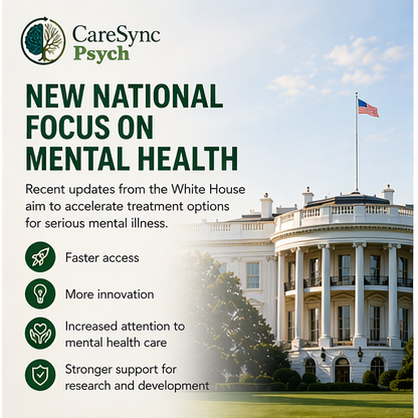
According to a new fact sheet from the White House, efforts are underway to accelerate the development and approval of treatments for conditions like schizophrenia, bipolar disorder, and severe depression. The goal is to reduce barriers and bring effective therapies to patients sooner—especially for those who have not responded to traditional treatments.


The Future of Mental Health Care: What Recent Policy Changes Mean for You

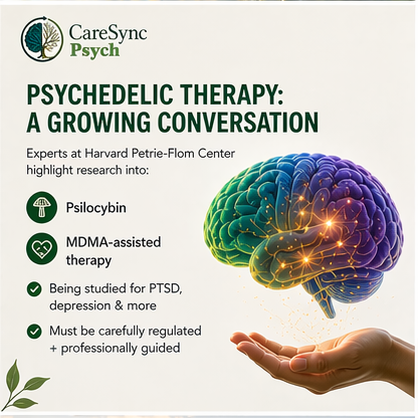
At the same time, discussions highlighted by Harvard Petrie-Flom Center emphasize a growing national focus on psychedelic-assisted therapies (such as psilocybin and MDMA) under careful regulation. These treatments are being studied for conditions like PTSD, depression, and treatment-resistant disorders—with promising early results.

Learn more

The future of mental health care is expanding.
And that means more hope, more options, and more individualized healing.

CareSync Psych Combined Approach -Psychiatry and Therapy

Check Your Insurance Coverage

Affordable Pricing

Insurance and Self-pay Options

Check Your Coverage

What does this mean for mental health care?

Personalized Psychiatry

As psychiatry evolves, our focus remains the same: helping you find the right combination of care—whether that’s therapy, medication, lifestyle changes, or emerging treatments when appropriate.

Make an appointment

More treatment options
Psychiatry is moving beyond a “one-size-fits-all” approach. Patients may soon have access to newer, more personalized therapies.

Faster innovation
Policies aimed at accelerating research could shorten the time it takes for breakthrough treatments to reach real people.

A shift toward holistic care
Emerging treatments recognize that healing involves brain, body, and experience—not just symptom reduction.

Continued need for safe, guided care
While new treatments are exciting, they require careful screening, monitoring, and integration with therapy to be effective and safe.


What stays the same?

Even with innovation, the foundation of mental health care remains:

• Strong therapeutic relationships
• Evidence-based medication when appropriate
• Skill-building (coping, emotional regulation, stress management)
• Personalized, compassionate care

Mental Health In America Recent updates from White House on psychedelics in psychiatry

Psychedelics

CareSync Psych Believes in Utilizing All Possibilites

At CareSync Psych, we stay informed so you don’t have to feel overwhelmed.

Services Offered at CareSync Psych

Psychedelics

The future of mental health care is expanding.
And that means more hope, more options, and more individualized healing.

Read More

Disordered Eating

Eating Disorders: What They Are & How We Help-Eating Disorder Treatment

Eating disorders are serious but treatable mental health conditions that involve disturbances in eating behaviors, thoughts, and emotions. They affect both physical health and emotional well-being, and they can occur in people of all ages, genders, body sizes, and backgrounds.

Many people struggle silently with disordered eating for years. Some feel out of control around food. Others restrict, overexercise, binge, purge, obsess over weight, or constantly battle shame after eating. Some do not meet criteria for a formal eating disorder but still experience significant distress, health consequences, and emotional exhaustion.

Eating disorders don’t have a single cause—they result from a combination of biological, psychological, and social factors.

How Disordered Eating May Present

  • Frequent dieting or cycles of restriction and overeating
  • Feeling out of control around food
  • Binge eating episodes
  • Skipping meals to “make up” for eating
  • Obsessive calorie counting or food rules
  • Guilt, shame, or panic after eating
  • Fear of weight gain
  • Preoccupation with body shape or appearance
  • Emotional eating during stress, loneliness, or overwhelm
  • Compensatory behaviors such as purging, fasting, or overexercising
  • Social withdrawal related to food or body image
  • Feeling that your thoughts about food take up too much mental spa

Specializing In

If food, weight, body image, or eating habits are affecting your mood, confidence, daily life, or health, your experience matters.

Healing your relationship with food and your body is not about rigid control. It is about learning to understand your patterns, reduce self-criticism, strengthen coping skills, and create a more stable, compassionate, and sustainable way forward

Our Approach at CareSync Psych

We take a whole-person, evidence-based, and compassionate approach. Treatment is individualized and may include a combination of psychiatric evaluation, medication management when appropriate, supportive therapy, and practical strategies to help reduce shame, improve emotional regulation, and build a healthier relationship with food and self.

We focus on understanding:

  • What your eating patterns are doing for you emotionally
  • What triggers the cycle
  • How anxiety, mood, trauma, or stress may be contributing
  • Whether medications may help reduce binge urges, anxiety, depression, or obsessive thinking
  • How to support both mental and physical well-being without judgment

Support for Disordered Eating That Goes Beyond “Willpower”

Disordered eating is not simply about food. It can involve anxiety, perfectionism, body image distress, loss of control, shame, obsessive thoughts, emotional overwhelm, or feeling stuck in patterns that are hard to stop. At CareSync Psych, we provide compassionate, nonjudgmental psychiatric care for individuals struggling with disordered eating, binge eating, body image concerns, restrictive patterns, food guilt, and related anxiety or mood symptoms.

We offer in-person appointments in Lakeland, Florida and telehealth throughout Florida, with treatment tailored to the whole person

You do not need to have everything figured out before asking for help.

Food Addiction: Why It’s Real, Why We Feel Out of Control, and How Healing Begins

At CareSync Psych, we evaluate the full picture. Disordered eating often overlaps with other emotional or mental health concerns, and treatment works best when those patterns are addressed together.

  • Binge eating disorder
  • Bulimia nervosa
  • Restrictive eating patterns
  • Body image distress
  • Food guilt and shame
  • Emotional eating
  • Obsessive-compulsive traits around food or exercise
  • Anxiety disorders
  • Depression
  • Trauma-related symptoms
  • Perfectionism
  • ADHD-related impulsive eating patterns
We take a whole-person, evidence-based, and compassionate approach. Treatment is individualized and may include a combination of psychiatric evaluation, medication management when appropriate, supportive therapy, and practical strategies to help reduce shame, improve emotional regulation, and build a healthier relationship with food and self.

Medication Management for Mental Health

We focus on understanding:

  • What your eating patterns are doing for you emotionally
  • What triggers the cycle
  • How anxiety, mood, trauma, or stress may be contributing
  • Whether medications may help reduce binge urges, anxiety, depression, or obsessive thinking
  • How to support both mental and physical well-being without judgment
Healing your relationship with food and your body is not about rigid control. It is about learning to understand your patterns, reduce self-criticism, strengthen coping skills, and create a more stable, compassionate, and sustainable way forward

Recovery Does Not Mean Perfection

You do not need to have everything figured out before asking for help.

Understanding Political Beliefs & The Psychology of Politics

Understanding Political Beliefs & The Psychology of Politics

Why Politics Feels So Personal: The Psychology Behind Beliefs, Identity, and Human Nature

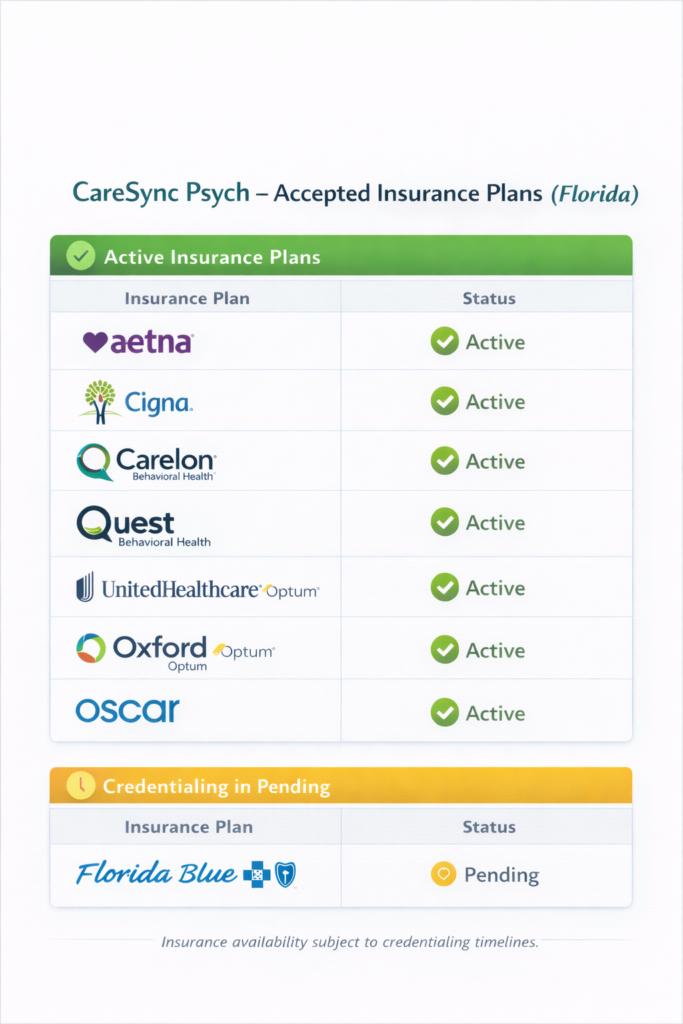
Psychiatry Appointments Florida. We accept Aetna, Cigna, Carelon, Quest, United Healthcare, Oxford and Oscar as well as affordable self-pay options

At CareSync Psych, we often discuss how mental health is deeply connected to the way humans think, feel, and interact & politics is no exception.

Many people assume political beliefs are formed purely through logic or facts, but psychology shows us it is much deeper than that. Research suggests our beliefs are heavily shaped by human nature, emotional experiences, upbringing, social environment, and identity formation (Cottam et al., 2022; Webster & Albertson, 2022).

From childhood, we begin learning values from our families, communities, religion, culture, and life experiences. Over time, these influences help shape what we believe is “right,” “wrong,” moral, fair, or threatening. Sociology teaches us that humans naturally seek belonging within groups, and political ideology often becomes tied to our sense of community, identity, and social belonging.

From childhood, we begin learning values from our families, communities, religion, culture, and life experiences. Over time, these influences help shape what we believe is “right,” “wrong,” moral, fair, or threatening. Sociology teaches us that humans naturally seek belonging within groups, and political ideology often becomes tied to our sense of community, identity, and social belonging.

In many ways, politics has evolved beyond policy—it has become part of personal identity. According to Mason (2022) modern politics often functions similarly to tribal affiliation, where individuals begin to emotionally attach their beliefs to who they are as a person. This is why disagreement can sometimes feel like a personal attack rather than a simple difference in opinion.

Psychologically, humans are also wired to defend their worldview. Our brains naturally seek consistency and safety, often favoring information that supports what we already believe while rejecting information that challenges us. This is known as confirmation bias, and it can make people fiercely protective of their beliefs even when presented with opposing evidence (Webster & Albertson, 2022).

Understanding Panic Disorder: Breaking the Cycle of Fear

Understanding this can help us recognize something important:
Most people are not simply “choosing” beliefs randomly—they are shaped by years of psychological, emotional, cultural, and social conditioning.

This does not mean every belief is correct, but it reminds us that beneath disagreement is often a person trying to make sense of the world through their own lived experiences.

Psychiatry & Mental Health Care In-person or Online in Lakeland, Florida

100% Remote Mental Health Care For The Entire State of Florida & Iowa

Understanding this can help us recognize something important:
Most people are not simply “choosing” beliefs randomly—they are shaped by years of psychological, emotional, cultural, and social conditioning.

This does not mean every belief is correct, but it reminds us that beneath disagreement is often a person trying to make sense of the world through their own lived experiences.

Psychiatry & Mental Health Care In-person or Online in Lakeland, Florida

100% Remote Mental Health Care For The Entire State of Florida & Iowa

Psychiatry Appointments Florida. We accept Aetna, Cigna, Carelon, Quest, United Healthcare, Oxford and Oscar as well as affordable self-pay options

Psychiatry in Lakeland, Fl- CareSync Psych accepts:

Aetna, Cigna, Carelon, Quest, United Healthcare, Oxford and Oscar- as well as affordable self-pay options

Click Here to Check Your Out-of-pocket Estimate with Your Insurance

This does not mean every belief is correct, but it reminds us that beneath disagreement is often a person trying to make sense of the world through their own lived experiences.

At CareSync Psych, we believe understanding human behavior—including why people think and react the way they do—can improve empathy, communication, emotional intelligence, and self-awareness. Sometimes growth begins when we stop asking, “Why would someone think that?” and start asking,

“What experiences shaped them to think that way?”

Understand the Mind Behind Human Behavior

At CareSync Psych, we believe understanding psychology goes far beyond symptoms and diagnoses—it helps explain why people think, feel, believe, and react the way they do. From emotions and relationships to identity, conflict, and even politics, psychology shapes every part of human behavior. Our mission is to help individuals better understand themselves, improve emotional wellness, and create meaningful, lasting change through compassionate, evidence-based mental health care.

Check-out CareSync Psych Now

References

Cottam, M. L., Mastors, E., & Preston, T. (2022). Introduction to political psychology. Routledge.

Mason, L. (2022). Uncivil agreement: How politics became our identity. University of Chicago Press.

Webster, S. W., & Albertson, B. (2022). Emotion and politics: Noncognitive psychological biases in public opinion. Annual Review of Political Science, 25, 401–418.

Transforming Your Mental Health by Healing

Transforming Your Mental Health by Healing

The Psychology of Easter: Why Transformation Matters

🧠 Why do we need meaning?
Humans are wired to make sense of their experiences. When life feels chaotic or painful, the brain searches for understanding and purpose. Without meaning, distress can feel heavier, more overwhelming, and harder to process. Meaning helps organize our experiences and gives us direction—even in difficult seasons.

Book an Appointment Now

Client-Centered Therapy

Services

🧠 Why is transformation necessary?
Psychological growth requires change. Staying the same may feel safe, but it often keeps people stuck in patterns of anxiety, depression, or self-doubt. Transformation allows the brain to form new pathways, new beliefs, and new ways of responding to life.

 Meaning builds resilience


Transformation builds flexibility


Both are essential for healing

Book an Appointment Now
CareSync Psych Mental Health healing

Mental health is not optional—it’s foundational.

Just like you go to the gym to build physical strength, your mind also needs consistent care and attention. You wouldn’t expect your body to stay healthy without movement, nutrition, and rest—and your mental health works the same way.

✨ Therapy helps you understand patterns, process emotions, and build insight
✨ Stress management teaches your nervous system how to regulate and reset
✨ Positive coping skills create resilience in everyday life
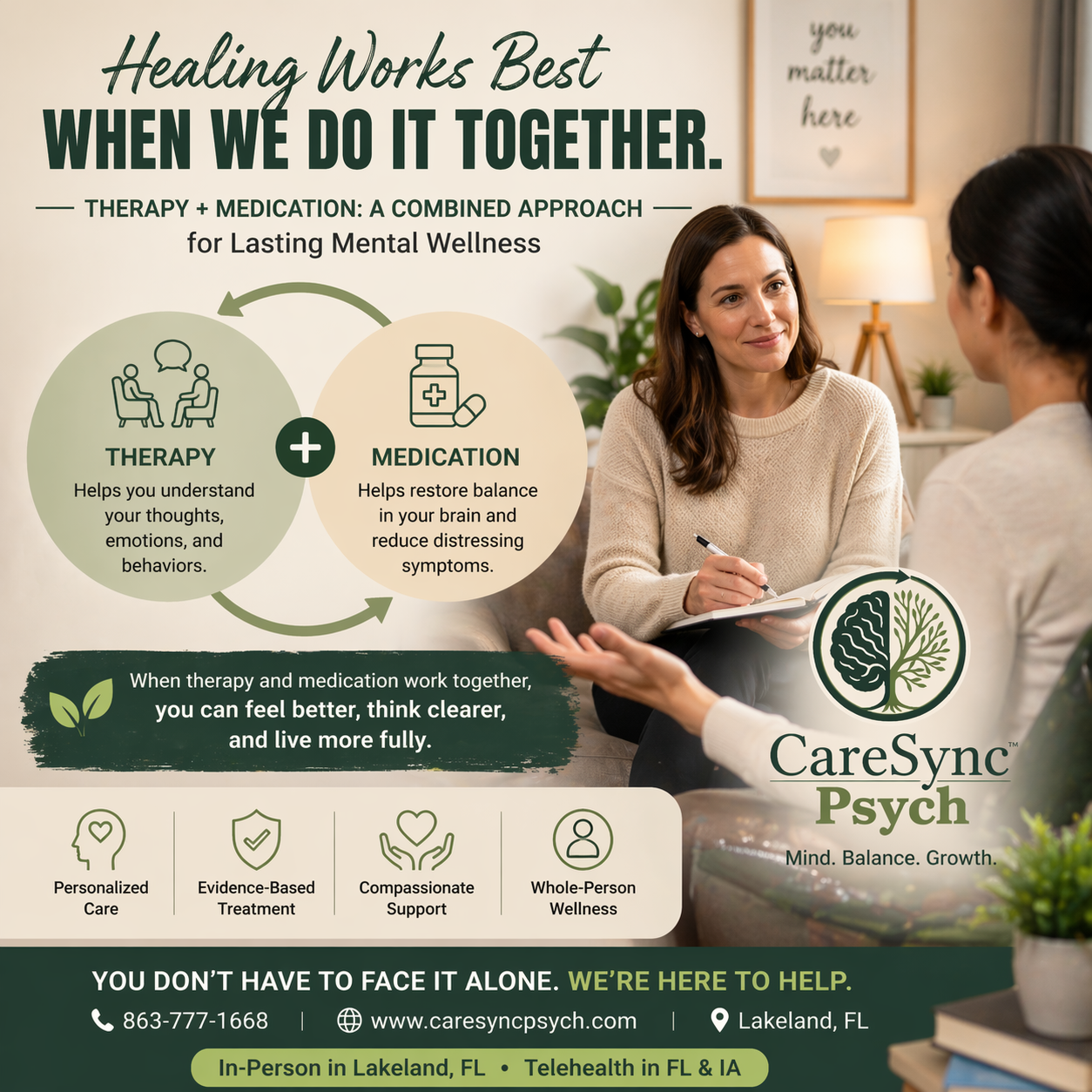
✨ Medication (when appropriate) can help restore balance and support brain function

Ignoring mental health is like ignoring physical pain—it doesn’t go away, it often grows louder.

At CareSync Psych, we recognize that behind symptoms is often a deeper process unfolding…one of change, identity, and rediscovery.


You’re not just “struggling.”
You may be in a phase of transformation.


🌱 And while that can feel uncomfortable, it’s often where the most meaningful growth begins.

Book an Appointment Now

Home

Mental Wellness

Why New Year’s Resolutions Fail—and How to Build Mental Health Habits That Stick

Book an Appointment Now

Psychedelics

Psychedelics

Psychedelics & New Psychiatry

Psychedelics in Psychiatry: How They Work, Why They Matter, and What the Future Could Hold

Psychedelics are resurfacing as one of the most debated topics in contemporary psychiatry. They were formerly completely overlooked, but are now being investigated as possible treatments for diseases such as depression, PTSD, addiction, and existential anguish. What intrigues me about psychedelics is not just their chemistry, but also the prospect that they might assist modify ingrained patterns of thinking, emotion, and behavior in ways that standard psychiatric drugs cannot. At the same time, these substances are not simply miraculous cures. The research indicates that their impacts are biological, psychological, and relational. In other words, psychedelics may be effective not because they are “magic,” but because they seem to provide a window through which the brain, mind, and therapeutic process become more adaptable.

What Are Psychedelics?

Classic psychedelics include psilocybin, LSD, mescaline, and DMT. These chemicals are known to cause dramatic alterations in perception, cognition, emotion, and sense of self (Kelmendi et al., 2022). In psychiatry, they are examined not for the perceptual alterations themselves, but for how such altered states might aid in therapeutic transformation.

How do psychedelics work?
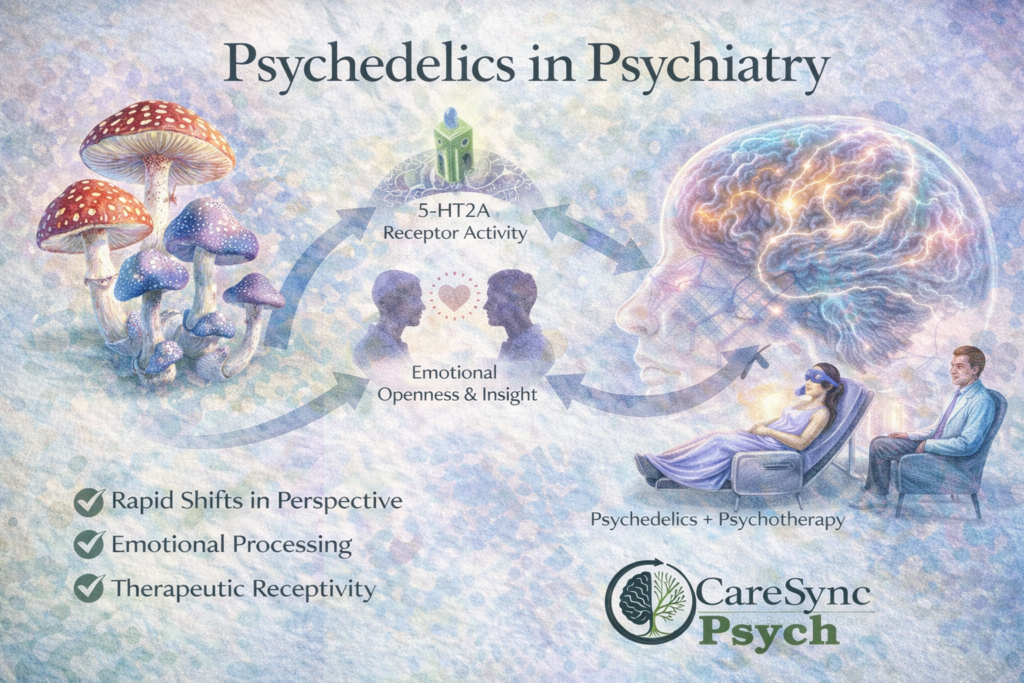
1. Serotonin receptor activity. The most commonly acknowledged pharmacologic mechanism is that traditional psychedelics predominantly operate on the 5-HT2A serotonin receptor (McClure-Begley & Roth, 2022; Van Elk & Yaden, 2022). Activation of this receptor alters cortical signaling, particularly in areas involved in perception, emotional salience, and self-referential processing.

2. Brain network disruption and flexibility. Psychedelics tend to lessen the rigidity of several large-scale brain networks, particularly the default mode network, which is linked to self-focused thinking, rumination, and habitual narrative processing (Van Elk & Yaden, 2022). This might explain why some individuals experience a transient relaxing of depressed or anxious mental patterns.

3. Therapeutically relevant psychological effects. These chemicals often produce:

Increased emotional openness

Changed meaning-making

decreased psychological defensiveness.

Improved feeling of togetherness

experiences may be defined as mystical or profound.

Never take online information as an absolute. Please perform your own research from separate scientific sources.. This post is not medical advise please ask your provider to guide your care.

According to Van Elk and Yaden (2022), these psychological impacts are not unintended. They may be essential to why psychedelics may have long-term therapeutic effects.

Why This Matters in Psychiatry

Traditional psychiatric therapies are often beneficial, yet many patients remain partly better, treatment-resistant, or functionally trapped. Psychedelics may be a unique tool since they do more than just alleviate symptoms; they may also assist disrupt deeply entrenched behaviors. According to Kelmendi et al. (2022), psychedelics are being investigated as therapies capable of promoting quick and long-term changes in mood, cognition, and behavior. This is especially important in psychiatry, where strict patterns of rumination, avoidance, trauma-related dread, or pessimism may exacerbate disease.

According to this viewpoint, psychedelics may be beneficial not just because they alter brain chemistry, but also because they improve adaptability on numerous levels:

Neural plasticity

Emotional flexibility

Cognitive openness

Therapeutic receptivity

Psychedelics Aren’t Just Pharmacology.

One of the most fundamental concepts in recent research is that psychedelic therapy is more than just consuming a chemical. Gründer et al. (2024) suggest that psychedelic treatment is equivalent to psychotherapy. The drug experience is inextricably linked to the subsequent therapeutic interaction, preparation, environment, and integration.

This is a significant change from reductionist thinking. In psychedelic treatment, the medicine and psychotherapy are inextricably linked.

This suggests that results are influenced by:

Set and setting.

clinician support

Patient Expectations

Emotional safety

Creating meaning after the event

This has significant implications for psychiatry: psychedelics may be most effective when used in conjunction with well planned psychotherapy treatment rather than as separate prescriptions.

Why Psychedelics May Be a Useful Tool

Psychedelics may be useful in psychiatry since they seem to provide something different than normal everyday drugs.

The following are some of the potential reasons they matter:

They may cause sudden alterations in attitude or viewpoint.

They may help patients access feelings that were previously denied.

They may provide a chance to process trauma, sorrow, or existential discomfort.

They may enhance the efficacy of psychotherapy in certain circumstances.

McClure-Begley and Roth (2022) define this area as having “promises and perils.” That’s a handy term. Psychedelics may be powerful tools, but strength demands prudence.

Current Research Themes

According to the material you supplied, modern psychedelic research focuses on many important themes:

1. Mechanistic understanding

Researchers are attempting to explain how much of the psychedelic advantage stems from:

receptor-level pharmacology.

alterations in brain network dynamics.

subjective experience.

Psychotherapy and Context

Van Elk and Yaden (2022) underline that no single explanation suffices. The impacts are most likely multilayered.

2. The significance of the encounter itself

A key study concern is whether the therapeutic impact is dependent on the altered state or whether a “non-hallucinogenic” variant may give comparable advantages. McClure-Begley and Roth (2022) identify this as one of the field’s fundamental disputes.

3. Integration of psychotherapy

Gründer et al. (2024) firmly believe that future models should not separate psychedelics and treatment. This shows that psychiatry may need new treatment models that are more immersive, relational, and time-consuming than traditional pharmaceutical visits.

What This Might Mean for Psychiatry

If psychedelic treatments continue to show potential, psychiatry may develop in many key directions:

A more integrated model

Psychiatry may become less focused on symptom suppression and more focused on:

Emotional Processing

Psychological flexibility

Healing in relationships

Long-term meaning and identity shifts

A reconsideration of pharmacological therapy.

Rather than everyday symptom management, some therapies may use episodic interventions in conjunction with psychotherapy.

More attention on set, location, and integration.

Client-Centered Therapy

If psychedelic treatments continue to show potential, psychiatry may develop in many key directions:

A more integrated model

Psychiatry may become less focused on symptom suppression and more focused on:

Emotional Processing

Psychological flexibility

Healing in relationships

Long-term meaning and identity shifts

A reconsideration of pharmacological therapy.

Rather than everyday symptom management, some therapies may use episodic interventions in conjunction with psychotherapy.

More attention on set, location, and integration.

Future psychiatric care may acknowledge that treatment setting is important medically and psychologically.

Potential Risks and Cautions

The enthusiasm around psychedelics should not override the necessity for care.

The risks may include:

Psychological instability in susceptible persons

worsening of psychosis or mania in susceptible people.

Overwhelming emotional sensations

Poor results in unstructured or unsupported circumstances.

McClure-Begley and Roth (2022) emphasize that, in addition to its therapeutic potential, psychedelic pharmacology contains significant hazards. These are not only health tools; they are effective cognitive therapies.

Future Implications.

The future of psychedelics in psychiatry may be dependent on various issues.

Can advantages be consistently replicated in real-world clinical settings?

What illnesses are most likely to respond?

How does psychotherapy affect long-term outcomes?

How should professionals be prepared for this work?

Can psychiatry use these ideas without overmedicalizing or simplifying them?

According to the literature, psychedelics have the potential to transform psychiatry not just by introducing new therapies, but also by changing how psychiatry perceives recovery.

Services

The CareSync Psychology Perspective

Psychedelics are gaining popularity because they might provide a fresh route for those who are locked in strict emotional and cognitive habits. Their promise is not simply in chemistry, but in the ability to create a transient condition of openness in which actual therapeutic work may take place.

At the same time, new evidence shows that these therapies should be treated mindfully, relationally, and with due regard for their complexity.

Psychiatry is finding that healing may need more than just neurotransmitters. It might also include flexibility, purpose, connection, and carefully managed change.

Never take online information as an absolute. Please perform your own research from separate scientific sources.. This post is not medical advise please ask your provider to guide your care.

References

Gründer, G., Brand, M., Mertens, L. J., Jungaberle, H., Kärtner, L., Scharf, D. J., … & Wolff, M. (2024). Treatment with psychedelics is psychotherapy: Beyond reductionism. The Lancet Psychiatry, 11(3), 231-236.

Kelmendi, B., Kaye, A. P., Pittenger, C., & Kwan, A. C. (2022). Psychedelics. Current Biology, 32(2), R63-R67.

McClure-Begley, T. D., & Roth, B. L. (2022). The promises and perils of psychedelic pharmacology for psychiatry. Nature Reviews Drug Discovery, 21(6), 463-473.

Van Elk, M., & Yaden, D. B. (2022). Pharmacological, neural, and psychological mechanisms underlying psychedelics: A critical review. Neuroscience & Biobehavioral Reviews, 140, 104793.

  • Prev
  • 1
  • 2
  • 3
  • 4
  • 5
  • Next

About CareSync Psych

Mental health care that sees the whole person.

CareSync Psych is an outpatient mental health practice providing thoughtful, individualized psychiatric care with an integrated understanding of both mental and physical health.

Our approach combines evidence-based psychiatric care with collaboration, education, and attention to the medical, psychological, behavioral, and social factors that can influence how a person feels and functions.

Care is provided by a nurse practitioner who is dual board certified in Psychiatric-Mental Health and Family Medicine, bringing both perspectives into the assessment and treatment process.

Book an Appointment Contact CareSync Psych
CareSync Psych whole-person outpatient mental health and psychiatric care
Whole-Person Clinical Perspective Dual Board Certified in Psychiatric-Mental Health & Family Medicine
Multi-State Care

Licensed in Five States

FLORIDA  •  WASHINGTON  •  ARIZONA  •  TEXAS  •  IOWA

Telehealth availability depends on patient location, clinical appropriateness, and applicable practice requirements. In-person care is available in Lakeland, Florida.

Who We Are

Psychiatric care with a broader clinical perspective.

Mental health is rarely influenced by one factor alone. CareSync Psych approaches treatment with that complexity in mind.

Diagnosis, medication, psychotherapy, and symptom measurement are important parts of psychiatric care. But they exist within a larger picture that may include physical health, sleep, nutrition, stress, relationships, medications, hormones, metabolic factors, life experiences, environment, and behavior.

CareSync Psych was developed around a whole-person approach: understand the psychiatric symptoms while also considering relevant factors that may contribute to them, worsen them, or affect treatment.

This does not mean every patient needs every type of intervention. It means treatment begins with careful assessment and is individualized to the person rather than automatically applying the same approach to everyone.

Treating mental health sometimes requires understanding more than mental health alone.
CareSync Psych nurse practitioner dual board certified in psychiatric mental health and family medicine
Clinical Expertise

Two specialties. One integrated view of the patient.

Dual Board Certified Nurse Practitioner Psychiatric-Mental Health & Family Medicine

CareSync Psych is led clinically by a nurse practitioner with board certification spanning both psychiatric-mental health and family medicine.

That combination supports a broader clinical perspective. Psychiatric symptoms can intersect with sleep, chronic illness, medications, metabolic health, hormonal changes, nutrition, pain, neurological symptoms, and other medical considerations.

The goal is not to turn every psychiatric visit into a primary care visit. It is to recognize when the broader medical picture may matter, understand the potential connections, and incorporate that perspective into appropriate psychiatric assessment, treatment planning, monitoring, education, and referral.

Psychiatric Perspective Assessment, diagnosis, medication management, psychotherapy, behavioral health, and ongoing psychiatric treatment.
Medical Perspective Awareness of relevant physical health conditions, medications, laboratory findings, metabolic factors, and other medical considerations that may intersect with mental health.
Integrated Perspective A treatment plan that considers the person as a whole while remaining within the appropriate scope of each service.
The Patient Experience

What we want mental health care to feel like.

Clinical care should be professional without feeling impersonal. Patients should be able to ask questions, understand their options, and participate meaningfully in treatment decisions.

01

Thorough Enough to Understand

Treatment decisions are stronger when there is time to understand symptoms, history, context, previous treatment, medical considerations, concerns, and what matters to the patient.

02

Clear, Not Mysterious

Patients should understand what is being treated, why an option is being considered, potential benefits and risks, and what happens next.

03

Collaborative

Clinical expertise helps guide treatment, while the patient's experiences, goals, concerns, values, and preferences remain important parts of decision-making.

04

Flexible Enough to Change

Symptoms, health, goals, medications, relationships, and life circumstances change. Treatment should be reassessed and adjusted when appropriate.

05

Respectful of Choice

Patients may have different preferences regarding medication, psychotherapy, lifestyle changes, and other interventions. Those preferences deserve thoughtful discussion.

06

Focused on Real Life

Progress is more than a symptom score. It may mean sleeping better, returning to work, improving relationships, functioning more consistently, or enjoying life again.

Our Values

The principles behind our care.

These values influence how CareSync Psych approaches assessment, treatment, communication, and ongoing care.

Curiosity We do not assume the first explanation is always the complete explanation. Understanding comes before intervention.
Transparency Patients deserve understandable information about treatment options, potential risks and benefits, uncertainties, and reasonable alternatives.
Respect Mental health care should preserve dignity and recognize that patients bring their own experiences, priorities, cultures, values, and preferences to treatment.
Clinical Responsibility Compassion and evidence belong together. Treatment decisions should remain grounded in appropriate assessment, monitoring, safety, and clinical judgment.
Whole-Person Thinking Psychological and physiological health can intersect. Relevant physical health factors should not automatically be separated from the mental health conversation.
Setting Expectations

What CareSync Psych is—and what it is not.

A good fit matters. We want patients to understand the kind of outpatient mental health practice they are choosing.

CareSync Psych Is

  • An outpatient psychiatric and mental health practice
  • A setting for psychiatric evaluation and ongoing treatment
  • A collaborative treatment environment
  • A practice where medication may be used when clinically appropriate
  • A setting where psychotherapy and behavioral strategies may be incorporated into care
  • A practice that considers relevant psychological, medical, metabolic, lifestyle, and social context
  • A practice informed by both psychiatric-mental health and family medicine perspectives
  • A place where questions and shared decision-making are encouraged

CareSync Psych Is Not

  • A one-size-fits-all prescribing clinic
  • A practice where every concern automatically requires medication
  • A substitute for emergency psychiatric or medical care
  • A setting where physical health is ignored when it may be relevant to psychiatric treatment
  • A replacement for a patient's primary care provider or medical specialist
  • A place where patients are expected to agree with treatment without understanding their options
  • A promise that one treatment approach will work for everyone
Continuity Matters

Treatment is a process, not a single appointment.

Mental health care often works best with continuity— time to observe patterns, evaluate response, make adjustments, and understand how treatment is functioning in everyday life.

Follow-up visits may involve much more than renewing a prescription. They can include reviewing progress, discussing side effects, understanding new stressors, reassessing symptoms or diagnoses, reviewing sleep and functioning, considering relevant health changes, revisiting goals, and changing direction when appropriate.

That ongoing relationship is an important part of the CareSync Psych approach.

Explore Our Services
Person walking outdoors representing progress reflection and continuity in mental health care
Care Across Five States

Licensed in FL, WA, AZ, TX & IA.

CareSync Psych expands access through telehealth for eligible patients located in states where the provider is licensed, with in-person care available in Lakeland, Florida.

FL Florida
WA Washington
AZ Arizona
TX Texas
IA Iowa
Book an Appointment

Telehealth services are subject to patient location, provider licensure, clinical appropriateness, and applicable state and federal requirements.

Our Lakeland Office

In-person care in South Lakeland. Telehealth across five states.

For patients who prefer face-to-face care, CareSync Psych offers a private outpatient setting in Lakeland, Florida.

180 Fitzgerald Road
Suite 2
Lakeland, Florida 33813

Telehealth provides another option for eligible patients located in Florida, Washington, Arizona, Texas, and Iowa.

In-Person Mental Health Care Private outpatient appointments at our South Lakeland office.
Multi-State Telehealth Virtual care for eligible patients in FL, WA, AZ, TX & IA.
Outpatient Services Psychiatric evaluation, medication management, psychotherapy, and ongoing mental health treatment.
Integrated Perspective Care informed by dual board certification in Psychiatric-Mental Health and Family Medicine.
Book an Appointment Contact CareSync Psych
CareSync Psych

Mental health care with the whole person in mind.

CareSync Psych provides individualized outpatient mental health care grounded in clinical evidence, thoughtful collaboration, and an integrated understanding of psychological and physical health.

Dual Board Certified Nurse Practitioner in Psychiatric-Mental Health & Family Medicine
Licensed in Florida • Washington • Arizona • Texas • Iowa

Book an Appointment Email CareSync Psych

Therapy sessions that meet you where you are — not where you “should” be.

Ready to Begin Your Journey?

Book an Appointment Today.

Book an Appointment

CareSync Psych™ | Whole-Person Psychiatric Care

Dual Board-Certified in Family and Psychiatric-Mental Health Care

Jennifer Sanri is a dual board-certified Family Nurse Practitioner and Psychiatric-Mental Health Nurse Practitioner. Her advanced preparation in both family health and psychiatry supports an integrated approach that considers mental health symptoms alongside physical health, medications, sleep, nutrition, metabolic factors, and chronic medical conditions.

CareSync Psych provides personalized psychiatric evaluations, medication management, and psychotherapy-informed treatment. Although the practice serves people with a broad range of psychiatric and emotional concerns, Jennifer has a particular clinical focus on panic disorder, obsessive-compulsive disorder, and social anxiety disorder.

Panic Disorder

Thoughtful evaluation and individualized treatment for panic attacks, anticipatory anxiety, physical symptoms, avoidance, and fear of experiencing another episode.

OCD & Intrusive Thoughts

Evidence-informed psychiatric care for obsessive thoughts, compulsive behaviors, distressing intrusive thoughts, and related anxiety, with medication and therapy coordination when appropriate.

Social Anxiety

Personalized care for fear of judgment, performance anxiety, avoidance, physical anxiety symptoms, and difficulty participating comfortably in relationships, school, work, or social situations.

Comprehensive Psychiatric Care

CareSync Psych evaluates and treats a broad range of psychiatric conditions, including depression, generalized anxiety, trauma-related symptoms, PTSD, ADHD, bipolar disorders, insomnia, adjustment difficulties, and other mental health concerns. Services are provided when clinically appropriate and within the scope of an outpatient psychiatric practice.

Care options: In-person and telehealth psychiatric care are available in Florida. CareSync Psych provides fully remote telehealth services in Arizona, Washington, and Iowa, subject to licensure, clinical appropriateness, and applicable prescribing requirements.

Book an Appointment Meet Your Provider

Jennifer Sanri, APRN, FNP-BC, PMHNP-BC

Dual Board-Certified
Family Health + Psychiatric-Mental Health

Error: Contact form not found.

CareSync Psych

Ready to take the next step?

Explore appointment options, check your insurance coverage, or contact our office with questions about getting started.

Book an Appointment Check Insurance
CareSync Psych – Psychiatry and Mental Health Care
CareSync Psych

Personalized psychiatry, psychotherapy, medication management, and whole-person mental health care.

Explore Mental Health Care →
CareSync Wellness – Mind Body Wellness
CareSync Wellness

Personalized wellness services supporting metabolic health, healthy aging, and whole-person wellness.

Explore Wellness Care →

CareSync Psych

Lakeland Office 180 Fitzgerald Road, Suite 2
Lakeland, FL 33813
Phone 863-858-5554
Email info@caresyncpsych.com
View on Google Maps →

Patient Care

Book an Appointment Check Insurance Pricing & Self-Pay Psychotherapy Metabolic Psychiatry Areas of Focus

Explore

Home About Us Contact FREE Mental Health Worksheets Mental Health Support Mental Health Crisis Support Mental Health Articles CareSync Wellness →

Telehealth Care

Telehealth may be available for eligible patients physically located in states where the provider is licensed.

Arizona
Florida
Iowa
Washington
Not sure where to begin?

Contact us with general questions about services or scheduling.

Contact Our Office →
Need immediate help? If you are experiencing a crisis or emergency, call or text 988, dial 911, or go to the nearest emergency room. Online forms and routine office messages are not monitored 24/7.
© 2026 CareSync Psych. All rights reserved.
Privacy Terms Contact