
Weight • Eating • Metabolic Health

When Food and Weight Begin to Take Up Too Much Space.

Weight management is not simply about eating less, trying harder, or reaching a number on the scale.

Our relationship with food can be influenced by biology, mood, anxiety, stress, sleep, medications, cravings, habits, body image, metabolic health, and years of dieting. CareSync Psych takes a personalized approach that looks at the whole picture rather than reducing treatment to willpower.

Woman surrounded by healthy food, movement, nature, and wellness symbols representing personalized weight management and metabolic health.
Beyond the Scale Nutrition, metabolism, movement, sleep, stress, behavior, mental health, and your individual goals all matter.
Whole-Person Care Mind and body considered together.
Individualized Plans No one-size-fits-all program.
Behavior + Biology Understand what may be driving the pattern.
Shared Decisions Your goals and preferences guide treatment.
Our Philosophy

Weight is only one piece of the story.

Two people can struggle with weight or eating for completely different reasons—and therefore need very different treatment.

For one person, chronic restriction may lead to intense hunger and loss-of-control eating. For another, emotional distress, medication effects, sleep disruption, insulin resistance, attention difficulties, or long-standing habits may be contributing.

Our goal is to understand the pattern before deciding what interventions may be useful.

The question is not simply, “How do we make the number smaller?” It is, “What is getting in the way of feeling healthier and more in control?”
Woman under a glass dome with food, a scale, and measuring tape symbolizing feeling trapped by weight, body image, and eating patterns.
When the Cycle Feels Controlling

Food and weight shouldn't control your life.

Sometimes the struggle becomes much bigger than what is happening on the scale.

Thoughts about food, calories, weight, appearance, dieting, and whether you were “good” or “bad” that day can gradually consume an enormous amount of mental energy.

Restriction Rigid dieting or skipping meals may increase hunger, preoccupation, and vulnerability to overeating.
Loss of Control Eating may begin to feel difficult to stop, particularly during stress or emotional distress.
Guilt & Self-Criticism Episodes may be followed by shame, frustration, or harsh judgments about yourself.
Starting Over A new restrictive plan begins—and the same cycle may repeat.
Flexible Treatment

There is more than one path forward.

Treatment can be built around what you actually need rather than forcing everyone into the same program.

01

Behavioral & Therapeutic Care

Explore triggers, eating patterns, emotional regulation, body image, all-or-nothing thinking, cravings, and behaviors that may be keeping the cycle going.

02

Medication Support

Medication may be considered when clinically appropriate after individualized assessment of medical history, psychiatric needs, risks, benefits, and treatment goals.

03

Lifestyle & Metabolic Support

Nutrition, movement, sleep, stress, routines, and metabolic factors may be addressed in realistic, sustainable ways.

04

Integrated Care

For some patients, the most effective plan combines psychiatric care, behavioral strategies, medication, and lifestyle support.

Binge & Emotional Eating

When eating feels difficult to stop.

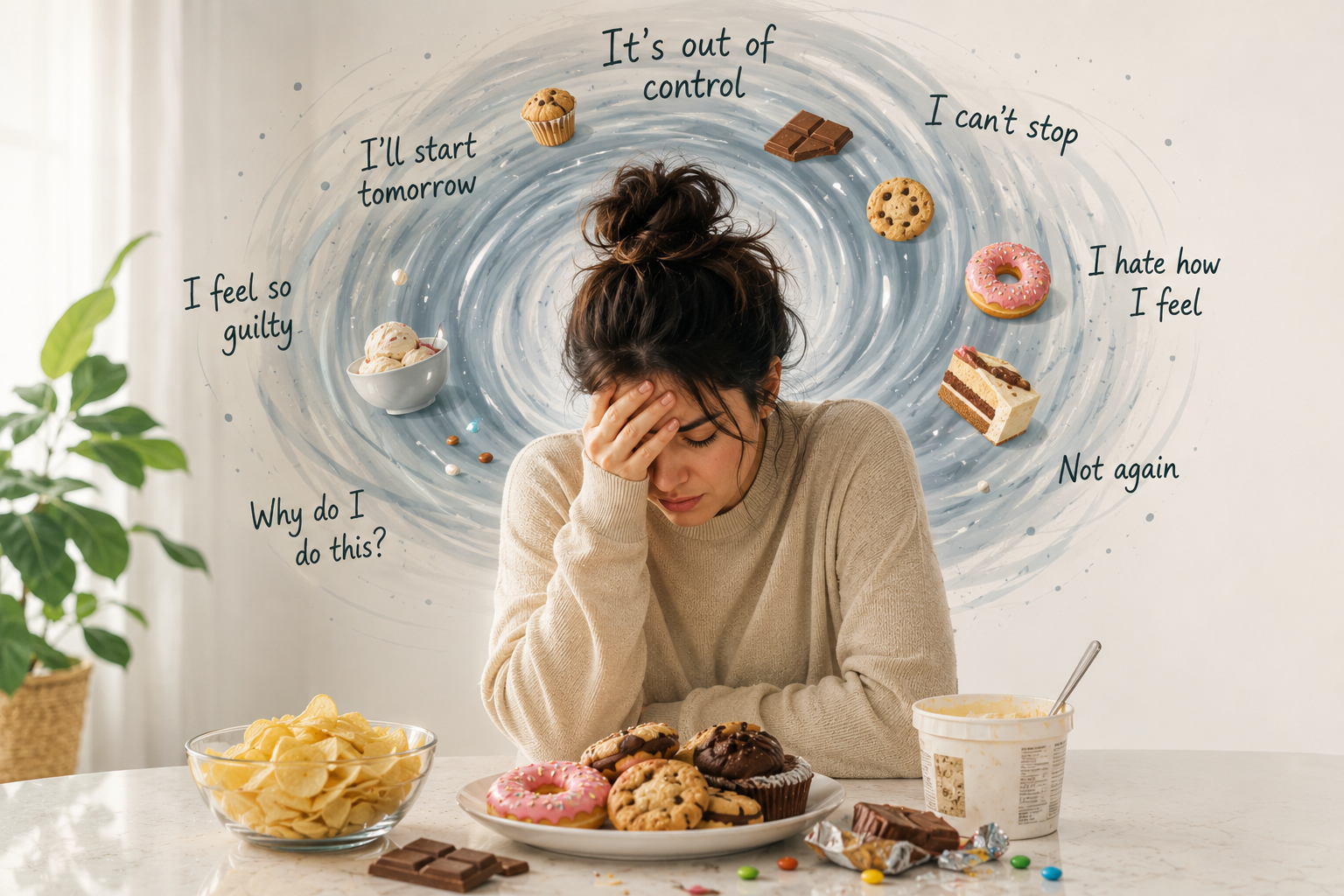
Loss-of-control eating is not a character flaw or a simple lack of discipline.

Stress, restrictive dieting, anxiety, mood symptoms, ADHD, sleep deprivation, learned habits, reward pathways, environmental cues, and biological hunger can all influence how we respond to food.
01
Recognize the trigger Stress, loneliness, boredom, overwhelm, restriction, fatigue, hunger, or environmental cues.
02
Understand the urge Learn what physical, emotional, and cognitive factors are occurring before an episode.
03
Interrupt the pattern Build alternative responses, structure meals, reduce all-or-nothing thinking, and develop coping skills.
04
Reduce the shame Guilt and self-criticism can reinforce the cycle. Treatment focuses on understanding rather than judgment.
Woman overwhelmed by repetitive thoughts and food, symbolizing emotional eating, binge eating, guilt, and loss-of-control eating.
Whole-person weight management image representing nourishment, movement, healthy habits, mindset, and individualized goals.
Sustainable Health

The goal is more than losing weight.

Long-term health is built through patterns you can actually live with.

Treatment may focus on improving energy, reducing binge or emotional eating, strengthening metabolic health, improving sleep, building confidence around food, and creating routines that support your physical and emotional well-being.

Nourishment Support adequate, balanced nutrition without relying on constant restriction or extreme rules.
Movement Build activity around function, strength, health, and sustainability.
Sleep & Stress Address factors that can influence appetite, cravings, mood, energy, and decision-making.
Mindset Challenge all-or-nothing thinking, shame, perfectionism, and negative self-talk.
Your Goals Progress is defined by what meaningful health and functioning look like for you.
What to Expect

Start by understanding the whole picture.

01 Comprehensive Evaluation Review weight history, eating patterns, medications, psychiatric symptoms, medical history, sleep, stress, movement, previous approaches, and treatment goals.
02 Identify Contributing Factors Explore behavioral, emotional, psychiatric, medication-related, lifestyle, and metabolic factors that may be influencing weight or eating.
03 Build a Personalized Plan Discuss therapy, behavioral strategies, medical options, nutrition-related considerations, movement, sleep, stress, or an integrated approach.
04 Monitor & Adjust Follow progress, tolerability, functioning, eating patterns, health markers when relevant, and whether the plan is actually improving quality of life.
Common Goals

Progress can mean more than a number.

Care can be tailored to the concerns that are most disruptive or meaningful to you.

Emotional Eating Binge Eating Loss-of-Control Eating Food Cravings Weight Concerns Body Image All-or-Nothing Thinking Chronic Dieting Stress Eating Medication-Associated Weight Changes Metabolic Health Sleep & Appetite Sustainable Habits Healthier Relationship With Food
Common Questions

Weight, eating, and treatment.

Do I have to take medication? No. Medication is only one potential tool. Some patients focus primarily on behavioral, therapeutic, nutritional, or lifestyle strategies.
Can medication be part of treatment? Yes, when clinically appropriate. Medication decisions require individualized assessment, review of medical and psychiatric history, and discussion of potential benefits and risks.
Do you treat emotional or binge eating? Care may address emotional eating, binge-type eating patterns, loss of control, cravings, and associated psychiatric or behavioral factors. Appropriate level of care is determined individually.
Is the goal always weight loss? No. Goals may also include fewer binge episodes, improved relationship with food, better energy, healthier routines, improved metabolic markers, or greater physical and emotional well-being.
What if I have tried many diets before? Previous dieting history is important. Repeated restriction and regain can affect hunger, behavior, expectations, and emotional well-being, so the treatment plan can account for those experiences.

Clinical note: Information on this page is educational and does not replace individual medical or psychiatric evaluation. Medication eligibility, treatment recommendations, laboratory monitoring, and appropriate level of care are determined based on an individualized clinical assessment.

CareSync Psych

You don't have to keep starting over.

If food, weight, cravings, or eating patterns are taking up too much of your mental and emotional energy, start with a conversation about what is actually happening and what you would like to change.