
Call us (863) 858-5554
HealthFlex
×
  • Home
  • About Us
    • Check Your Coverage
    • Insurance & Self-pay Options
    • Client-Centered Therapy
    • Crisis and After-Hours Care
    • Privacy Policy
  • Specializing In
    • Specializing In
    • Metabolic Psychiatry
    • Weight Management & Binge Eating
  • Services
    • Services
    • Medication Management for Mental Health
    • Telehealth
    • Client-Centered Therapy
    • Metabolic Psychiatry
  • Book An Appointment
  • Contact Us

The Power of the Unconscious | Mental Health Growth and Self-Awareness | CareSync Psych

The Power of the Unconscious | Mental Health Growth and Self-Awareness | CareSync Psych

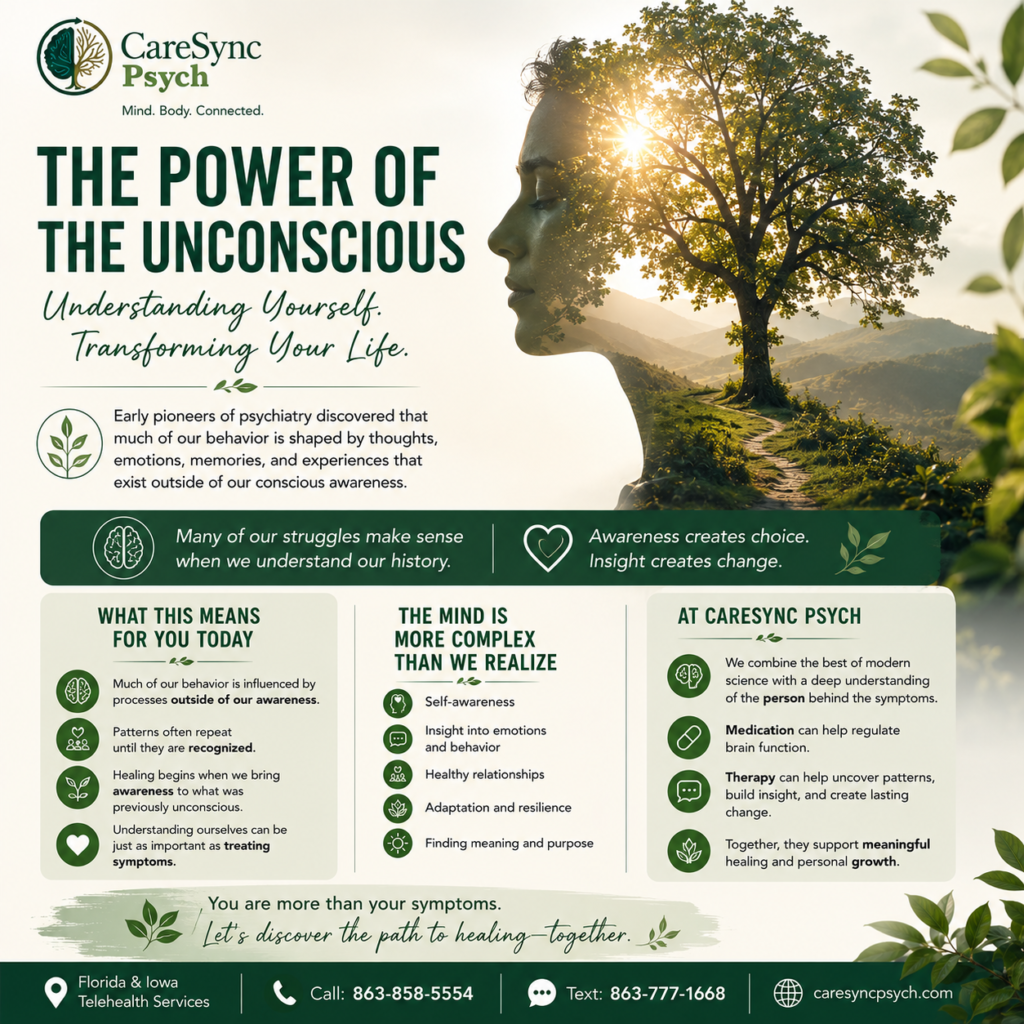
Modern psychiatry often focuses on neurotransmitters, medications, and evidence-based therapies—but long before brain scans and psychopharmacology, pioneers of dynamic psychiatry were asking a different question:

"Why do we think, feel, and behave the way we do?"

One of the most interesting themes from this work is the idea that much of human behavior is influenced by processes occurring outside of conscious awareness. Long before modern neuroscience confirmed that many brain functions occur automatically, clinicians observed that unresolved experiences, beliefs, conflicts, and emotions could shape thoughts, relationships, and even physical symptoms.

Book an Appointment Using Insurance 

Learn More About Our Services

Affordable Self-Pay Options

Telehealth Options (FL, WA, IA)

 Sometimes our reactions make sense when we understand our history.

What Does This Mean Today?

While modern psychiatry has advanced tremendously, the core insight remains relevant:

Understanding ourselves can be just as important as treating symptoms.

🧠 The Mind Remembers What We Don’t Always See

Modern psychiatry has come a long way, but one truth still matters:
healing often begins when we understand the story behind our symptoms.

✨

Your Reactions Have Roots

Sometimes the way we respond today makes sense when we understand what we’ve been through.

🔁

Patterns Repeat Until They’re Seen

Relationship struggles, anxiety loops, and coping habits often shift once we recognize them.

🌱

Awareness Creates Change

Healing begins when hidden thoughts, emotions, and experiences come into the light safely.

💚

You Are More Than Symptoms

Understanding yourself can be just as important as treating anxiety, depression, or stress.

Many people enter treatment believing they simply need to “stop feeling anxious” or “get rid of depression.” While symptom relief is important, meaningful growth often comes from discovering deeper patterns involving self-worth, relationships, attachment, trauma, and coping strategies.

The Mind Is More Complex Than We Realize

Ellenberger’s work reminds us that mental health is not simply the absence of symptoms. It involves:

🧠 Self-awareness
💬 Insight into emotions and behavior
🤝 Healthy relationships
🌿 Adaptation and resilience
❤️ Finding meaning and purpose

 Healing begins when we bring awareness to what was previously unconscious.

At CareSync Psych

We believe effective mental health care combines the best of modern science with a genuine understanding of the person behind the symptoms.

Medication may help regulate brain function. Therapy can help uncover patterns, build insight, and create lasting change. Together, they can support meaningful healing and personal growth.

Because sometimes the most important discoveries are not made in a laboratory—they are made within ourselves.

Book an Appointment Using Insurance 

Learn More About Our Services

Affordable Self-Pay Options

Telehealth Options (FL, WA, IA)

Patterns often repeat until they are recognized.  

What if some of the most important influences on your life operate outside of your awareness?

Henri Ellenberger’s The Discovery of the Unconscious explores how pioneers of psychology and psychiatry helped uncover the hidden forces that shape thoughts, emotions, relationships, and behavior.

Many struggles aren’t signs of weakness—they may be patterns developed to adapt, survive, or cope.

Through therapy, self-reflection, and evidence-based treatment, those patterns can become opportunities for growth.

✨ Awareness creates choice.
✨ Insight creates change.
✨ Healing starts with understanding.

Group Psychology Can Change Society

Group Psychology Can Change Society

In today’s world, people are more connected digitally than at any other point in history—yet many individuals feel increasingly anxious, polarized, isolated, and emotionally overwhelmed.

Two influential works that explore these dynamics are:

The Psychology of Totalitarianism by Mattias Desmet and Group Psychology and the Analysis of the Ego by Sigmund Freud.

Although written generations apart, both books explore an important psychological question:

At CareSync Psych, we believe psychological insight can empower individuals to better understand themselves, their relationships, and the world around them.

Without self-awareness, people may mistake emotional intensity for truth.

How does group influence shape individual thinking, emotions, identity, and behavior?

The Human Need for Belonging

Humans are social beings. We naturally seek:

  • Connection
  • Meaning
  • Identity
  • Safety
  • Community

When people feel disconnected, fearful, uncertain, or emotionally distressed, group dynamics can become incredibly powerful.

Freud discussed how individuals in groups may unconsciously shift parts of their identity toward the group itself, sometimes leading emotions and collective thinking to overpower individual reasoning.

Desmet expands on this concept by exploring how fear, chronic stress, loneliness, uncertainty, and social fragmentation may increase susceptibility to rigid collective thinking and emotional contagion.

Mental health does not exist in isolation from society.

When individuals are chronically stressed, isolated, sleep-deprived, overstimulated, or emotionally dysregulated, they may become more vulnerable to external emotional influence and black-and-white thinking.

Chronic stress, fear, social division, and constant exposure to emotionally charged information can affect:

  • Anxiety levels
  • Emotional regulation
  • Critical thinking
  • Relationships
  • Sense of identity
  • Nervous system activation

Many people today report feeling:

  • Emotionally exhausted
  • Hypervigilant
  • Disconnected
  • Angry or fearful
  • Overstimulated by media and social conflict

Understanding group psychology can help individuals become more aware of:
✔ Emotional influence
✔ Cognitive bias
✔ Fear-based thinking
✔ Social pressure
✔ Identity and belonging needs
✔ The impact of chronic societal stress on mental health

At CareSync Psych, we believe psychological insight can empower individuals to better understand themselves, their relationships, and the world around them.

Without self-awareness, people may mistake emotional intensity for truth.

Awareness Is Protective

Awareness can help people:

  • Pause before reacting emotionally
  • Think more independently
  • Build healthier relationships
  • Reduce black-and-white thinking
  • Stay grounded during uncertainty
  • Strengthen emotional resilience

Mental wellness includes not only caring for ourselves individually, but also understanding the environments and systems that influence how we think, feel, and relate to others.

Social Anxiety

Understanding Political Beliefs & The Psychology of Politics

Understanding Panic Disorder: Breaking the Cycle of Fear

Humans are neurologically wired for connection. Emotions spread socially.

When emotions run high in groups, people may:

  • React impulsively
  • Adopt beliefs without reflection
  • Feel pressured to conform
  • Seek safety in certainty
  • Lose connection with their individual emotional awareness

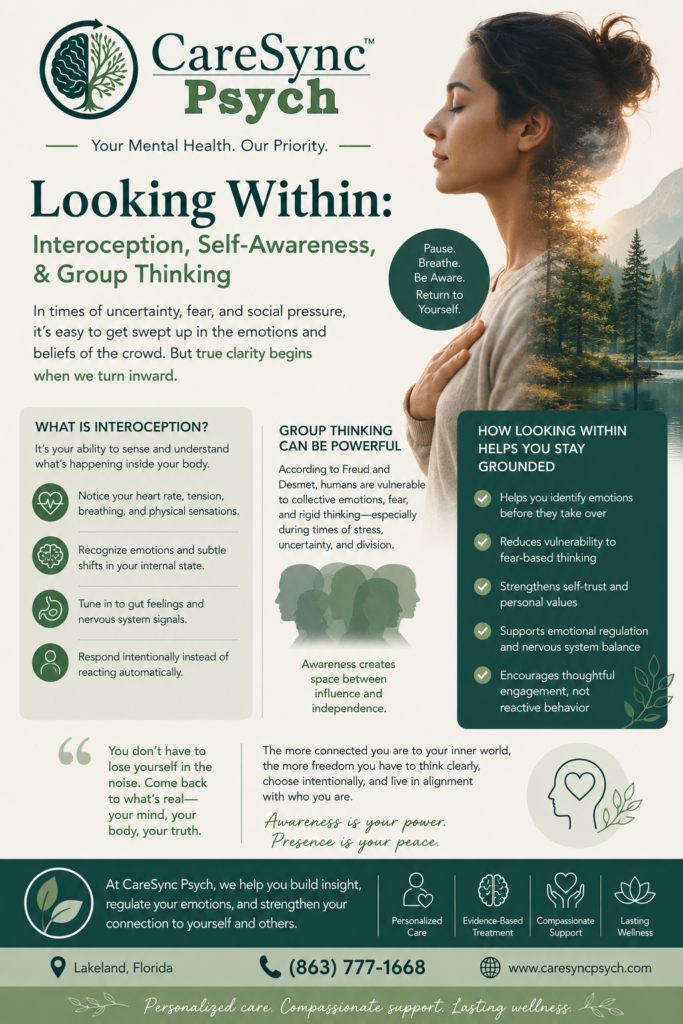
This is where introspection and interoception become deeply important.

The ability to ask ourselves:

  • “What am I actually feeling right now?”
  • “Is this fear mine, or am I absorbing collective fear?”
  • “Am I reacting emotionally or thoughtfully?”
  • “What is happening in my body as I consume this information?”
  • “Am I grounded, or emotionally overwhelmed?”

can create space between emotional contagion and conscious decision-making.

The more connected we become to our inner world, the less likely we are to lose ourselves completely in external noise.

At CareSync Psych, we believe psychological insight can empower individuals to better understand themselves, their relationships, and the world around them.

The Nervous System and Emotional Contagion

Fear spreads.
Anger spreads.
Panic spreads.
Calm spreads too.

At CareSync Psych, we believe emotional insight and self-awareness are essential components of mental wellness

When individuals are chronically stressed, isolated, sleep-deprived, overstimulated, or emotionally dysregulated, they may become more vulnerable to external emotional influence and black-and-white thinking.

References Desmet, M. (2022). The psychology of totalitarianism. Chelsea Green Publishing. Freud, S., & Strachey, J. (2024). Group psychology and the analysis of the ego: Illustrated & psychology glossary & index added inside. E-Kitap Projesi & Cheapest Books.

Evidence Over Fear: Understanding Antidepressant Withdrawal

Evidence Over Fear: Understanding Antidepressant Withdrawal

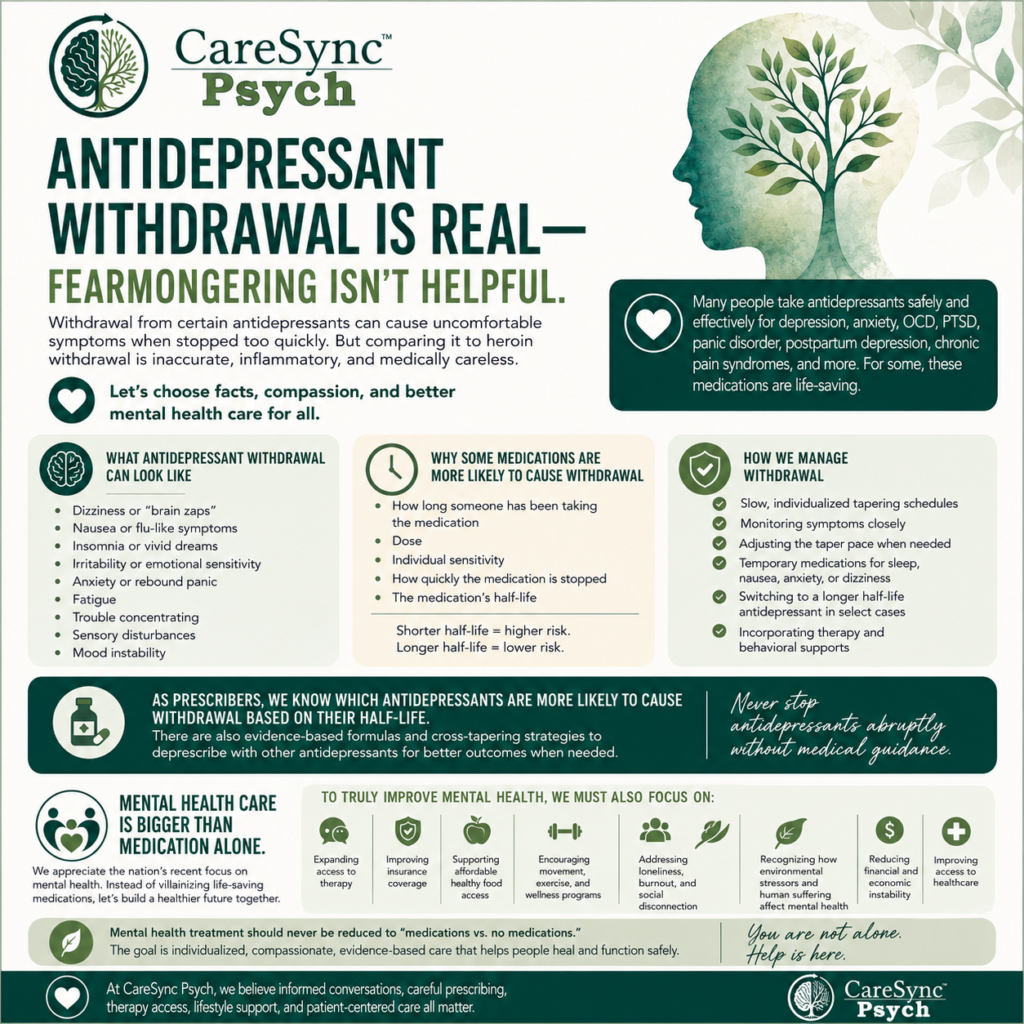
Antidepressant withdrawal is real, clinically recognized, and something responsible prescribers take seriously. Research over the last several years has shown that stopping certain antidepressants too quickly can lead to significant discontinuation symptoms in some individuals, especially with medications that have shorter half-lives.

At the same time, comparing antidepressant withdrawal to heroin withdrawal is medically inaccurate, inflammatory, and potentially harmful. These are fundamentally different substances with different mechanisms, risks, and patterns of dependence. Oversimplified comparisons can increase fear, stigma, and misinformation — especially for patients who genuinely benefit from treatment.

Many people take antidepressants safely and effectively for depression, anxiety, OCD, PTSD, panic disorder, postpartum depression, chronic pain syndromes, and other conditions. For some, these medications are life-saving.

What antidepressant withdrawal can look like:

  • Dizziness or “brain zaps”
  • Nausea or flu-like symptoms
  • Insomnia or vivid dreams
  • Irritability or emotional sensitivity
  • Anxiety or rebound panic
  • Fatigue
  • Trouble concentrating
  • Sensory disturbances
  • Mood instability

Withdrawal risk often depends on:

  • How long someone has been taking the medication
  • Dose
  • Individual sensitivity
  • How quickly the medication is stopped
  • The medication’s half-life

As prescribers, we know some antidepressants are much more likely to cause discontinuation symptoms than others. Medications with shorter half-lives are generally associated with higher withdrawal risk, while medications with longer half-lives tend to leave the body more gradually and may be easier to taper. Evidence-based deprescribing strategies, cross-tapering approaches, and individualized taper schedules can significantly reduce discomfort and improve outcomes.

This is why antidepressants should never be abruptly stopped without medical guidance.

Services

Weight Loss Management & Control

In clinical practice, withdrawal is commonly managed by:

  • Slow, individualized tapering schedules
  • Monitoring symptoms closely
  • Adjusting the taper pace when needed
  • Temporary supportive medications for sleep, nausea, anxiety, or dizziness
  • Switching to a longer half-life antidepressant in select cases
  • Incorporating psychotherapy and behavioral supports during medication transitions

Mental health care deserves nuance — not fear-based headlines.

We appreciate the growing national focus on mental health and the broader conversation happening across the country. But improving mental health outcomes means addressing the full picture, not vilifying medications that help many people survive and function.

Medication is only one piece of care for those who need it.

If we truly want better mental health outcomes in America, we should also focus on:

  • Expanding access to therapy
  • Improving insurance coverage for mental health treatment
  • Supporting affordable healthy food access
  • Encouraging movement, exercise, and wellness programs
  • Reducing financial and economic instability
  • Improving access to healthcare
  • Addressing loneliness, burnout, and social disconnection
  • Supporting families and communities under chronic stress
  • Recognizing how environmental stressors and human suffering affect mental health

Medication is only one piece of care for those who need it.

Mental health treatment should never be reduced to “medications vs no medications.” The goal is individualized, compassionate, evidence-based care that helps people heal and function safely.

Medication is only one piece of care for those who need it.

At CareSync Psych, we believe informed conversations, careful prescribing, therapy access, lifestyle support, and patient-centered care all matter.

Panic Attacks: The Attack on Your Brain & Body and Finding Treatment

Panic Attacks: The Attack on Your Brain & Body and Finding Treatment

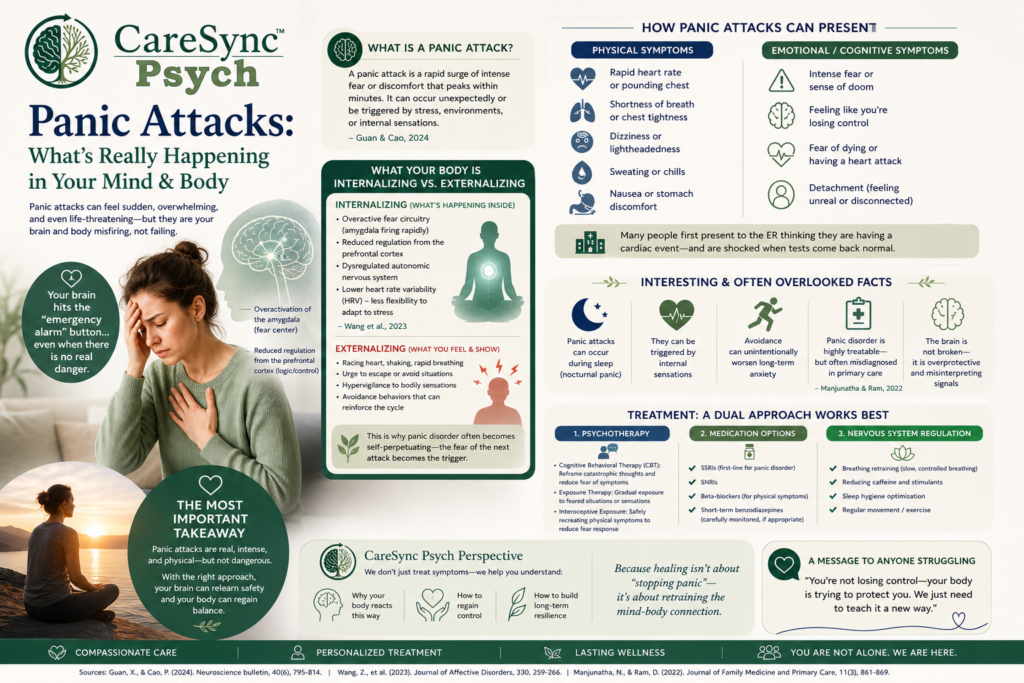
Panic attacks can feel sudden, overwhelming, and even life-threatening—but they are your brain and body misfiring, not failing.

What is a Panic Attack?

A panic attack is a rapid surge of intense fear or discomfort that peaks within minutes. It can occur unexpectedly or be triggered by stress, environments, or internal sensations.

At the neurobiological level, research by Guan & Cao (2024) shows that panic attacks involve hyperactivation of the amygdala (fear center) and dysregulation between the prefrontal cortex (logic/control) and limbic system (emotion).

👉 In simple terms:
Your brain hits the “emergency alarm” button… even when there is no real danger.

Check Out CareSync Psych

How Panic Attacks Can Present

Panic attacks are not “just anxiety”—they are full-body experiences:

Physical symptoms:

  • Rapid heart rate or pounding chest
  • Shortness of breath or chest tightness
  • Dizziness or lightheadedness
  • Sweating or chills
  • Nausea or stomach discomfort

Emotional/cognitive symptoms:

  • Intense fear or sense of doom
  • Feeling like you’re losing control
  • Fear of dying or having a heart attack
  • Detachment (feeling unreal or disconnected)

💡 Many people first present to the ER thinking they are having a cardiac event—and are shocked when tests come back normal.

BOOK AN APPOINTMENT

What Your Body is Internalizing vs. Externalizing

Internalizing (what’s happening inside):

  • Overactive fear circuitry (amygdala firing rapidly)
  • Reduced regulation from the prefrontal cortex
  • Dysregulated autonomic nervous system
  • Lower heart rate variability (HRV)—meaning the body has less flexibility to adapt to stress (Wang et al., 2023)

👉 Low HRV = the nervous system is “stuck” in fight-or-flight mode

Externalizing (what you feel and show):

  • Racing heart, shaking, rapid breathing
  • Urge to escape or avoid situations
  • Hypervigilance to bodily sensations
  • Avoidance behaviors that can reinforce the cycle

This is why panic disorder often becomes self-perpetuating—the fear of the next attack becomes the trigger.

Interesting & Often Overlooked Facts

✨ Panic attacks can occur during sleep (nocturnal panic)
✨ They can be triggered by internal sensations, like slight changes in breathing or heart rate
✨ Avoidance (e.g., skipping places, activities) can unintentionally worsen long-term anxiety
✨ Panic disorder is highly treatable—but often misdiagnosed in primary care (Manjunatha & Ram, 2022)
✨ The brain is not broken—it is overprotective and misinterpreting signals

Anxiety Treatment at CareSync Psych

Understanding Panic Disorder: Breaking the Cycle of Fear

BOOK AN APPOINTMENT

Panic Attacks and Treatment: A Dual Approach Works Best

At CareSync Psych, we focus on treating both the brain AND the body.

1. Psychotherapy (First-Line)

  • Cognitive Behavioral Therapy (CBT):
    Helps reframe catastrophic thoughts and reduce fear of symptoms
  • Exposure Therapy:
    Gradual exposure to feared sensations or situations
  • Interoceptive Exposure:
    Safely recreating physical symptoms (like increased heart rate) to reduce fear response

2. Medication for Panic Disorder

  • SSRIs (first-line for panic disorder)
  • SNRIs
  • Beta-blockers (for physical symptoms)
  • Short-term benzodiazepines (carefully monitored, if appropriate)

Panic attacks are real, intense, and physical—but not dangerous.

With the right approach, your brain can relearn safety and your body can regain balance.

3. Nervous System Regulation with Panic Attacks

  • Breathing retraining (slow, controlled breathing)
  • Reducing caffeine and stimulants
  • Sleep hygiene optimization
  • Regular movement/exercise

The Most Important Takeaway

Panic attacks are real, intense, and physical—but not dangerous.

With the right approach, your brain can relearn safety and your body can regain balance.

BOOK AN APPOINTMENT

CareSync Psych Perspective

We don’t just treat symptoms—we help you understand:

  • Why your body reacts this way
  • How to regain control
  • How to build long-term resilience

Because healing isn’t about “stopping panic”—
it’s about retraining the mind-body connection.

A Message to Anyone Struggling

“You’re not losing control—your body is trying to protect you.
We just need to teach it a new way.”

References

Guan, X., & Cao, P. (2024). Brain mechanisms underlying panic attack and panic disorder.     Neuroscience Bulletin, 40(6), 795–814. https://doi.org/10.1007/s12264-024-01123-3

Manjunatha, N., & Ram, D. (2022). Panic disorder in general medical practice: A narrative   review. Journal of Family Medicine and Primary Care, 11(3), 861–869.   https://doi.org/10.4103/jfmpc.jfmpc_1440_21

Wang, Z., Luo, Y., Zhang, Y., Chen, L., Zou, Y., Xiao, J., … Zou, Z. (2023). Heart rate variability   in generalized anxiety disorder, major depressive disorder and panic disorder: A network   meta-analysis and systematic review. Journal of Affective Disorders, 330, 259–266.   https://doi.org/10.1016/j.jad.2023.02.021

Fluoxetine: Why This “Oldie” is Still a Goody

Fluoxetine: Why This “Oldie” is Still a Goody

Fluoxetine: Why This “Oldie” is Still a Goody

Mental Wellness

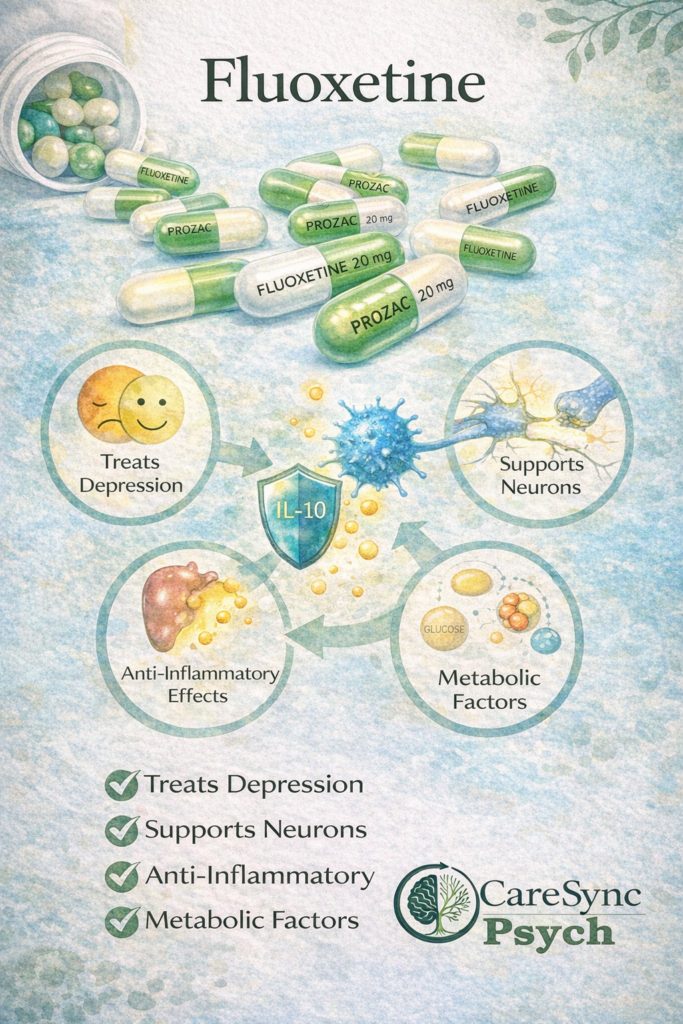
Fluoxetine (commonly known by the brand name Prozac) was first approved in the late 1980s. That means it’s a dinosaur medication in psychiatric terms. However new research reveals that this SSRI may still have biological consequences that are much deeper than just mood management.

Never take online information as an absolute. Do your own research. This post is not medical advise please ask your provider to guide your care

This post is not medical advice. Consult with your medical provider.

Two new studies show that fluoxetine may affect brain health, immunological function, and metabolic resilience. This suggests that the drug may have more therapeutic uses than previously thought.

Fluoxetine and Cognition

A systematic study conducted in 2024 examined the possible involvement of fluoxetine in Alzheimer’s disease and cognitive decline (Bougea et al., 2024).
Researchers discovered that fluoxetine may affect many molecular pathways associated with neurodegeneration:
• Neurogenesis—Fluoxetine may help new neurons grow, especially in the hippocampus, which is an area of the brain that is very important for memory.
• Less neuroinflammation: Long-term inflammation is a big reason why Alzheimer’s disease becomes worse. Fluoxetine seems to change how inflammation works in the brain.
• Amyloid-related pathways – Some studies done before fluoxetine was used on people show that it may affect the mechanisms that lead to amyloid plaque buildup.
• Synaptic plasticity – Fluoxetine may facilitate neuronal transmission by augmenting synaptic signaling.

Although this information does not show that fluoxetine is a medication for Alzheimer’s disease, This study suggests possibilities that the medicine may possess neuroprotective qualities that transcend its use in depression treatment.
(Bougea et al., 2024)

Fluoxetine and the Immune System

A research published in Science Advances in 2025 found something even more shocking. Researchers demonstrated that fluoxetine may boost IL-10–dependent metabolic defense mechanisms, which might help keep organisms alive after sepsis (Gallant et al., 2025). IL-10 is an important anti-inflammatory cytokine that controls immune responses and stops inflammation from becoming too bad.

The research revealed that fluoxetine can:
• turn on immune-metabolic pathways
• boost IL-10 signaling
• enhance resilience to intense inflammatory stress
This indicates that fluoxetine may affect immunological resilience and metabolic defense pathways, broadening its significance beyond psychiatry (Gallant et al., 2025).

What This Means for Mental Health

These findings indicate a broader trend in neuroscience and medicine.
Psychiatric treatments are not only “mood drugs.” They interact with a number of biological systems, such as:

Fluoxetine

Is It Depression—Or Are You Low on Vitamin D? What You Need to Know

Psoriasis, Inflammation, Anxiety & Depression: What the Science Is Teaching Us About the Brain–Body Connection

Psoriasis, Inflammation, Anxiety & Depression: What the Science Is Teaching Us About the Brain–Body Connection

Psoriasis, Inflammation, Anxiety & Depression: What the Science Is Teaching Us About the Brain–Body Connection

A 2025 review by Keenan & Granstein in Acta Physiologica offers a powerful and evolving perspective on mental health: anxiety and depression are not “just in the mind.” They are deeply connected to immune signaling, inflammation, and neurobiological pathways that link the skin, brain, and nervous system.

For those of us practicing modern psychiatry, this research reinforces something we are learning more clearly each year — mental health is systemic.

The Article’s Unique Perspective

Keenan and Granstein (2025) explore how proinflammatory cytokines (such as IL-6, TNF-α, and IL-1β) and neuropeptides (including substance P and CGRP) play roles in:

  • Psoriasis

  • Depression

  • Anxiety

Psoriasis has long been understood as an inflammatory autoimmune skin condition. However, this review highlights how the same inflammatory mediators active in psoriasis are also implicated in mood and anxiety disorders.

This is not coincidence. It is biology.

Cytokines & Mood

Proinflammatory cytokines can:

  • Cross the blood–brain barrier

  • Alter serotonin and dopamine pathways

  • Affect glutamate signaling

  • Activate the HPA axis

  • Increase neuroinflammation

Understanding Glucose Metabolism Disorders & Inflammation

So the result can cause symptoms that look like depression and anxiety — low mood, fatigue, sleep disruption, irritability, brain fog, and heightened stress reactivity.

This helps explain why:

  • Patients with psoriasis have higher rates of depression and anxiety.

  • Patients with chronic inflammatory conditions often report mood symptoms.

  • Traditional antidepressants sometimes only partially address symptoms when inflammation is a driving factor.

Psychiatry Is Expanding: The Brain–Body Model

For decades, psychiatry focused primarily on neurotransmitters. Today, we are integrating:

  • Immunology

  • Endocrinology

  • Gut-brain signaling

  • Metabolic health

  • Stress physiology

This article reinforces the concept of psychoneuroimmunology — the dynamic communication between the nervous system, immune system, and endocrine system.

At CareSync Psych, we believe in treating the whole-person, no just mental health.

Mental health is not separate from:

  • Autoimmune conditions

  • Hormonal shifts

  • Metabolic dysfunction

  • Chronic stress

  • Inflammatory load

The brain and body are in constant dialogue.

Why This Matters for Anxiety & Depression Treatment

Understanding inflammation’s role opens doors to more comprehensive treatment planning, including:

  • Lifestyle interventions that reduce inflammatory burden

  • Nutrition strategies that support immune regulation

  • Sleep optimization

  • Stress-response regulation

  • Thoughtful medication selection

  • Targeted lab evaluation when clinically appropriate

This does not mean inflammation causes all cases of depression or anxiety. However, it does mean that being to narrow or ignoring the body misses part of the story.

Anxiety Treatment at CareSync Psych

A Whole-Person Approach in Psychiatry

At CareSync Psych in Lakeland, Florida, we embrace this evolving science. We practice psychiatry with a brain-body framework, integrating:

  • Evidence-based medication management

  • Therapy and psychoeducation

  • Metabolic and lifestyle considerations

  • Personalized treatment planning

We are licensed to provide psychiatric care in:

  • Florida (FL)

  • Iowa (IA)

Telehealth available throughout Florida and Iowa.
Arizona (AZ) and Washington (WA) licensure pending.

If you are struggling with anxiety, depression, autoimmune symptoms, or stress-related flares, know this:

Your symptoms are not a personal failure. They may reflect complex biological signaling — and that means there are multiple pathways toward healing.

The Future of Mental Health Care

Research like Keenan & Granstein (2025) continues to move psychiatry forward. We are no longer separating skin from brain, immune system from mood, or stress from physiology.

The future of mental health care is integrative.

And it is already here.

CareSync Psych
Psychiatric Medication Management | Therapy | Brain-Body Mental Health
Lakeland, FL
Serving Florida & Iowa via telehealth
Arizona & Washington pending licensure

If you’re searching for:

  • Psychiatric provider in Lakeland FL

  • Anxiety treatment in Florida

  • Depression care in Iowa

  • Integrative psychiatry near me

  • Brain-body mental health care

We’re here to help.

Anxiety Treatment at CareSync Psych

Anxiety Treatment at CareSync Psych

Anxiety Disorder Treatment in Florida: Therapy, Medication, and Proven Self-Help Strategies

Anxiety disorders are among the most common mental health conditions in Florida, affecting adults, adolescents, and professionals juggling high stress, family demands, and fast-paced lifestyles. While anxiety can feel overwhelming and persistent, effective treatment is available, and most people improve significantly with the right combination of care.

At CareSync Psych, In Lakeland, Florida , we provide evidence-based anxiety treatment across Florida through medication management, therapy collaboration, and practical self-help strategies designed to calm the nervous system and restore confidence.

Anxiety isn’t a personal failure.

It’s a nervous system stuck in overdrive.

At CareSync Psych, we specialize in treating panic disorder, social anxiety, and OCD with care that goes deeper than symptom checklists or rushed prescriptions.

Panic attacks can make your body feel unsafe.
Social anxiety can quietly shrink your world.
OCD can trap you in exhausting cycles of fear, doubt, and control.

And when these conditions are misunderstood or minimized, the impact can be devastating.

💙 Our approach is different
We combine:


    • Specialized psychiatric care for anxiety and OCD
    • Thoughtful, individualized medication management
    • Therapy-informed treatment planning
    • A nervous-system-focused, mind–body approach

Progress isn’t just “fewer symptoms.”
It’s feeling calmer in your body, more confident in your life, and more in control when anxiety shows up.

 ✨ CareSync Psych helps adults struggling with panic disorder, social anxiety, and OCD regain calm and clarity through personalized, evidence-based psychiatric care.

If anxiety has been running your life—or quietly limiting it—you don’t have to navigate this alone.

CareSync Psych has treatment for anxiety in Lakeland, Florida


Panic disorder feels frightening—but it is treatable.
Anti-anxiety medications, therapy, and self-help strategies can work together to restore calm and confidence.

You don’t have to live in fear of the next panic attack.

Support is available—and recovery is possible.


📍 Anxiety Treatment in Florida | Self-pay & insurance options
📅 Now accepting new patients

Specializing In

How Anxiety Feels in the Body and Mind

Anxiety is not just mental—it is deeply physiological.

People with anxiety often experience:

  • Racing thoughts or constant worry

  • Rapid heart rate or chest tightness

  • Shortness of breath

  • Muscle tension

  • Restlessness or agitation

  • GI discomfort or nausea

  • Fatigue and poor sleep

Many people seek medical care first, believing something is physically wrong—because anxiety can feel that intense.

What Are Anxiety Disorders?

Anxiety disorders involve excessive fear, worry, or nervous system activation that interferes with daily life. Unlike everyday stress, anxiety disorders persist even when no immediate danger is present.

Common anxiety disorders treated in Florida include:

  • Generalized Anxiety Disorder (GAD)

  • Panic Disorder

  • Social Anxiety Disorder

  • Obsessive-Compulsive Disorder (OCD)

  • Health Anxiety

  • Trauma-related anxiety

Understanding Panic Disorder: Breaking the Cycle of Fear

Anxiety Treatment in Florida: Why Medication + Therapy Works Best

Research consistently shows that combining medication with psychotherapy leads to better outcomes than either alone for moderate to severe anxiety.

How Therapy Helps Anxiety

Therapy—especially Cognitive Behavioral Therapy (CBT)—helps by:

  • Teaching how anxiety works

  • Reducing catastrophic thinking

  • Gradually facing feared sensations or situations

  • Building long-term coping skills

Therapy retrains how the brain interprets threat.

Anxiety Treatment in with Anti-Anxiety Medications

Medication can help quiet the nervous system, making therapy and self-help strategies more effective.

Anti-anxiety medications:

  • Reduce baseline anxiety

  • Decrease panic symptoms

  • Improve emotional regulation

Medication Management for Mental Health

Medication is always personalized—there is no one-size-fits-all approach.

Read More

Social Anxiety

Social Anxiety

Why Social Anxiety Flares During the Holidays: What the Research Tells Us

http://www.caresyncpsych.com

The holiday season is painted as a time of warmth, gatherings, and joyful connection. But for people living with social anxiety disorder (SAD), this time of year can feel especially overwhelming. Increased social expectations, crowded environments, and pressure to perform emotionally often collide with the core symptoms of social anxiety—leaving many feeling drained, ashamed, or even fearful.

Two major research findings help us understand why the holidays can be such a triggering time.


1. Shame Deepens Social Anxiety

Swee, Hudson, & Heimberg (2021) found that shame plays a powerful role in the experience of social anxiety—more than many people realize. Shame fuels the belief that “there’s something wrong with me” or “I’m not good enough,” making social interactions feel threatening.

During the holidays, shame can intensify because:

  • There are more opportunities for comparison

  • Family gatherings may resurface old insecurities

  • People feel pressure to appear happy or confident

  • Comments about appearance, lifestyle, or achievements can sting

Shame becomes a lens that distorts interactions. A small awkward moment—forgetting someone’s name, stumbling over words, or feeling out of place—can spiral into deep self-criticism. This emotional layer makes holiday events feel less like celebrations and more like tests.

http://www.caresyncpsych.com


2. Social Anxiety Changes How the Brain Processes Faces

One of the most striking insights from Günther et al. (2021) is that people with social anxiety perceive and process emotional faces differently. Eye-tracking studies show that individuals with SAD often:

  • avoid looking directly at faces

  • especially avoid eyes

  • hyper-focus on negative or threatening expressions

  • interpret neutral expressions as negative

  • scan their environment for signs of rejection or disapproval

Imagine walking into a holiday party with these heightened patterns. Every glance feels loaded. Neutral faces appear judgmental. Your brain is working overtime, trying to detect threat in a room full of people who may not be thinking about you at all.

This hypervigilance is exhausting—and it’s a big reason holiday gatherings feel so intense.


3. The Holiday Environment Amplifies These Vulnerabilities

When shame and hyper-attuned threat perception collide with holiday expectations, people with social anxiety experience:

• Fear of judgment

Everything—from how you look in photos to what you bring to the potluck—can feel like it’s being evaluated.

• Anticipatory anxiety

Worrying for days or weeks before family gatherings or work parties.

• Rumination after events

Replaying conversations and perceived mistakes long after everyone else has moved on.

• Physical symptoms

Racing heart, sweating, trembling, nausea, or feeling frozen when entering crowded spaces.

• Social exhaustion

Because the brain never turns off its “threat scanning” mode, social events drain energy quickly.

http://www.caresyncpsych.com


4. You’re Not Alone—And Your Experience Is Valid

If holiday gatherings make you feel tense, self-conscious, or overwhelmed, you’re not “being dramatic.” You’re responding to an environment that intensifies patterns already linked to social anxiety.

The research affirms what many people feel but can’t always explain:
Your brain processes social cues differently—and that’s why this season may feel harder for you.


5. How CareSync Psych Supports You Through the Season

Whether you’re navigating mild social discomfort or living with significant social anxiety, support is available:

  • Evidence-based therapy (CBT, exposure therapy, mindfulness-based approaches)

  • Medication management when needed

  • Coaching on boundaries, pacing, and communication

  • Skills for managing shame and reducing self-criticism

  • Strategies for recovering emotionally after social events

You don’t have to push yourself past your limits—or avoid everything altogether. There is a middle ground, and we can help you find it.

www.caresyncpsych.com

Obsessive-Compulsive Disorder (OCD)

Obsessive-Compulsive Disorder   (OCD)

Obsessive–Compulsive Disorder (OCD): A Whole-Person Guide

CareSync Psych Blog 

For More Info Visit CareSync Psych at www.caresyncpsych.com

Obsessive–Compulsive Disorder (OCD) is not a personality quirk or a preference for neatness—it’s a neuropsychiatric condition marked by intrusive, distressing thoughts (obsessions) and repetitive behaviors or mental acts (compulsions) performed to reduce anxiety. Untreated, OCD can consume hours each day; treated, it is highly manageable with the right combination of therapy and, when appropriate, medication (Curtiss et al., 2021; Singh et al., 2023).


What OCD Is—In Plain Language

  • Obsessions: Unwanted thoughts, images, or urges (e.g., “What if I harmed someone?” “What if this is contaminated?”).

  • Compulsions: Behaviors or mental rituals done to feel safer or “just right” (washing, checking, praying, counting, neutralizing thoughts). Relief is temporary, which keeps the cycle going.


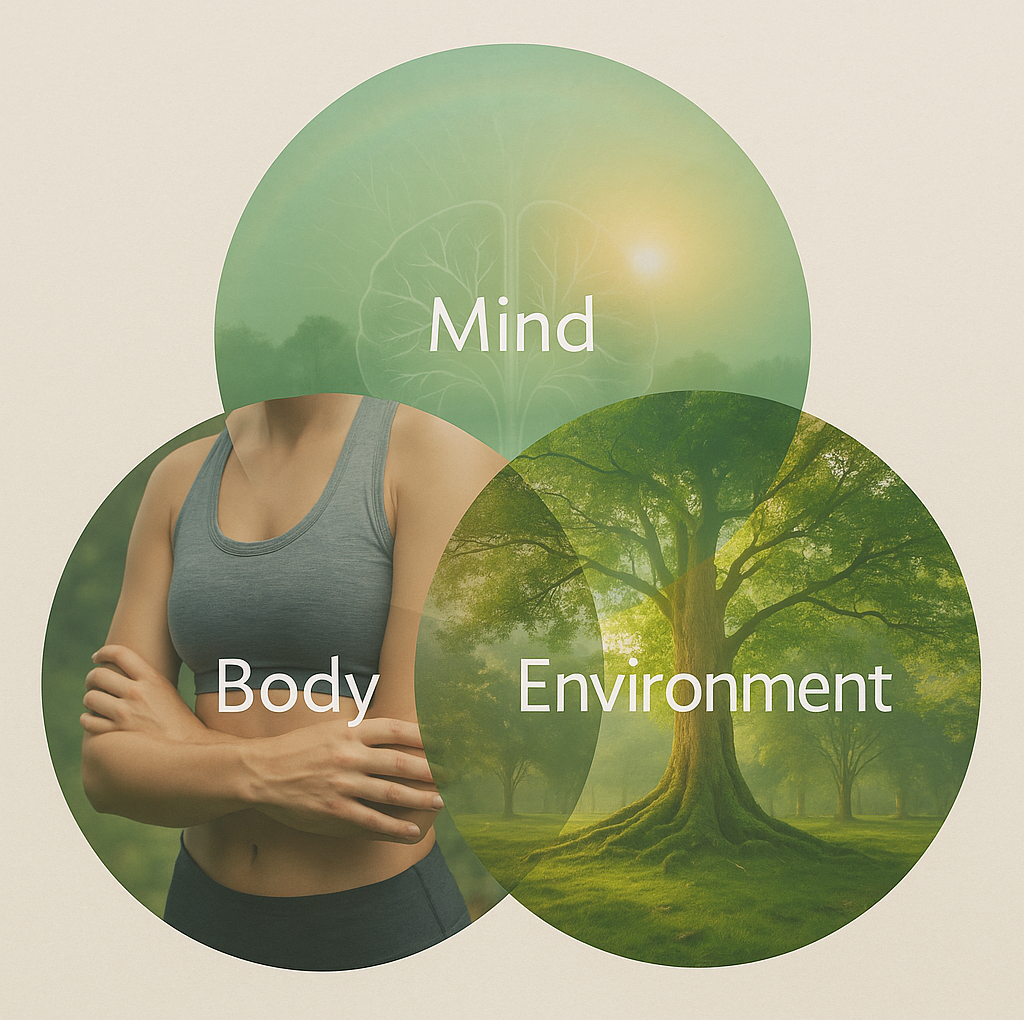
The Three Lenses: Biology, Psychology, and Environment

1) Biology (Brain & Body)

  • Circuits: In OCD, fronto-striatal-thalamic networks (e.g., orbitofrontal cortex, anterior cingulate, caudate) show dysregulated error-detection and habit loops, which can over-signal that “something is wrong” (Jalal, Chamberlain, & Sahakian, 2023).

  • Neurochemistry: Serotonergic systems (and often glutamatergic/dopaminergic modulation) are implicated—why SSRIs and clomipramine can help reduce symptom severity (Singh et al., 2023).

2) Psychology (How the Mind Interprets)

  • Cognitive style: Inflated responsibility (“If I don’t check, something bad will happen”), intolerance of uncertainty, perfectionism, and thought-action fusion (“Thinking it is as bad as doing it”) maintain obsessions and drive rituals (Curtiss et al., 2021).

  • Behavioral loops: Compulsions and safety behaviors reduce distress short-term, unintentionally “teaching” the brain that obsessions are dangerous—so they rebound stronger.

3) Environment (Context Matters)

  • Stress & learning: Stressful events, family accommodation (others assisting rituals), and critical/high-expressed-emotion environments can worsen symptoms (Singh et al., 2023).

  • Comorbidity: Anxiety disorders, depression, and tic-related conditions are common and can shape presentation and treatment planning (Singh et al., 2023).


How OCD Manifests (It’s Not Just Cleaning)

Common Symptom Dimensions

  • Contamination/Illness → washing, sanitizing, testing, reassurance seeking

  • Harm/Responsibility → checking stoves/locks, mental review of past actions

  • Symmetry/“Just-Right” → arranging, repeating until the feeling clicks

  • Forbidden/Taboo Thoughts (sexual, violent, blasphemous) → covert neutralizing, avoidance of triggers

  • Hoarding/Saving → difficulty discarding due to feared loss/consequence

Hidden Compulsions (Easy to Miss)

Compulsions aren’t always visible. Many are covert or cognitive, including:

  • Mental rituals: Replaying, counting, praying, “canceling” bad thoughts

  • Reassurance seeking: “Are you sure I didn’t offend them?”—by text, Google, or loved ones

  • Avoidance & safety behaviors: Not touching doorknobs, avoiding news, steering clear of people/places that trigger obsessions.

    • Importantly, avoidance in OCD functions as a compulsion—a ritual to reduce distress. While avoidance is also common in PTSD, in OCD it’s part of the obsession-compulsion feedback loop rather than a trauma cue response; clinically, it’s targeted like any other ritual in treatment (Curtiss et al., 2021).


Book an Appointment

Diagnosis At-a-Glance

  • Core features: Time-consuming obsessions/compulsions, significant distress, functional impairment.

  • Rule-outs: Differentiate from generalized anxiety, psychotic disorders, autism/ADHD-related rigidity, and trauma-related conditions (Singh et al., 2023).

  • Specifiers: Insight level (good/fair, poor, absent), tic-related.


What Actually Helps: Evidence-Based Care

1) CBT with Exposure and Response Prevention (ERP) — First-Line

  • How it works: Gradual, therapist-guided exposures to feared triggers without performing rituals. Over time, the brain relearns safety; anxiety peaks and then naturally falls.

  • Targets visible and hidden rituals: ERP addresses mental compulsions and avoidance directly (response prevention).

  • Skills add-ons: Cognitive restructuring, uncertainty tolerance, mindfulness, and relapse-prevention plans (Curtiss et al., 2021).

2) Medication — Often Alongside ERP

  • SSRIs (e.g., fluoxetine, sertraline, fluvoxamine, paroxetine, escitalopram) and clomipramine have the strongest evidence; OCD often requires higher doses and longer trials than depression/anxiety (Singh et al., 2023).

  • Augmentation: For partial responders, options may include low-dose antipsychotic augmentation or glutamatergic strategies under specialist care (Singh et al., 2023).

  • Why combine? Medication can lower baseline anxiety and obsessional intensity, making ERP more doable and durable (Curtiss et al., 2021).

3) Whole-Person Supports (CareSync Psych Approach)

  • Family work: Reduce accommodation and coach supportive responses.

  • Lifestyle & metabolic health: Sleep, exercise, nutrition, and stress-regulation improve cognitive control and therapy engagement.

  • Digital/at-home ERP tools: Between-session tracking, trigger hierarchies, and structured practice sustain momentum.


Book an appointment

Prognosis: OCD Is Treatable

With ERP/CBT, appropriate medication, and consistent practice, most people experience substantial reduction in symptoms and reclaim time, energy, and freedom. Setbacks happen; with relapse-prevention skills and a collaborative plan, progress is maintainable (Curtiss et al., 2021; Singh et al., 2023).


Key Takeaways

  • OCD is a brain-based, behavior-maintained condition shaped by biology, psychology, and environment.

  • Compulsions can be invisible (mental rituals, reassurance seeking) and avoidance acts like a ritual in OCD.

  • ERP/CBT and SSRIs/clomipramine are gold-standard treatments; many benefit from both.

  • With skilled care and practice, OCD is highly manageable—recovery is realistic.


References

  • Curtiss, J. E., Levine, D. S., Ander, I., & Baker, A. W. (2021). Cognitive-behavioral treatments for anxiety and stress-related disorders. Focus, 19(2), 184–189.

  • Jalal, B., Chamberlain, S. R., & Sahakian, B. J. (2023). Obsessive-compulsive disorder: Etiology, neuropathology, and cognitive dysfunction. Brain and Behavior, 13(6), e3000.

  • Singh, A., Anjankar, V. P., & Sapkale, B. (2023). Obsessive-compulsive disorder (OCD): A comprehensive review of diagnosis, comorbidities, and treatment approaches. Cureus, 15(11).

Glucose and Neuroinflammation

Glucose and Neuroinflammation

Glucose and Hypometabolism

Cerebral glucose hypometabolism refers to a reduction in the brain’s ability to metabolize glucose, the primary source of neuronal energy. Because neurons have limited capacity for energy storage, consistent glucose supply is essential for proper cognitive, emotional, and behavioral function. When metabolism slows, neurons become less active, leading to impaired neurotransmission, synaptic plasticity, and overall brain performance — even before structural damage occurs.


🔬 Pathophysiology

Glucose metabolism in the brain occurs primarily through aerobic glycolysis, producing ATP to fuel neuronal signaling. When this process falters — whether due to mitochondrial dysfunction, neuroinflammation, insulin resistance, or oxidative stress — regions of the brain exhibit hypometabolism on FDG-PET (fluorodeoxyglucose positron emission tomography) scans.

Mechanisms contributing to cerebral hypometabolism include:

  • Mitochondrial dysfunction: decreased ATP synthesis impairs neuronal signaling.
  • Neuroinflammation: cytokines disrupt insulin and glucose pathways.
  • Brain insulin resistance: glucose uptake is blunted despite normal peripheral insulin levels.
  • Oxidative stress: damages neuronal membranes and enzymes critical for metabolism.

🧩 Clinical Correlations

Cerebral glucose hypometabolism is observed across neuropsychiatric and neurodegenerative disorders, with distinct regional patterns:

Condition Commonly Affected Regions Clinical Correlates
Alzheimer’s Disease Posterior cingulate, parietotemporal cortex Early memory loss and executive dysfunction
Frontotemporal Dementia Frontal and anterior temporal lobes Behavioral disinhibition, apathy
Major Depressive Disorder Dorsolateral prefrontal cortex, anterior cingulate Impaired concentration, emotional regulation
Schizophrenia Frontal and temporal regions Executive dysfunction, cognitive impairment
Bipolar Disorder Frontal, limbic circuits Mood instability, impulsivity
Traumatic Brain Injury Site-specific Cognitive slowing, emotional dysregulation

In psychiatry, hypometabolism often reflects neural circuit inefficiency rather than cell loss. For instance, decreased glucose utilization in the prefrontal cortex may explain poor emotional regulation in depression or executive dysfunction in schizophrenia.


⚕️ Integrative and Metabolic Psychiatry Perspective

At CareSync Psych, cerebral glucose hypometabolism underscores the mind-body connection — illustrating how metabolic and psychiatric processes intertwine. Emerging research links metabolic dysfunction (e.g., insulin resistance, obesity, chronic inflammation) with neuropsychiatric symptoms, suggesting that improving systemic metabolism may also enhance brain energy and mood stability.

Therapeutic approaches that can help restore cerebral metabolism include:

  • Lifestyle interventions: balanced nutrition, exercise, restorative sleep.
  • Nutritional psychiatry: ketogenic or low-glycemic diets supplying ketones as alternate brain fuel.
  • Pharmacologic supports: metformin, GLP-1 receptor agonists, and mitochondrial antioxidants (e.g., CoQ10).
  • Psychotherapy and mindfulness: reducing stress-driven cortisol spikes that impair glucose utilization.

🌿 Clinical Implications and Future Directions

  • FDG-PET imaging remains the gold standard to detect regional hypometabolism.
  • Metabolic psychiatry is reframing depression, anxiety, and cognitive decline as partly bioenergetic disorders.
  • Addressing glucose dysregulation early may prevent progression of cognitive and emotional disorders.
  • Future research aims to integrate metabolic biomarkers into psychiatric diagnostics and personalized treatment plans.

🧾 References (APA 7th Edition)

  • Butterfield, D. A., & Halliwell, B. (2019). Oxidative stress, dysfunctional glucose metabolism, and Alzheimer disease. Nature Reviews Neuroscience, 20(3), 148–160. https://doi.org/10.1038/s41583-019-0132-6
  • Cunnane, S. C., Trushina, E., Morland, C., Prigione, A., Casadesus, G., Andrews, Z. B., … & Mattson, M. P. (2020). Brain energy rescue: An emerging therapeutic concept for neurodegenerative disorders of ageing. Nature Reviews Drug Discovery, 19(9), 609–633. https://doi.org/10.1038/s41573-020-0072-x
  • Mosconi, L., Berti, V., Glodzik, L., Pupi, A., De Santi, S., & de Leon, M. J. (2010). Pre-clinical detection of Alzheimer’s disease using FDG-PET, with or without amyloid imaging. Journal of Alzheimer’s Disease, 20(3), 843–854. https://doi.org/10.3233/JAD-2010-091504
  • Rasgon, N. L., & McEwen, B. S. (2016). Insulin resistance—a missing link no more. Molecular Psychiatry, 21(12), 1648–1652. https://doi.org/10.1038/mp.2016.163
  • Tomasi, D., & Volkow, N. D. (2019). Associations between brain activation, glucose metabolism, and psychiatric symptoms in major depressive disorder. Molecular Psychiatry, 24(12), 1672–1680. https://doi.org/10.1038/s41380-018-0262-9
  • Zhang, X., Chen, W., Li, J., Zhang, Y., & Xu, Y. (2021). Brain glucose hypometabolism and psychiatric disorders: A review of mechanisms and therapeutic perspectives. Frontiers in Psychiatry, 12, 700–714. https://doi.org/10.3389/fpsyt.2021.700714
  • 1
  • 2
  • Next

We are an outpatient mental health care provider committed to integrating evidence-based treatment with a holistic, healing-centered approach to promote mental wellness. Our patient-focused services include medication management, psychotherapy, metabolic psychiatry,  and wellness optimization.

“Providing compassionate mental health care by syncing the mind and body—treating the psychological with the physiological.”

Recent Posts

  • How Nature Supports Mental Health and Stress Reduction | CareSync Psych
  • The Power of the Unconscious | Mental Health Growth and Self-Awareness | CareSync Psych
  • Group Psychology Can Change Society
  • Why Propranolol Is One of My Favorite Medications in Psychiatry
  • Evidence Over Fear: Understanding Antidepressant Withdrawal
  • Home
  • About Us
  • Services
  • Book An Appointment
  • Contact Us
  • Weight Loss Management & Control
  • Immunity & Mental Health
  • Food Addiction & Binge Eating
  • Free Mental Health Worksheets to Download

Copyright ©2026 all rights reserved
CareSync™ Health