Call us (863) 858-5554
HealthFlex
×
  • Home
  • About Us
    • Check Your Coverage
    • Insurance & Self-pay Options
    • Client-Centered Therapy
    • Crisis and After-Hours Care
    • Privacy Policy
  • Specializing In
    • Specializing In
    • Metabolic Psychiatry
    • Weight Management & Binge Eating
  • Services
    • Services
    • Medication Management for Mental Health
    • Telehealth
    • Client-Centered Therapy
    • Metabolic Psychiatry
  • Book An Appointment
  • Contact Us

The Power of the Unconscious | Mental Health Growth and Self-Awareness | CareSync Psych

The Power of the Unconscious | Mental Health Growth and Self-Awareness | CareSync Psych

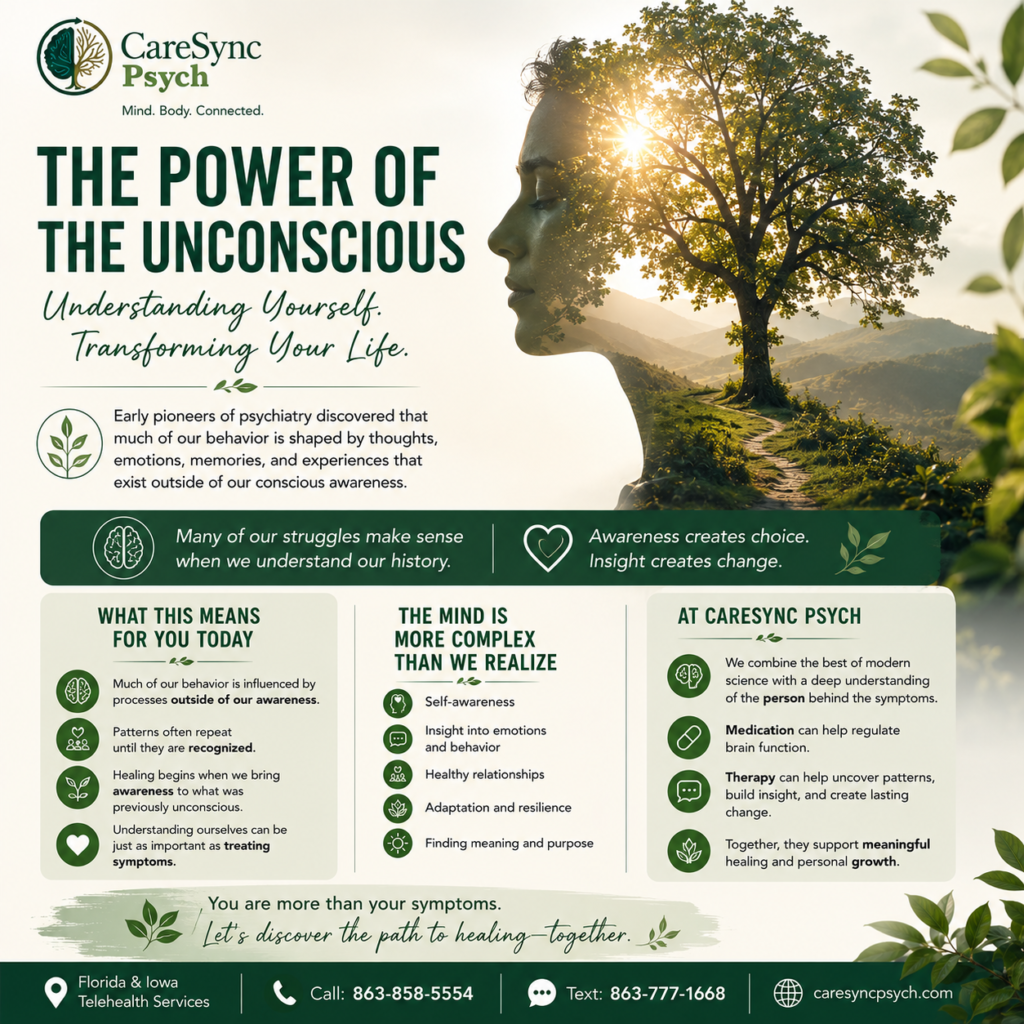
Modern psychiatry often focuses on neurotransmitters, medications, and evidence-based therapies—but long before brain scans and psychopharmacology, pioneers of dynamic psychiatry were asking a different question:

"Why do we think, feel, and behave the way we do?"

One of the most interesting themes from this work is the idea that much of human behavior is influenced by processes occurring outside of conscious awareness. Long before modern neuroscience confirmed that many brain functions occur automatically, clinicians observed that unresolved experiences, beliefs, conflicts, and emotions could shape thoughts, relationships, and even physical symptoms.

Book an Appointment Using Insurance 

Learn More About Our Services

Affordable Self-Pay Options

Telehealth Options (FL, WA, IA)

 Sometimes our reactions make sense when we understand our history.

What Does This Mean Today?

While modern psychiatry has advanced tremendously, the core insight remains relevant:

Understanding ourselves can be just as important as treating symptoms.

🧠 The Mind Remembers What We Don’t Always See

Modern psychiatry has come a long way, but one truth still matters:
healing often begins when we understand the story behind our symptoms.

✨

Your Reactions Have Roots

Sometimes the way we respond today makes sense when we understand what we’ve been through.

🔁

Patterns Repeat Until They’re Seen

Relationship struggles, anxiety loops, and coping habits often shift once we recognize them.

🌱

Awareness Creates Change

Healing begins when hidden thoughts, emotions, and experiences come into the light safely.

💚

You Are More Than Symptoms

Understanding yourself can be just as important as treating anxiety, depression, or stress.

Many people enter treatment believing they simply need to “stop feeling anxious” or “get rid of depression.” While symptom relief is important, meaningful growth often comes from discovering deeper patterns involving self-worth, relationships, attachment, trauma, and coping strategies.

The Mind Is More Complex Than We Realize

Ellenberger’s work reminds us that mental health is not simply the absence of symptoms. It involves:

🧠 Self-awareness
💬 Insight into emotions and behavior
🤝 Healthy relationships
🌿 Adaptation and resilience
❤️ Finding meaning and purpose

 Healing begins when we bring awareness to what was previously unconscious.

At CareSync Psych

We believe effective mental health care combines the best of modern science with a genuine understanding of the person behind the symptoms.

Medication may help regulate brain function. Therapy can help uncover patterns, build insight, and create lasting change. Together, they can support meaningful healing and personal growth.

Because sometimes the most important discoveries are not made in a laboratory—they are made within ourselves.

Book an Appointment Using Insurance 

Learn More About Our Services

Affordable Self-Pay Options

Telehealth Options (FL, WA, IA)

Patterns often repeat until they are recognized.  

What if some of the most important influences on your life operate outside of your awareness?

Henri Ellenberger’s The Discovery of the Unconscious explores how pioneers of psychology and psychiatry helped uncover the hidden forces that shape thoughts, emotions, relationships, and behavior.

Many struggles aren’t signs of weakness—they may be patterns developed to adapt, survive, or cope.

Through therapy, self-reflection, and evidence-based treatment, those patterns can become opportunities for growth.

✨ Awareness creates choice.
✨ Insight creates change.
✨ Healing starts with understanding.

Group Psychology Can Change Society

Group Psychology Can Change Society

In today’s world, people are more connected digitally than at any other point in history—yet many individuals feel increasingly anxious, polarized, isolated, and emotionally overwhelmed.

Two influential works that explore these dynamics are:

The Psychology of Totalitarianism by Mattias Desmet and Group Psychology and the Analysis of the Ego by Sigmund Freud.

Although written generations apart, both books explore an important psychological question:

At CareSync Psych, we believe psychological insight can empower individuals to better understand themselves, their relationships, and the world around them.

Without self-awareness, people may mistake emotional intensity for truth.

How does group influence shape individual thinking, emotions, identity, and behavior?

The Human Need for Belonging

Humans are social beings. We naturally seek:

  • Connection
  • Meaning
  • Identity
  • Safety
  • Community

When people feel disconnected, fearful, uncertain, or emotionally distressed, group dynamics can become incredibly powerful.

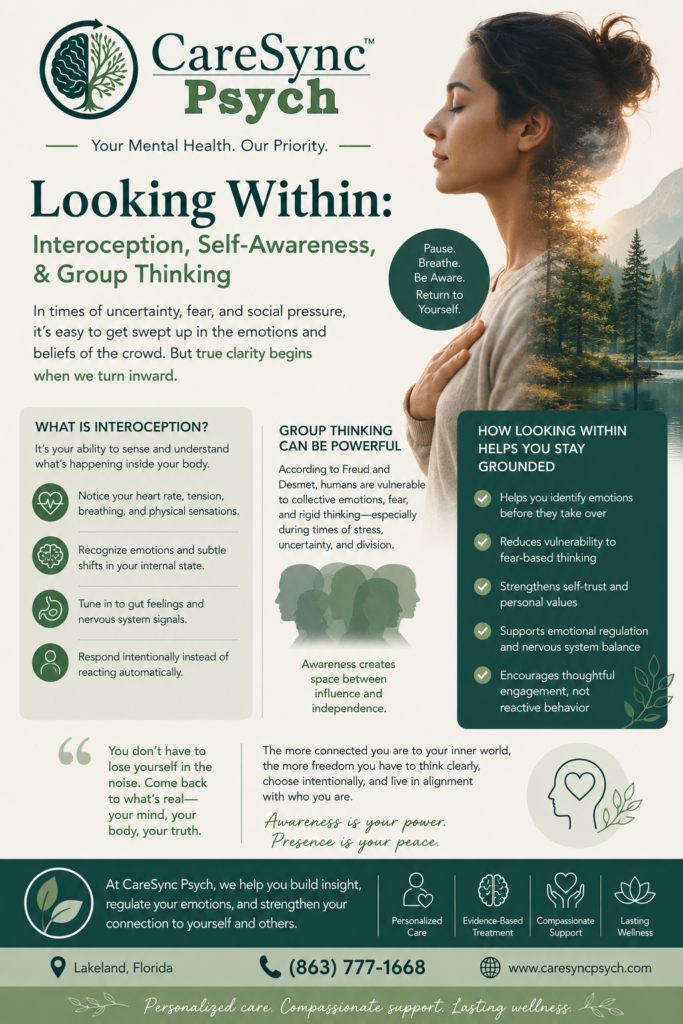
Freud discussed how individuals in groups may unconsciously shift parts of their identity toward the group itself, sometimes leading emotions and collective thinking to overpower individual reasoning.

Desmet expands on this concept by exploring how fear, chronic stress, loneliness, uncertainty, and social fragmentation may increase susceptibility to rigid collective thinking and emotional contagion.

Mental health does not exist in isolation from society.

When individuals are chronically stressed, isolated, sleep-deprived, overstimulated, or emotionally dysregulated, they may become more vulnerable to external emotional influence and black-and-white thinking.

Chronic stress, fear, social division, and constant exposure to emotionally charged information can affect:

  • Anxiety levels
  • Emotional regulation
  • Critical thinking
  • Relationships
  • Sense of identity
  • Nervous system activation

Many people today report feeling:

  • Emotionally exhausted
  • Hypervigilant
  • Disconnected
  • Angry or fearful
  • Overstimulated by media and social conflict

Understanding group psychology can help individuals become more aware of:
✔ Emotional influence
✔ Cognitive bias
✔ Fear-based thinking
✔ Social pressure
✔ Identity and belonging needs
✔ The impact of chronic societal stress on mental health

At CareSync Psych, we believe psychological insight can empower individuals to better understand themselves, their relationships, and the world around them.

Without self-awareness, people may mistake emotional intensity for truth.

Awareness Is Protective

Awareness can help people:

  • Pause before reacting emotionally
  • Think more independently
  • Build healthier relationships
  • Reduce black-and-white thinking
  • Stay grounded during uncertainty
  • Strengthen emotional resilience

Mental wellness includes not only caring for ourselves individually, but also understanding the environments and systems that influence how we think, feel, and relate to others.

Social Anxiety

Understanding Political Beliefs & The Psychology of Politics

Understanding Panic Disorder: Breaking the Cycle of Fear

Humans are neurologically wired for connection. Emotions spread socially.

When emotions run high in groups, people may:

  • React impulsively
  • Adopt beliefs without reflection
  • Feel pressured to conform
  • Seek safety in certainty
  • Lose connection with their individual emotional awareness

This is where introspection and interoception become deeply important.

The ability to ask ourselves:

  • “What am I actually feeling right now?”
  • “Is this fear mine, or am I absorbing collective fear?”
  • “Am I reacting emotionally or thoughtfully?”
  • “What is happening in my body as I consume this information?”
  • “Am I grounded, or emotionally overwhelmed?”

can create space between emotional contagion and conscious decision-making.

The more connected we become to our inner world, the less likely we are to lose ourselves completely in external noise.

At CareSync Psych, we believe psychological insight can empower individuals to better understand themselves, their relationships, and the world around them.

The Nervous System and Emotional Contagion

Fear spreads.
Anger spreads.
Panic spreads.
Calm spreads too.

At CareSync Psych, we believe emotional insight and self-awareness are essential components of mental wellness

When individuals are chronically stressed, isolated, sleep-deprived, overstimulated, or emotionally dysregulated, they may become more vulnerable to external emotional influence and black-and-white thinking.

References Desmet, M. (2022). The psychology of totalitarianism. Chelsea Green Publishing. Freud, S., & Strachey, J. (2024). Group psychology and the analysis of the ego: Illustrated & psychology glossary & index added inside. E-Kitap Projesi & Cheapest Books.

Evidence Over Fear: Understanding Antidepressant Withdrawal

Evidence Over Fear: Understanding Antidepressant Withdrawal

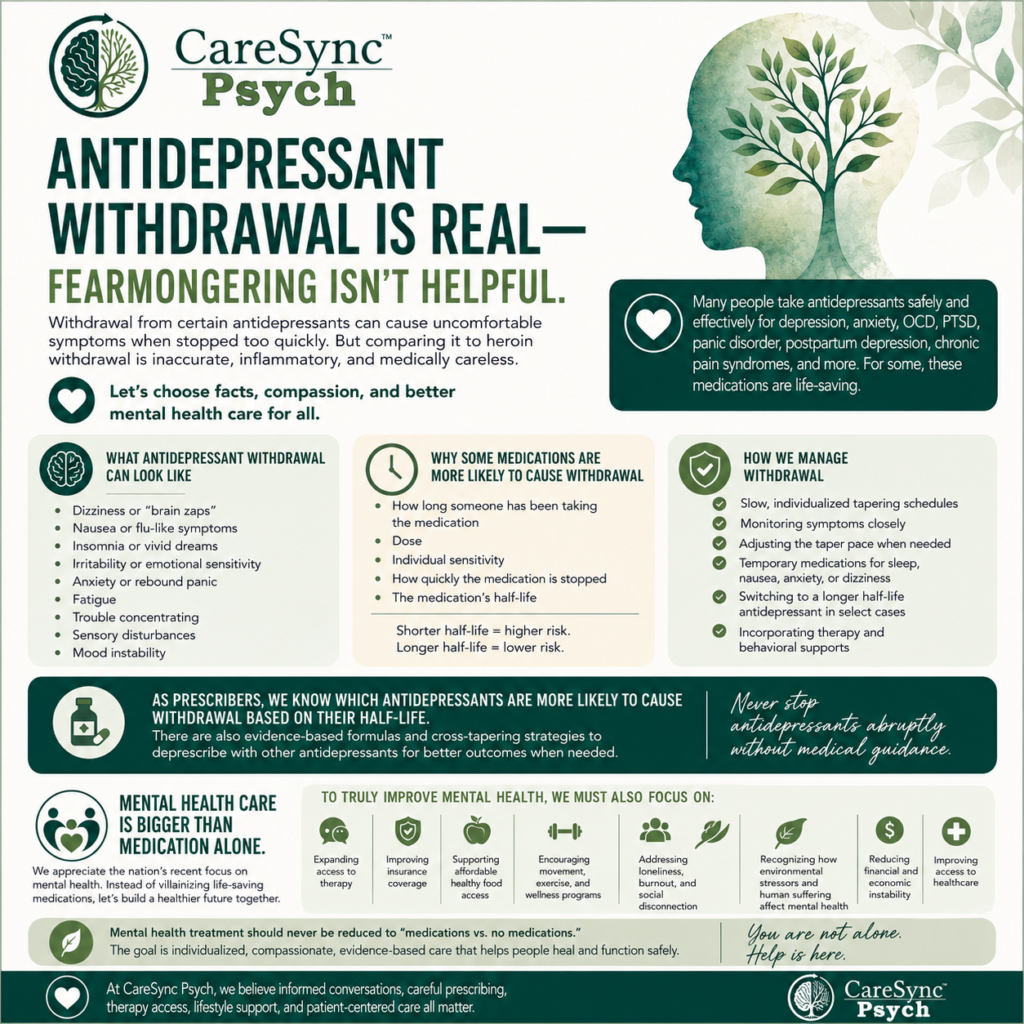
Antidepressant withdrawal is real, clinically recognized, and something responsible prescribers take seriously. Research over the last several years has shown that stopping certain antidepressants too quickly can lead to significant discontinuation symptoms in some individuals, especially with medications that have shorter half-lives.

At the same time, comparing antidepressant withdrawal to heroin withdrawal is medically inaccurate, inflammatory, and potentially harmful. These are fundamentally different substances with different mechanisms, risks, and patterns of dependence. Oversimplified comparisons can increase fear, stigma, and misinformation — especially for patients who genuinely benefit from treatment.

Many people take antidepressants safely and effectively for depression, anxiety, OCD, PTSD, panic disorder, postpartum depression, chronic pain syndromes, and other conditions. For some, these medications are life-saving.

What antidepressant withdrawal can look like:

  • Dizziness or “brain zaps”
  • Nausea or flu-like symptoms
  • Insomnia or vivid dreams
  • Irritability or emotional sensitivity
  • Anxiety or rebound panic
  • Fatigue
  • Trouble concentrating
  • Sensory disturbances
  • Mood instability

Withdrawal risk often depends on:

  • How long someone has been taking the medication
  • Dose
  • Individual sensitivity
  • How quickly the medication is stopped
  • The medication’s half-life

As prescribers, we know some antidepressants are much more likely to cause discontinuation symptoms than others. Medications with shorter half-lives are generally associated with higher withdrawal risk, while medications with longer half-lives tend to leave the body more gradually and may be easier to taper. Evidence-based deprescribing strategies, cross-tapering approaches, and individualized taper schedules can significantly reduce discomfort and improve outcomes.

This is why antidepressants should never be abruptly stopped without medical guidance.

Services

Weight Loss Management & Control

In clinical practice, withdrawal is commonly managed by:

  • Slow, individualized tapering schedules
  • Monitoring symptoms closely
  • Adjusting the taper pace when needed
  • Temporary supportive medications for sleep, nausea, anxiety, or dizziness
  • Switching to a longer half-life antidepressant in select cases
  • Incorporating psychotherapy and behavioral supports during medication transitions

Mental health care deserves nuance — not fear-based headlines.

We appreciate the growing national focus on mental health and the broader conversation happening across the country. But improving mental health outcomes means addressing the full picture, not vilifying medications that help many people survive and function.

Medication is only one piece of care for those who need it.

If we truly want better mental health outcomes in America, we should also focus on:

  • Expanding access to therapy
  • Improving insurance coverage for mental health treatment
  • Supporting affordable healthy food access
  • Encouraging movement, exercise, and wellness programs
  • Reducing financial and economic instability
  • Improving access to healthcare
  • Addressing loneliness, burnout, and social disconnection
  • Supporting families and communities under chronic stress
  • Recognizing how environmental stressors and human suffering affect mental health

Medication is only one piece of care for those who need it.

Mental health treatment should never be reduced to “medications vs no medications.” The goal is individualized, compassionate, evidence-based care that helps people heal and function safely.

Medication is only one piece of care for those who need it.

At CareSync Psych, we believe informed conversations, careful prescribing, therapy access, lifestyle support, and patient-centered care all matter.

Mental Health Awareness

Mental Health Awareness

 Mental Health Awareness Month 2026: Where We Started, Where We Are, and Where We’re Going

Each May, we recognize Mental Health Awareness Month—a movement that began in 1949, initiated by what is now the Mental Health America. The goal was simple but powerful: reduce stigma, educate the public, and promote mental wellness for all.

Where We Are Now

Fast forward to 2026, and mental health has become a central part of overall health. The World Health Organization emphasizes that mental health is essential to well-being, yet millions worldwide still lack access to care (WHO, 2022).

At CareSync Psych, we believe mental health care should be accessible, personalized, and free of judgment. Mental Health Awareness Month is more than a campaign—it’s a reminder that seeking support is a sign of strength, not weakness.

You don’t have to wait until things feel overwhelming.
You deserve support, clarity, and a path forward—every single day.

Some important realities:

  • 1 in 8 people globally live with a mental health condition (WHO, 2022)

  • Anxiety and depression remain among the most common disorders

  • Access to care continues to be a major barrier, especially in underserved communities

Book an Appointment Now

At the same time, we’ve made some progress:

  • Increased openness in discussing mental health
  • Integration of mental health into primary care
  • Expansion of telehealth and digital services
  • Greater use of social media to spread awareness and education

Research shows that social media can be used for wellness andsignificantly improve awareness, reduce stigma, and encourage help-seeking behaviors when used responsibly (Latha et al., 2020).

Interesting Shifts in Mental Health Awareness

  • Mental health is now viewed as part of whole-person care, not separate from physical health
  • Younger generations are more likely to seek help and talk openly about struggles
  • Preventative mental health (stress management, therapy, lifestyle changes) is gaining attention—not just crisis care

How We Can Improve as a Society

  • 1. Normalize Mental Health Conversations
    Talking about mental health should feel as natural as discussing physical health. Reducing stigma starts with everyday conversations.

    2. Improve Access to Care
    Expanding affordable, accessible services—including telehealth—can help reach more individuals in need.

    3. Focus on Early Intervention
    Addressing symptoms early can prevent worsening conditions and improve long-term outcomes.

    4. Use Social Media Intentionally
    Social platforms can be powerful tools for education, connection, and support—but should promote accurate, evidence-based information.

    5. Embrace a Whole-Person Approach
    Mental health is influenced by biology, environment, relationships, and lifestyle. Effective care considers all of these factors.

Book an Appointment Now

Mental Wellness

A Message from CareSync Psych

At CareSync Psych, we believe mental health care should be accessible, personalized, and free of judgment. Mental Health Awareness Month is more than a campaign—it’s a reminder that seeking support is a sign of strength, not weakness.

You don’t have to wait until things feel overwhelming.
You deserve support, clarity, and a path forward—every single day.

References

Latha, K., Meena, K. S., Pravitha, M. R., Dasgupta, M., & Chaturvedi, S. K. (2020). Effective use of social media platforms for promotion of mental health awareness. Journal of Education and Health Promotion, 9(1), 124.

World Health Organization. (2022). World mental health report: Transforming mental health for all.

Mental Health America. Mental Health Awareness Month.

Book an Appointment Now

Psychiatry, Politics and Psychedelics

Psychiatry, Politics and Psychedelics

Mental Health is Evolving Psychedelics in Psychiatry Lakeland, Florida
Psychedelic Therapy

At CareSync Psych, we stay informed so you don’t have to feel overwhelmed.

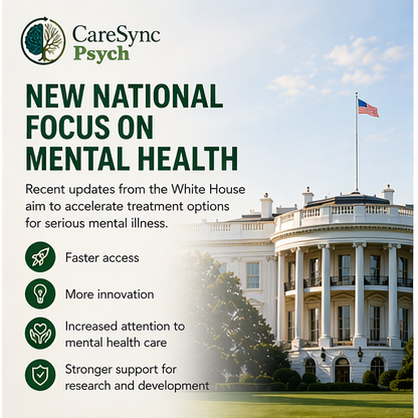
Mental health care is evolving—and recent federal initiatives are signaling a shift toward faster, more innovative treatment options for serious mental illness.

According to a new fact sheet from the White House, efforts are underway to accelerate the development and approval of treatments for conditions like schizophrenia, bipolar disorder, and severe depression. The goal is to reduce barriers and bring effective therapies to patients sooner—especially for those who have not responded to traditional treatments.


The Future of Mental Health Care: What Recent Policy Changes Mean for You

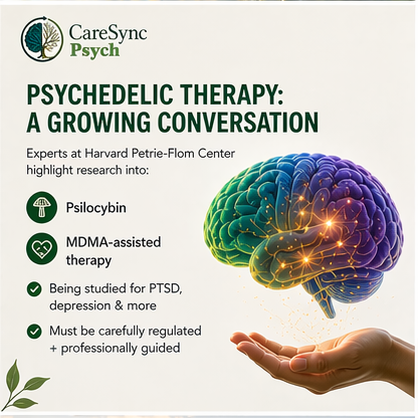
At the same time, discussions highlighted by Harvard Petrie-Flom Center emphasize a growing national focus on psychedelic-assisted therapies (such as psilocybin and MDMA) under careful regulation. These treatments are being studied for conditions like PTSD, depression, and treatment-resistant disorders—with promising early results.

Learn more

The future of mental health care is expanding.
And that means more hope, more options, and more individualized healing.

CareSync Psych Combined Approach -Psychiatry and Therapy

Check Your Insurance Coverage

Affordable Pricing

Insurance and Self-pay Options

Check Your Coverage

What does this mean for mental health care?

Personalized Psychiatry

As psychiatry evolves, our focus remains the same: helping you find the right combination of care—whether that’s therapy, medication, lifestyle changes, or emerging treatments when appropriate.

Make an appointment

More treatment options
Psychiatry is moving beyond a “one-size-fits-all” approach. Patients may soon have access to newer, more personalized therapies.

Faster innovation
Policies aimed at accelerating research could shorten the time it takes for breakthrough treatments to reach real people.

A shift toward holistic care
Emerging treatments recognize that healing involves brain, body, and experience—not just symptom reduction.

Continued need for safe, guided care
While new treatments are exciting, they require careful screening, monitoring, and integration with therapy to be effective and safe.


What stays the same?

Even with innovation, the foundation of mental health care remains:

• Strong therapeutic relationships
• Evidence-based medication when appropriate
• Skill-building (coping, emotional regulation, stress management)
• Personalized, compassionate care

Mental Health In America Recent updates from White House on psychedelics in psychiatry

Psychedelics

CareSync Psych Believes in Utilizing All Possibilites

At CareSync Psych, we stay informed so you don’t have to feel overwhelmed.

Services Offered at CareSync Psych

Psychedelics

The future of mental health care is expanding.
And that means more hope, more options, and more individualized healing.

Read More

Psychedelics

Psychedelics

Psychedelics & New Psychiatry

Psychedelics in Psychiatry: How They Work, Why They Matter, and What the Future Could Hold

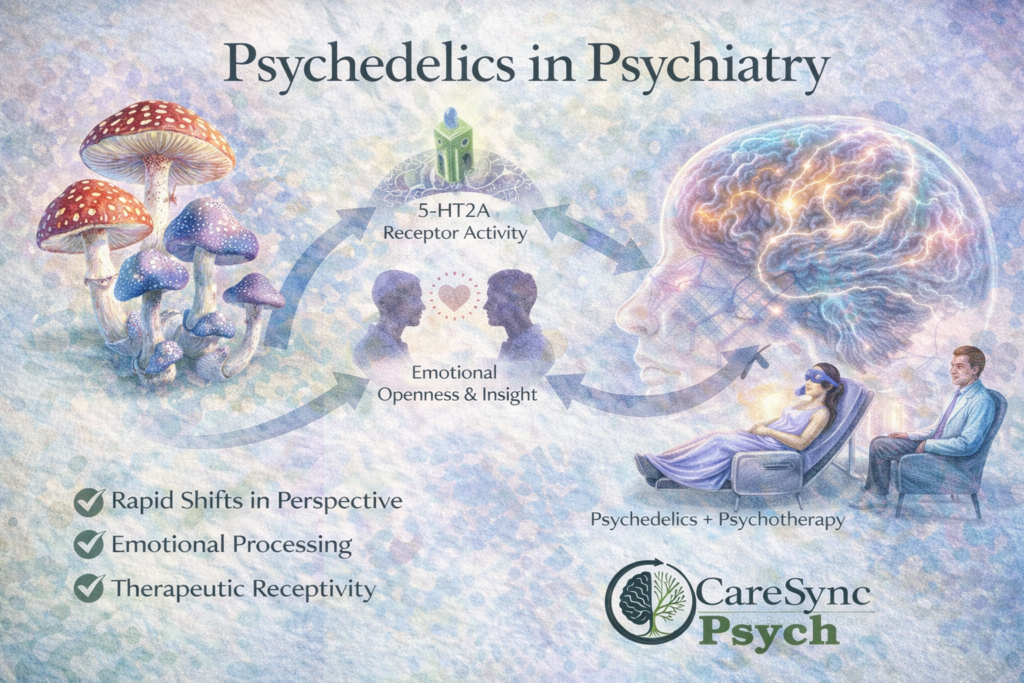
Psychedelics are resurfacing as one of the most debated topics in contemporary psychiatry. They were formerly completely overlooked, but are now being investigated as possible treatments for diseases such as depression, PTSD, addiction, and existential anguish. What intrigues me about psychedelics is not just their chemistry, but also the prospect that they might assist modify ingrained patterns of thinking, emotion, and behavior in ways that standard psychiatric drugs cannot. At the same time, these substances are not simply miraculous cures. The research indicates that their impacts are biological, psychological, and relational. In other words, psychedelics may be effective not because they are “magic,” but because they seem to provide a window through which the brain, mind, and therapeutic process become more adaptable.

What Are Psychedelics?

Classic psychedelics include psilocybin, LSD, mescaline, and DMT. These chemicals are known to cause dramatic alterations in perception, cognition, emotion, and sense of self (Kelmendi et al., 2022). In psychiatry, they are examined not for the perceptual alterations themselves, but for how such altered states might aid in therapeutic transformation.

How do psychedelics work?
1. Serotonin receptor activity. The most commonly acknowledged pharmacologic mechanism is that traditional psychedelics predominantly operate on the 5-HT2A serotonin receptor (McClure-Begley & Roth, 2022; Van Elk & Yaden, 2022). Activation of this receptor alters cortical signaling, particularly in areas involved in perception, emotional salience, and self-referential processing.

2. Brain network disruption and flexibility. Psychedelics tend to lessen the rigidity of several large-scale brain networks, particularly the default mode network, which is linked to self-focused thinking, rumination, and habitual narrative processing (Van Elk & Yaden, 2022). This might explain why some individuals experience a transient relaxing of depressed or anxious mental patterns.

3. Therapeutically relevant psychological effects. These chemicals often produce:

Increased emotional openness

Changed meaning-making

decreased psychological defensiveness.

Improved feeling of togetherness

experiences may be defined as mystical or profound.

Never take online information as an absolute. Please perform your own research from separate scientific sources.. This post is not medical advise please ask your provider to guide your care.

According to Van Elk and Yaden (2022), these psychological impacts are not unintended. They may be essential to why psychedelics may have long-term therapeutic effects.

Why This Matters in Psychiatry

Traditional psychiatric therapies are often beneficial, yet many patients remain partly better, treatment-resistant, or functionally trapped. Psychedelics may be a unique tool since they do more than just alleviate symptoms; they may also assist disrupt deeply entrenched behaviors. According to Kelmendi et al. (2022), psychedelics are being investigated as therapies capable of promoting quick and long-term changes in mood, cognition, and behavior. This is especially important in psychiatry, where strict patterns of rumination, avoidance, trauma-related dread, or pessimism may exacerbate disease.

According to this viewpoint, psychedelics may be beneficial not just because they alter brain chemistry, but also because they improve adaptability on numerous levels:

Neural plasticity

Emotional flexibility

Cognitive openness

Therapeutic receptivity

Psychedelics Aren’t Just Pharmacology.

One of the most fundamental concepts in recent research is that psychedelic therapy is more than just consuming a chemical. Gründer et al. (2024) suggest that psychedelic treatment is equivalent to psychotherapy. The drug experience is inextricably linked to the subsequent therapeutic interaction, preparation, environment, and integration.

This is a significant change from reductionist thinking. In psychedelic treatment, the medicine and psychotherapy are inextricably linked.

This suggests that results are influenced by:

Set and setting.

clinician support

Patient Expectations

Emotional safety

Creating meaning after the event

This has significant implications for psychiatry: psychedelics may be most effective when used in conjunction with well planned psychotherapy treatment rather than as separate prescriptions.

Why Psychedelics May Be a Useful Tool

Psychedelics may be useful in psychiatry since they seem to provide something different than normal everyday drugs.

The following are some of the potential reasons they matter:

They may cause sudden alterations in attitude or viewpoint.

They may help patients access feelings that were previously denied.

They may provide a chance to process trauma, sorrow, or existential discomfort.

They may enhance the efficacy of psychotherapy in certain circumstances.

McClure-Begley and Roth (2022) define this area as having “promises and perils.” That’s a handy term. Psychedelics may be powerful tools, but strength demands prudence.

Current Research Themes

According to the material you supplied, modern psychedelic research focuses on many important themes:

1. Mechanistic understanding

Researchers are attempting to explain how much of the psychedelic advantage stems from:

receptor-level pharmacology.

alterations in brain network dynamics.

subjective experience.

Psychotherapy and Context

Van Elk and Yaden (2022) underline that no single explanation suffices. The impacts are most likely multilayered.

2. The significance of the encounter itself

A key study concern is whether the therapeutic impact is dependent on the altered state or whether a “non-hallucinogenic” variant may give comparable advantages. McClure-Begley and Roth (2022) identify this as one of the field’s fundamental disputes.

3. Integration of psychotherapy

Gründer et al. (2024) firmly believe that future models should not separate psychedelics and treatment. This shows that psychiatry may need new treatment models that are more immersive, relational, and time-consuming than traditional pharmaceutical visits.

What This Might Mean for Psychiatry

If psychedelic treatments continue to show potential, psychiatry may develop in many key directions:

A more integrated model

Psychiatry may become less focused on symptom suppression and more focused on:

Emotional Processing

Psychological flexibility

Healing in relationships

Long-term meaning and identity shifts

A reconsideration of pharmacological therapy.

Rather than everyday symptom management, some therapies may use episodic interventions in conjunction with psychotherapy.

More attention on set, location, and integration.

Client-Centered Therapy

If psychedelic treatments continue to show potential, psychiatry may develop in many key directions:

A more integrated model

Psychiatry may become less focused on symptom suppression and more focused on:

Emotional Processing

Psychological flexibility

Healing in relationships

Long-term meaning and identity shifts

A reconsideration of pharmacological therapy.

Rather than everyday symptom management, some therapies may use episodic interventions in conjunction with psychotherapy.

More attention on set, location, and integration.

Future psychiatric care may acknowledge that treatment setting is important medically and psychologically.

Potential Risks and Cautions

The enthusiasm around psychedelics should not override the necessity for care.

The risks may include:

Psychological instability in susceptible persons

worsening of psychosis or mania in susceptible people.

Overwhelming emotional sensations

Poor results in unstructured or unsupported circumstances.

McClure-Begley and Roth (2022) emphasize that, in addition to its therapeutic potential, psychedelic pharmacology contains significant hazards. These are not only health tools; they are effective cognitive therapies.

Future Implications.

The future of psychedelics in psychiatry may be dependent on various issues.

Can advantages be consistently replicated in real-world clinical settings?

What illnesses are most likely to respond?

How does psychotherapy affect long-term outcomes?

How should professionals be prepared for this work?

Can psychiatry use these ideas without overmedicalizing or simplifying them?

According to the literature, psychedelics have the potential to transform psychiatry not just by introducing new therapies, but also by changing how psychiatry perceives recovery.

Services

The CareSync Psychology Perspective

Psychedelics are gaining popularity because they might provide a fresh route for those who are locked in strict emotional and cognitive habits. Their promise is not simply in chemistry, but in the ability to create a transient condition of openness in which actual therapeutic work may take place.

At the same time, new evidence shows that these therapies should be treated mindfully, relationally, and with due regard for their complexity.

Psychiatry is finding that healing may need more than just neurotransmitters. It might also include flexibility, purpose, connection, and carefully managed change.

Never take online information as an absolute. Please perform your own research from separate scientific sources.. This post is not medical advise please ask your provider to guide your care.

References

Gründer, G., Brand, M., Mertens, L. J., Jungaberle, H., Kärtner, L., Scharf, D. J., … & Wolff, M. (2024). Treatment with psychedelics is psychotherapy: Beyond reductionism. The Lancet Psychiatry, 11(3), 231-236.

Kelmendi, B., Kaye, A. P., Pittenger, C., & Kwan, A. C. (2022). Psychedelics. Current Biology, 32(2), R63-R67.

McClure-Begley, T. D., & Roth, B. L. (2022). The promises and perils of psychedelic pharmacology for psychiatry. Nature Reviews Drug Discovery, 21(6), 463-473.

Van Elk, M., & Yaden, D. B. (2022). Pharmacological, neural, and psychological mechanisms underlying psychedelics: A critical review. Neuroscience & Biobehavioral Reviews, 140, 104793.

Vision Boards and Mental Health: The Psychology, Science, and How to Make Them Actually Work

Vision Boards and Mental Health: The Psychology, Science, and How to Make Them Actually Work

Vision boards are often dismissed as trendy or superficial—something associated with wishful thinking rather than real psychological change. Yet research in psychology, behavioral science, and therapeutic practice suggests that visualization tools like vision boards can be effective when grounded in intention, reflection, and action.

At CareSync Psych, we take a science-informed approach to tools that support mental health, motivation, and sustainable behavior change. Vision boards are not magic—but when used correctly, they can support clarity, hope, and goal-directed behavior.

Vision boards don’t create change on their own—but they can help you see what you’re working toward.

Home

What Is a Vision Board (Psychologically Speaking)?

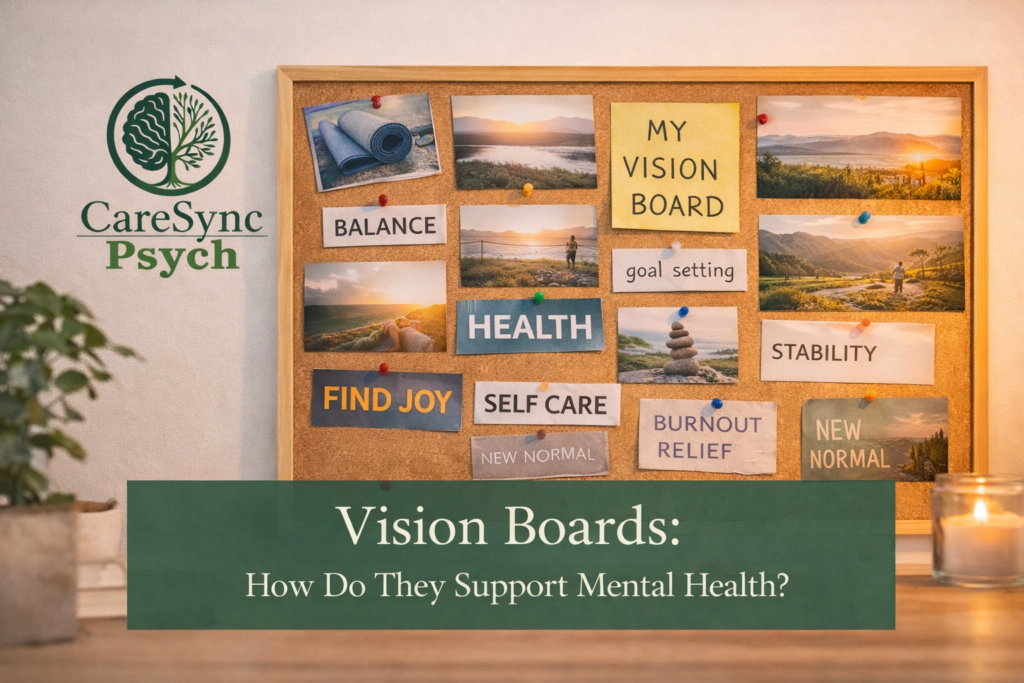
A vision board is a visual representation of goals, values, and desired states, typically created using images, words, and symbols that reflect what an individual wants to cultivate in their life.

From a psychological standpoint, vision boards are not about “manifesting” outcomes without effort. Instead, they function as:

  • A self-reflection tool

  • A cognitive priming mechanism

  • A way to externalize goals and values

  • A support for motivation and emotional regulation

Burton and Lent (2016) describe vision boards as a therapeutic intervention that can facilitate insight, emotional processing, and goal clarity—particularly when integrated into structured therapeutic work.


Sometimes, making goals visible is enough to help you move forward.

How to Use Vision Boards Effectively (Without the Hype)

1. Start With Reflection, Not Images

Before creating a vision board, reflect on:

  • What feels missing or misaligned

  • What values matter most right now

  • What kind of life feels supportive—not just impressive

This aligns with PCC’s (2023) framework of moving from reflection to visualization.


2. Focus on Feelings and Values

Include images or words that reflect:

  • Calm

  • Stability

  • Connection

  • Health

  • Balance

Not just achievements or external markers of success.


3. Make Goals Visible—but Grounded

Place your vision board somewhere you’ll see it regularly, but pair it with:

  • Small, realistic goals

  • Flexible timelines

  • Compassion for setbacks

Visibility supports awareness—but action creates change.


4. Use Vision Boards as a Check-In Tool

Revisit your vision board periodically:

  • What still fits?

  • What no longer aligns?

  • What feels unrealistic or pressure-based?

Vision boards should evolve as you do.

Client-Centered Therapy

Vision boards don’t create change on their own—but they can help you see what you’re working toward.

A CareSync Psych Perspective

At CareSync Psych, we view vision boards as one possible tool within a broader mental health and behavior-change framework. When combined with therapy, medication management, lifestyle support, and self-compassion, visualization can help reinforce clarity and direction.

Mental health–informed change is not about forcing positivity.
It’s about supporting the nervous system, reducing overwhelm, and creating environments that make healthy choices easier.

Anxiety Treatment at CareSync Psych

Sometimes, making goals visible is enough to help you move forward.

Final Takeaway

Vision boards work best when they are:

  • Grounded in reflection

  • Paired with action

  • Flexible rather than rigid

  • Used as support—not pressure

You don’t need to manifest a perfect future.
You need clarity, support, and small steps in the right direction.

New Year, New Me? The Psychology of Making Habits Stick

References Used in this Post

Burton, L., & Lent, J. (2016). The use of vision boards as a therapeutic intervention. Journal of Creativity in Mental Health, 11(1), 52–65.

Kharbanda, K. (2025). Exploring the relationship between optimism and hope among individuals using vision boards. International Journal of Interdisciplinary Approaches in Psychology, 3(3), 295–306.

PCC, J. H. (2023). From reflection to visualization: A framework for goal setting and strategic planning. Journal of Financial Planning, 36(12), 44–47.

Read More
Dec 2025 by Jennifer Sanri
New Year, New Me? The Psychology of Making Habits Stick
Read More
Read More
Dec 2025 by Jennifer Sanri
Anxiety Treatment at CareSync Psych
Read More
Read More
Dec 2025 by Jennifer Sanri
When the Holidays Feel Heavy: Understanding Seasonal Sadness

mD

Read More
Read More
Oct 2025 by Jennifer Sanri
Food Addiction: Why It’s Real, Why We Feel Out of Control, and How Healing Begins
Read More

We are an outpatient mental health care provider committed to integrating evidence-based treatment with a holistic, healing-centered approach to promote mental wellness. Our patient-focused services include medication management, psychotherapy, metabolic psychiatry,  and wellness optimization.

“Providing compassionate mental health care by syncing the mind and body—treating the psychological with the physiological.”

Recent Posts

  • How Nature Supports Mental Health and Stress Reduction | CareSync Psych
  • The Power of the Unconscious | Mental Health Growth and Self-Awareness | CareSync Psych
  • Group Psychology Can Change Society
  • Why Propranolol Is One of My Favorite Medications in Psychiatry
  • Evidence Over Fear: Understanding Antidepressant Withdrawal
  • Home
  • About Us
  • Services
  • Book An Appointment
  • Contact Us
  • Weight Loss Management & Control
  • Immunity & Mental Health
  • Food Addiction & Binge Eating
  • Free Mental Health Worksheets to Download

Copyright ©2026 all rights reserved
CareSync™ Health