Call us (863) 858-5554
HealthFlex
×
  • Home
  • About Us
    • Check Your Coverage
    • Insurance & Self-pay Options
    • Client-Centered Therapy
    • Crisis and After-Hours Care
    • Privacy Policy
  • Specializing In
    • Specializing In
    • Metabolic Psychiatry
    • Weight Management & Binge Eating
  • Services
    • Services
    • Medication Management for Mental Health
    • Telehealth
    • Client-Centered Therapy
    • Metabolic Psychiatry
  • Book An Appointment
  • Contact Us

Psychedelics

Psychedelics

Psychedelics & New Psychiatry

Psychedelics in Psychiatry: How They Work, Why They Matter, and What the Future Could Hold

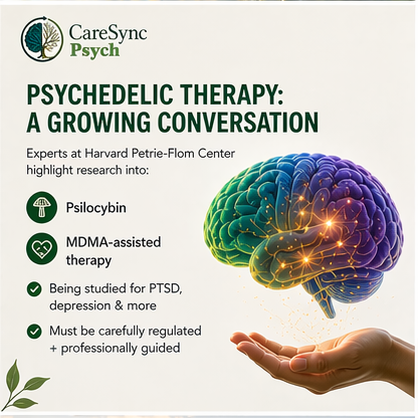
Psychedelics are resurfacing as one of the most debated topics in contemporary psychiatry. They were formerly completely overlooked, but are now being investigated as possible treatments for diseases such as depression, PTSD, addiction, and existential anguish. What intrigues me about psychedelics is not just their chemistry, but also the prospect that they might assist modify ingrained patterns of thinking, emotion, and behavior in ways that standard psychiatric drugs cannot. At the same time, these substances are not simply miraculous cures. The research indicates that their impacts are biological, psychological, and relational. In other words, psychedelics may be effective not because they are “magic,” but because they seem to provide a window through which the brain, mind, and therapeutic process become more adaptable.

What Are Psychedelics?

Classic psychedelics include psilocybin, LSD, mescaline, and DMT. These chemicals are known to cause dramatic alterations in perception, cognition, emotion, and sense of self (Kelmendi et al., 2022). In psychiatry, they are examined not for the perceptual alterations themselves, but for how such altered states might aid in therapeutic transformation.

How do psychedelics work?
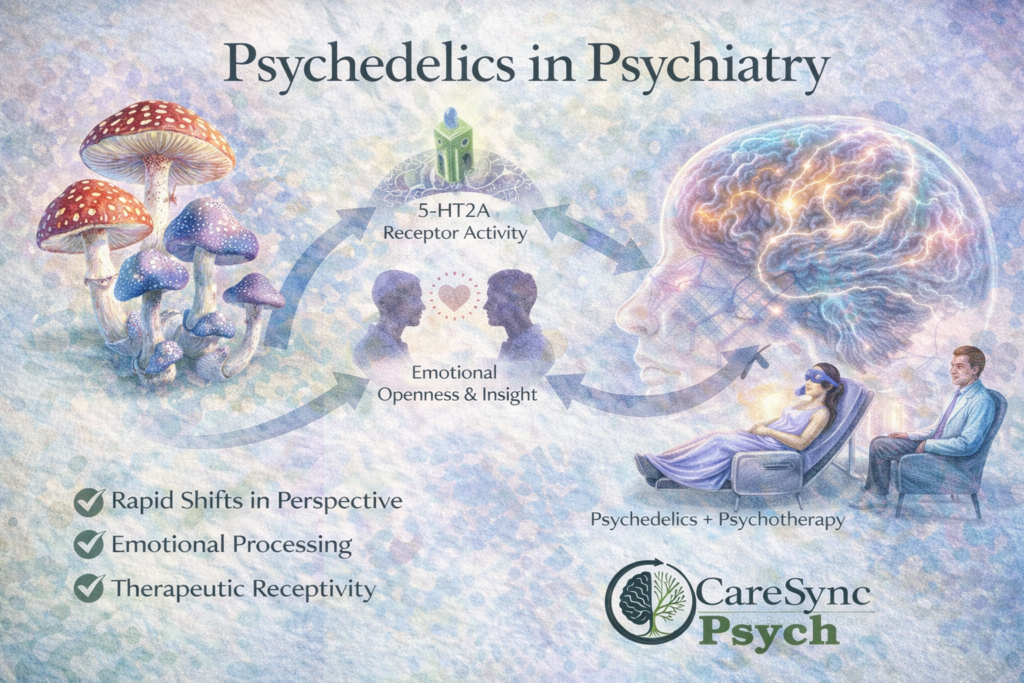
1. Serotonin receptor activity. The most commonly acknowledged pharmacologic mechanism is that traditional psychedelics predominantly operate on the 5-HT2A serotonin receptor (McClure-Begley & Roth, 2022; Van Elk & Yaden, 2022). Activation of this receptor alters cortical signaling, particularly in areas involved in perception, emotional salience, and self-referential processing.

2. Brain network disruption and flexibility. Psychedelics tend to lessen the rigidity of several large-scale brain networks, particularly the default mode network, which is linked to self-focused thinking, rumination, and habitual narrative processing (Van Elk & Yaden, 2022). This might explain why some individuals experience a transient relaxing of depressed or anxious mental patterns.

3. Therapeutically relevant psychological effects. These chemicals often produce:

Increased emotional openness

Changed meaning-making

decreased psychological defensiveness.

Improved feeling of togetherness

experiences may be defined as mystical or profound.

Never take online information as an absolute. Please perform your own research from separate scientific sources.. This post is not medical advise please ask your provider to guide your care.

According to Van Elk and Yaden (2022), these psychological impacts are not unintended. They may be essential to why psychedelics may have long-term therapeutic effects.

Why This Matters in Psychiatry

Traditional psychiatric therapies are often beneficial, yet many patients remain partly better, treatment-resistant, or functionally trapped. Psychedelics may be a unique tool since they do more than just alleviate symptoms; they may also assist disrupt deeply entrenched behaviors. According to Kelmendi et al. (2022), psychedelics are being investigated as therapies capable of promoting quick and long-term changes in mood, cognition, and behavior. This is especially important in psychiatry, where strict patterns of rumination, avoidance, trauma-related dread, or pessimism may exacerbate disease.

According to this viewpoint, psychedelics may be beneficial not just because they alter brain chemistry, but also because they improve adaptability on numerous levels:

Neural plasticity

Emotional flexibility

Cognitive openness

Therapeutic receptivity

Psychedelics Aren’t Just Pharmacology.

One of the most fundamental concepts in recent research is that psychedelic therapy is more than just consuming a chemical. Gründer et al. (2024) suggest that psychedelic treatment is equivalent to psychotherapy. The drug experience is inextricably linked to the subsequent therapeutic interaction, preparation, environment, and integration.

This is a significant change from reductionist thinking. In psychedelic treatment, the medicine and psychotherapy are inextricably linked.

This suggests that results are influenced by:

Set and setting.

clinician support

Patient Expectations

Emotional safety

Creating meaning after the event

This has significant implications for psychiatry: psychedelics may be most effective when used in conjunction with well planned psychotherapy treatment rather than as separate prescriptions.

Why Psychedelics May Be a Useful Tool

Psychedelics may be useful in psychiatry since they seem to provide something different than normal everyday drugs.

The following are some of the potential reasons they matter:

They may cause sudden alterations in attitude or viewpoint.

They may help patients access feelings that were previously denied.

They may provide a chance to process trauma, sorrow, or existential discomfort.

They may enhance the efficacy of psychotherapy in certain circumstances.

McClure-Begley and Roth (2022) define this area as having “promises and perils.” That’s a handy term. Psychedelics may be powerful tools, but strength demands prudence.

Current Research Themes

According to the material you supplied, modern psychedelic research focuses on many important themes:

1. Mechanistic understanding

Researchers are attempting to explain how much of the psychedelic advantage stems from:

receptor-level pharmacology.

alterations in brain network dynamics.

subjective experience.

Psychotherapy and Context

Van Elk and Yaden (2022) underline that no single explanation suffices. The impacts are most likely multilayered.

2. The significance of the encounter itself

A key study concern is whether the therapeutic impact is dependent on the altered state or whether a “non-hallucinogenic” variant may give comparable advantages. McClure-Begley and Roth (2022) identify this as one of the field’s fundamental disputes.

3. Integration of psychotherapy

Gründer et al. (2024) firmly believe that future models should not separate psychedelics and treatment. This shows that psychiatry may need new treatment models that are more immersive, relational, and time-consuming than traditional pharmaceutical visits.

What This Might Mean for Psychiatry

If psychedelic treatments continue to show potential, psychiatry may develop in many key directions:

A more integrated model

Psychiatry may become less focused on symptom suppression and more focused on:

Emotional Processing

Psychological flexibility

Healing in relationships

Long-term meaning and identity shifts

A reconsideration of pharmacological therapy.

Rather than everyday symptom management, some therapies may use episodic interventions in conjunction with psychotherapy.

More attention on set, location, and integration.

Client-Centered Therapy

If psychedelic treatments continue to show potential, psychiatry may develop in many key directions:

A more integrated model

Psychiatry may become less focused on symptom suppression and more focused on:

Emotional Processing

Psychological flexibility

Healing in relationships

Long-term meaning and identity shifts

A reconsideration of pharmacological therapy.

Rather than everyday symptom management, some therapies may use episodic interventions in conjunction with psychotherapy.

More attention on set, location, and integration.

Future psychiatric care may acknowledge that treatment setting is important medically and psychologically.

Potential Risks and Cautions

The enthusiasm around psychedelics should not override the necessity for care.

The risks may include:

Psychological instability in susceptible persons

worsening of psychosis or mania in susceptible people.

Overwhelming emotional sensations

Poor results in unstructured or unsupported circumstances.

McClure-Begley and Roth (2022) emphasize that, in addition to its therapeutic potential, psychedelic pharmacology contains significant hazards. These are not only health tools; they are effective cognitive therapies.

Future Implications.

The future of psychedelics in psychiatry may be dependent on various issues.

Can advantages be consistently replicated in real-world clinical settings?

What illnesses are most likely to respond?

How does psychotherapy affect long-term outcomes?

How should professionals be prepared for this work?

Can psychiatry use these ideas without overmedicalizing or simplifying them?

According to the literature, psychedelics have the potential to transform psychiatry not just by introducing new therapies, but also by changing how psychiatry perceives recovery.

Services

The CareSync Psychology Perspective

Psychedelics are gaining popularity because they might provide a fresh route for those who are locked in strict emotional and cognitive habits. Their promise is not simply in chemistry, but in the ability to create a transient condition of openness in which actual therapeutic work may take place.

At the same time, new evidence shows that these therapies should be treated mindfully, relationally, and with due regard for their complexity.

Psychiatry is finding that healing may need more than just neurotransmitters. It might also include flexibility, purpose, connection, and carefully managed change.

Never take online information as an absolute. Please perform your own research from separate scientific sources.. This post is not medical advise please ask your provider to guide your care.

References

Gründer, G., Brand, M., Mertens, L. J., Jungaberle, H., Kärtner, L., Scharf, D. J., … & Wolff, M. (2024). Treatment with psychedelics is psychotherapy: Beyond reductionism. The Lancet Psychiatry, 11(3), 231-236.

Kelmendi, B., Kaye, A. P., Pittenger, C., & Kwan, A. C. (2022). Psychedelics. Current Biology, 32(2), R63-R67.

McClure-Begley, T. D., & Roth, B. L. (2022). The promises and perils of psychedelic pharmacology for psychiatry. Nature Reviews Drug Discovery, 21(6), 463-473.

Van Elk, M., & Yaden, D. B. (2022). Pharmacological, neural, and psychological mechanisms underlying psychedelics: A critical review. Neuroscience & Biobehavioral Reviews, 140, 104793.

Psoriasis, Inflammation, Anxiety & Depression: What the Science Is Teaching Us About the Brain–Body Connection

Psoriasis, Inflammation, Anxiety & Depression: What the Science Is Teaching Us About the Brain–Body Connection

Psoriasis, Inflammation, Anxiety & Depression: What the Science Is Teaching Us About the Brain–Body Connection

A 2025 review by Keenan & Granstein in Acta Physiologica offers a powerful and evolving perspective on mental health: anxiety and depression are not “just in the mind.” They are deeply connected to immune signaling, inflammation, and neurobiological pathways that link the skin, brain, and nervous system.

For those of us practicing modern psychiatry, this research reinforces something we are learning more clearly each year — mental health is systemic.

The Article’s Unique Perspective

Keenan and Granstein (2025) explore how proinflammatory cytokines (such as IL-6, TNF-α, and IL-1β) and neuropeptides (including substance P and CGRP) play roles in:

  • Psoriasis

  • Depression

  • Anxiety

Psoriasis has long been understood as an inflammatory autoimmune skin condition. However, this review highlights how the same inflammatory mediators active in psoriasis are also implicated in mood and anxiety disorders.

This is not coincidence. It is biology.

Cytokines & Mood

Proinflammatory cytokines can:

  • Cross the blood–brain barrier

  • Alter serotonin and dopamine pathways

  • Affect glutamate signaling

  • Activate the HPA axis

  • Increase neuroinflammation

Understanding Glucose Metabolism Disorders & Inflammation

So the result can cause symptoms that look like depression and anxiety — low mood, fatigue, sleep disruption, irritability, brain fog, and heightened stress reactivity.

This helps explain why:

  • Patients with psoriasis have higher rates of depression and anxiety.

  • Patients with chronic inflammatory conditions often report mood symptoms.

  • Traditional antidepressants sometimes only partially address symptoms when inflammation is a driving factor.

Psychiatry Is Expanding: The Brain–Body Model

For decades, psychiatry focused primarily on neurotransmitters. Today, we are integrating:

  • Immunology

  • Endocrinology

  • Gut-brain signaling

  • Metabolic health

  • Stress physiology

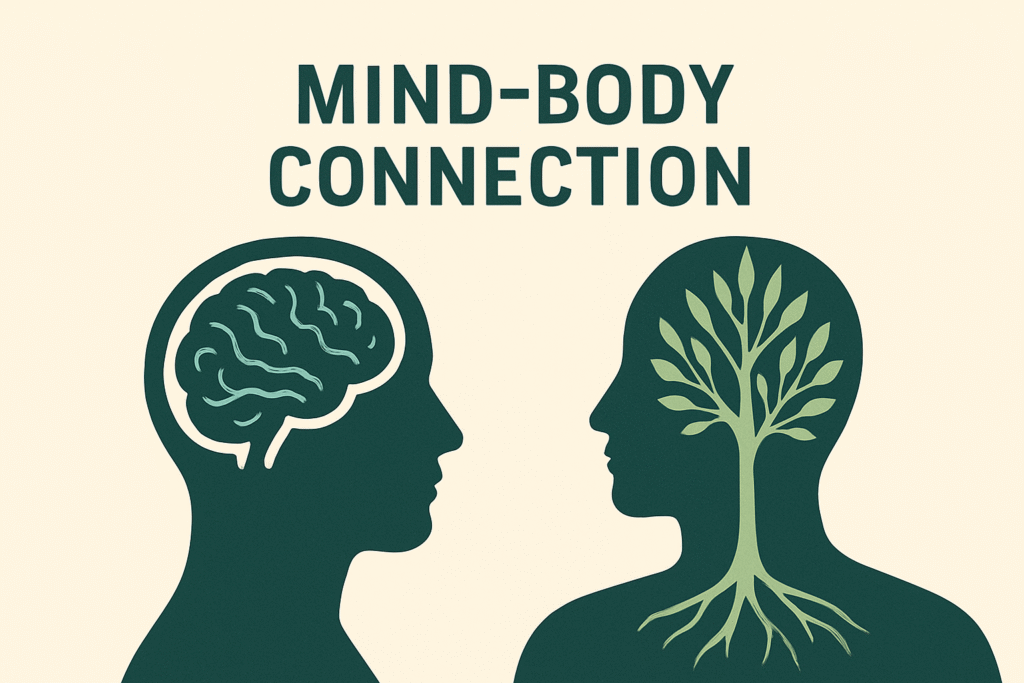
This article reinforces the concept of psychoneuroimmunology — the dynamic communication between the nervous system, immune system, and endocrine system.

At CareSync Psych, we believe in treating the whole-person, no just mental health.

Mental health is not separate from:

  • Autoimmune conditions

  • Hormonal shifts

  • Metabolic dysfunction

  • Chronic stress

  • Inflammatory load

The brain and body are in constant dialogue.

Why This Matters for Anxiety & Depression Treatment

Understanding inflammation’s role opens doors to more comprehensive treatment planning, including:

  • Lifestyle interventions that reduce inflammatory burden

  • Nutrition strategies that support immune regulation

  • Sleep optimization

  • Stress-response regulation

  • Thoughtful medication selection

  • Targeted lab evaluation when clinically appropriate

This does not mean inflammation causes all cases of depression or anxiety. However, it does mean that being to narrow or ignoring the body misses part of the story.

Anxiety Treatment at CareSync Psych

A Whole-Person Approach in Psychiatry

At CareSync Psych in Lakeland, Florida, we embrace this evolving science. We practice psychiatry with a brain-body framework, integrating:

  • Evidence-based medication management

  • Therapy and psychoeducation

  • Metabolic and lifestyle considerations

  • Personalized treatment planning

We are licensed to provide psychiatric care in:

  • Florida (FL)

  • Iowa (IA)

Telehealth available throughout Florida and Iowa.
Arizona (AZ) and Washington (WA) licensure pending.

If you are struggling with anxiety, depression, autoimmune symptoms, or stress-related flares, know this:

Your symptoms are not a personal failure. They may reflect complex biological signaling — and that means there are multiple pathways toward healing.

The Future of Mental Health Care

Research like Keenan & Granstein (2025) continues to move psychiatry forward. We are no longer separating skin from brain, immune system from mood, or stress from physiology.

The future of mental health care is integrative.

And it is already here.

CareSync Psych
Psychiatric Medication Management | Therapy | Brain-Body Mental Health
Lakeland, FL
Serving Florida & Iowa via telehealth
Arizona & Washington pending licensure

If you’re searching for:

  • Psychiatric provider in Lakeland FL

  • Anxiety treatment in Florida

  • Depression care in Iowa

  • Integrative psychiatry near me

  • Brain-body mental health care

We’re here to help.

Glucose and Neuroinflammation

Glucose and Neuroinflammation

Glucose and Hypometabolism

Cerebral glucose hypometabolism refers to a reduction in the brain’s ability to metabolize glucose, the primary source of neuronal energy. Because neurons have limited capacity for energy storage, consistent glucose supply is essential for proper cognitive, emotional, and behavioral function. When metabolism slows, neurons become less active, leading to impaired neurotransmission, synaptic plasticity, and overall brain performance — even before structural damage occurs.


🔬 Pathophysiology

Glucose metabolism in the brain occurs primarily through aerobic glycolysis, producing ATP to fuel neuronal signaling. When this process falters — whether due to mitochondrial dysfunction, neuroinflammation, insulin resistance, or oxidative stress — regions of the brain exhibit hypometabolism on FDG-PET (fluorodeoxyglucose positron emission tomography) scans.

Mechanisms contributing to cerebral hypometabolism include:

  • Mitochondrial dysfunction: decreased ATP synthesis impairs neuronal signaling.
  • Neuroinflammation: cytokines disrupt insulin and glucose pathways.
  • Brain insulin resistance: glucose uptake is blunted despite normal peripheral insulin levels.
  • Oxidative stress: damages neuronal membranes and enzymes critical for metabolism.

🧩 Clinical Correlations

Cerebral glucose hypometabolism is observed across neuropsychiatric and neurodegenerative disorders, with distinct regional patterns:

Condition Commonly Affected Regions Clinical Correlates
Alzheimer’s Disease Posterior cingulate, parietotemporal cortex Early memory loss and executive dysfunction
Frontotemporal Dementia Frontal and anterior temporal lobes Behavioral disinhibition, apathy
Major Depressive Disorder Dorsolateral prefrontal cortex, anterior cingulate Impaired concentration, emotional regulation
Schizophrenia Frontal and temporal regions Executive dysfunction, cognitive impairment
Bipolar Disorder Frontal, limbic circuits Mood instability, impulsivity
Traumatic Brain Injury Site-specific Cognitive slowing, emotional dysregulation

In psychiatry, hypometabolism often reflects neural circuit inefficiency rather than cell loss. For instance, decreased glucose utilization in the prefrontal cortex may explain poor emotional regulation in depression or executive dysfunction in schizophrenia.


⚕️ Integrative and Metabolic Psychiatry Perspective

At CareSync Psych, cerebral glucose hypometabolism underscores the mind-body connection — illustrating how metabolic and psychiatric processes intertwine. Emerging research links metabolic dysfunction (e.g., insulin resistance, obesity, chronic inflammation) with neuropsychiatric symptoms, suggesting that improving systemic metabolism may also enhance brain energy and mood stability.

Therapeutic approaches that can help restore cerebral metabolism include:

  • Lifestyle interventions: balanced nutrition, exercise, restorative sleep.
  • Nutritional psychiatry: ketogenic or low-glycemic diets supplying ketones as alternate brain fuel.
  • Pharmacologic supports: metformin, GLP-1 receptor agonists, and mitochondrial antioxidants (e.g., CoQ10).
  • Psychotherapy and mindfulness: reducing stress-driven cortisol spikes that impair glucose utilization.

🌿 Clinical Implications and Future Directions

  • FDG-PET imaging remains the gold standard to detect regional hypometabolism.
  • Metabolic psychiatry is reframing depression, anxiety, and cognitive decline as partly bioenergetic disorders.
  • Addressing glucose dysregulation early may prevent progression of cognitive and emotional disorders.
  • Future research aims to integrate metabolic biomarkers into psychiatric diagnostics and personalized treatment plans.

🧾 References (APA 7th Edition)

  • Butterfield, D. A., & Halliwell, B. (2019). Oxidative stress, dysfunctional glucose metabolism, and Alzheimer disease. Nature Reviews Neuroscience, 20(3), 148–160. https://doi.org/10.1038/s41583-019-0132-6
  • Cunnane, S. C., Trushina, E., Morland, C., Prigione, A., Casadesus, G., Andrews, Z. B., … & Mattson, M. P. (2020). Brain energy rescue: An emerging therapeutic concept for neurodegenerative disorders of ageing. Nature Reviews Drug Discovery, 19(9), 609–633. https://doi.org/10.1038/s41573-020-0072-x
  • Mosconi, L., Berti, V., Glodzik, L., Pupi, A., De Santi, S., & de Leon, M. J. (2010). Pre-clinical detection of Alzheimer’s disease using FDG-PET, with or without amyloid imaging. Journal of Alzheimer’s Disease, 20(3), 843–854. https://doi.org/10.3233/JAD-2010-091504
  • Rasgon, N. L., & McEwen, B. S. (2016). Insulin resistance—a missing link no more. Molecular Psychiatry, 21(12), 1648–1652. https://doi.org/10.1038/mp.2016.163
  • Tomasi, D., & Volkow, N. D. (2019). Associations between brain activation, glucose metabolism, and psychiatric symptoms in major depressive disorder. Molecular Psychiatry, 24(12), 1672–1680. https://doi.org/10.1038/s41380-018-0262-9
  • Zhang, X., Chen, W., Li, J., Zhang, Y., & Xu, Y. (2021). Brain glucose hypometabolism and psychiatric disorders: A review of mechanisms and therapeutic perspectives. Frontiers in Psychiatry, 12, 700–714. https://doi.org/10.3389/fpsyt.2021.700714

Understanding Ehlers-Danlos Syndrome

March 16, 2017Body HealthChronic PainEhlers-Danlos Syndrome (EDS)hEDS
Understanding Ehlers-Danlos Syndrome

Read More

Ehlers-Danlos Syndrome: The Overlooked Impact on Mind and Body

Ehlers-Danlos Syndrome: The Overlooked Impact on Mind and Body

Living with Ehlers-Danlos Syndrome (EDS) often means more than just joint hypermobility or fragile skin—it means navigating a long, complex journey through the healthcare system while managing pain that others can’t always see. Recent research highlights just how misunderstood EDS remains, and why supporting both body and mind is essential in care.

Book an Appointment

The Diagnostic Odyssey

For many with hypermobile EDS (hEDS), the road to diagnosis is long and winding. Halverson et al. (2023) found that patients often endure years of misdiagnoses and comorbidities before receiving an accurate EDS diagnosis. Many are initially told they have fibromyalgia, chronic fatigue syndrome, or even psychosomatic conditions. This “diagnostic odyssey” delays effective treatment and increases emotional distress.

The consequences of misdiagnosis include:

  • Unnecessary treatments or procedures.

  • Dismissal of symptoms as “in the patient’s head.”

  • Psychological harm, including mistrust of healthcare providers.

  • Worsening of both physical and mental health symptoms.

Pain in EDS: More Than Meets the Eye

Pain is one of the most disabling symptoms of EDS, and it’s not just mechanical. Research by Malfait et al. (2021) highlights that EDS pain is multifactorial, involving:

  • Musculoskeletal pain from joint instability, sprains, and micro-injuries.

  • Neuropathic pain due to nerve compression or damage.

  • Central sensitization, where the nervous system becomes hypersensitive to pain signals, amplifying even mild discomfort.

This complexity makes pain in EDS hard to treat with standard approaches, often leaving patients in a cycle of trial-and-error medications, physical therapy, and alternative treatments.

The Mental Health Impact

Both misdiagnosis and chronic pain shape the mental health of people with EDS:

  • Anxiety & Depression – Rates are significantly higher among those with chronic, uncontrolled pain.

  • Medical Trauma – Being repeatedly dismissed or misdiagnosed can create PTSD-like responses to healthcare visits.

  • Cognitive Strain – Chronic pain and fatigue contribute to “brain fog,” memory lapses, and difficulty concentrating.

  • Isolation – Limited mobility, stigma, and disbelief from others can lead to social withdrawal.

EDS shows us how physical and psychological health are inseparable. Treating only the joints or only the anxiety misses the full picture.

Toward a Whole-Person Approach

To improve care for patients with EDS, treatment must be multidimensional:

  • Medical – Accurate diagnosis, management of comorbidities (like POTS or mast cell activation), and targeted therapies for connective tissue.

  • Pain Management – Using multimodal approaches, including medication, physical therapy, nerve blocks, and mindfulness-based strategies.

  • Mental Health Care – Psychotherapy to address medical trauma, coping skills for chronic pain, and support for mood disorders.

  • Lifestyle & Integrative Care – Nutrition support, pacing strategies, gentle strengthening exercises, and sleep optimization.

Book an Appointment

Conclusion

Ehlers-Danlos Syndrome is far more than a “bendy joint” condition—it is a whole-body, whole-mind disorder that demands compassionate, integrated care. By acknowledging the diagnostic challenges and the complex pain mechanisms, providers can better support patients not just in surviving with EDS, but in finding ways to thrive.

  • Halverson, C. M., Cao, S., Perkins, S. M., & Francomano, C. A. (2023). Comorbidity, misdiagnoses, and the diagnostic odyssey in patients with hypermobile Ehlers-Danlos syndrome. Genetics in Medicine Open, 1(1), 100812. https://doi.org/10.1016/j.gimo.2023.100812
  • Malfait, F., Colman, M., Vroman, R., De Wandele, I., Rombaut, L., Miller, R. E., … & Syx, D. (2021). Pain in the Ehlers–Danlos syndromes: Mechanisms, models, and challenges. American Journal of Medical Genetics Part C: Seminars in Medical Genetics, 187(4), 429-445. https://doi.org/10.1002/ajmg.c.31967
  •  

References

Halverson, C. M., Cao, S., Perkins, S. M., & Francomano, C. A. (2023). Comorbidity, misdiagnoses, and the diagnostic odyssey in patients with hypermobile Ehlers-Danlos syndrome. Genetics in Medicine Open, 1(1), 100812. https://doi.org/10.1002/ajmg.c.31935

Malfait, F., Colman, M., Vroman, R., De Wandele, I., Rombaut, L., Miller, R. E., … & Syx, D. (2021). Pain in the Ehlers–Danlos syndromes: Mechanisms, models, and challenges. American Journal of Medical Genetics Part C: Seminars in Medical Genetics, 187(4), 429-445. https://doi.org/10.1002/ajmg.c.31950

We are an outpatient mental health care provider committed to integrating evidence-based treatment with a holistic, healing-centered approach to promote mental wellness. Our patient-focused services include medication management, psychotherapy, metabolic psychiatry,  and wellness optimization.

“Providing compassionate mental health care by syncing the mind and body—treating the psychological with the physiological.”

Recent Posts

  • Disordered Eating
  • Understanding Political Beliefs & The Psychology of Politics
  • Transforming Your Mental Health by Healing
  • Psychedelics
  • Fluoxetine: Why This “Oldie” is Still a Goody
  • Home
  • About Us
  • Services
  • Book An Appointment
  • Contact Us
  • Weight Loss Management & Control
  • Sample Page
  • Food Addiction & Binge Eating
  • Free Mental Health Worksheets to Download

Copyright ©2026 all rights reserved
CareSync™ Health