
Call us (863) 858-5554
HealthFlex
×
  • Home
  • About Us
    • Check Your Coverage
    • Insurance & Self-pay Options
    • Client-Centered Therapy
    • Sidebar – Blog
    • Crisis and After-Hours Care
    • Privacy Policy
  • Specializing In
    • Specializing In
    • Metabolic Psychiatry
    • Weight Management & Binge Eating
  • Services
    • Services
    • Medication Management for Mental Health
    • Telehealth
    • Client-Centered Therapy
    • Metabolic Psychiatry
  • Book An Appointment
  • Contact Us
    • Mental Health Crisis

Next Wave of Obesity Treatment & It’s Role in Mental Health

Weight Management

 Amylin & Weight Management | CareSync™ Psych

Peptide Therapy

Amylin and Weight Management: A Mental Health Perspective

CagriSema, an investigational combination of the amylin analogue cagrilintide and the GLP-1 medication semaglutide.

Another emerging approach combines eloralintide, an investigational amylin receptor agonist, with tirzepatide, which targets GIP and GLP-1 receptors.

CareSync™ Psych · Research & Education

Weight Management, Mental Health & the Next Wave of Treatment

A psychiatric perspective on amylin and emerging peptide medications

Research update · October 3, 2026

Weight changes can feel especially frustrating when you are already working hard to manage your mental health. Sleep, stress, and certain medications used for depression or psychotic disorders can contribute to weight gain. These concerns deserve a thoughtful conversation, without blame. [8]

New research into amylin offers another perspective on the biology of appetite—and on how future treatments may expand our options.

Recent scientific reviews describe how amylin-based medications could expand treatment options for obesity and type 2 diabetes. The innovation is in working with the biological signals that influence appetite, fullness, and blood sugar. [1–4]

What is amylin?

Amylin is a peptide hormone released by the pancreas alongside insulin. After a meal, it helps signal fullness, slows the movement of food from the stomach, and helps regulate blood sugar by reducing inappropriate glucagon release.

Scientists are developing longer-acting amylin analogues—medications designed to mimic some of these effects—to support weight management. They act through pathways that differ from those targeted by GLP-1 medications. [1–2]

Why are combination treatments getting attention?

Appetite and metabolism involve several interacting signals. Researchers are exploring whether targeting complementary pathways can produce greater benefits than targeting one pathway alone.

One example is CagriSema, an investigational combination of the amylin analogue cagrilintide and the GLP-1 medication semaglutide. Clinical studies have demonstrated substantial weight loss, and an application for U.S. approval has been submitted. An application is a step in the review process; it does not mean a medication is already approved or available for routine prescribing. [5]

Another emerging approach combines eloralintide, an investigational amylin receptor agonist, with tirzepatide, which targets GIP and GLP-1 receptors. In September 2026, Lilly reported that this combination produced greater weight loss than tirzepatide alone in a phase 2b study involving adults with overweight or obesity and type 2 diabetes. Gastrointestinal side effects and treatment discontinuation were also concerns. Larger trials are needed to clarify its benefits and tolerability. [6]

Promising research, realistic expectations.

Study results are averages—not predictions of an individual person’s outcome. Investigational treatments require further evaluation and regulatory review.

What does “peptide therapy” actually mean?

Peptides are short chains of amino acids. Some act as signals within the body, and some medications are designed to mimic those signals.

The word peptide alone does not tell us whether a product is effective, safe, or approved. Each medication needs its own evidence. Established prescription treatments, medications being studied in clinical trials, and products marketed online as “research peptides” have very different levels of oversight.

The FDA specifically warns against unapproved weight-loss products and states that cagrilintide and retatrutide cannot be used in compounding under federal law. Products labeled “for research purposes” should not be treated as patient medications. [7]

Why this matters in psychiatric care

At CareSync™ Psych, medication conversations include how treatment affects your daily life, including appetite, sleep, energy, and weight. If weight changes begin after a medication change, bring that concern to your prescriber. We can review the timing, benefits, side effects, and possible options together. Do not stop psychiatric medication on your own.

Appetite biology and emotional eating are related, but they are different parts of the picture. Medication research does not replace attention to stress, coping patterns, body image, or a history of disordered eating. Emerging amylin treatments should not be presented as established treatments for depression, anxiety, or eating disorders.

A plan that supports physical and emotional health

A thoughtful evaluation may include your current medications, weight trajectory, sleep, eating patterns, medical history, and metabolic health. We also want to understand what progress means to you—whether that is more energy, fewer medication-related concerns, a healthier relationship with food, or improved physical health.

For patients with a history of restrictive eating, binge eating, or purging, those experiences should be discussed before considering appetite-suppressing treatment. Your mental health and nutritional needs remain central to the plan.

Let’s talk about the whole picture

If appetite changes or weight concerns are affecting your well-being, schedule a visit with CareSync™ Psych. Together, we can review your treatment and discuss appropriate next steps, including coordination with medical or nutrition care when needed.

Visit CareSync™ Psych

CareSync™ Psych — Educational Disclaimer

Posts published by CareSync™ Psych are for educational and informational purposes only. They do not constitute medical advice, an individualized treatment recommendation, or an endorsement of any medication, peptide, product, procedure, or therapy discussed. Mention of a treatment does not imply that it is approved, appropriate for you, or offered by CareSync™ Psych. This content does not replace an evaluation by a qualified healthcare professional or establish a provider–patient relationship. Decisions about your healthcare, including starting, stopping, or changing medications or treatments, should be made collaboratively with your physician and treating healthcare team. Do not make treatment changes based solely on these posts. Healthcare evidence, regulatory status, and recommendations may change as new information becomes available.

References & further reading

  1. Lutz, T. A. (2026). Amylin analogues as a novel perspective in anti-obesity therapy. British Journal of Pharmacology.
  2. Secher, A., Lutz, T. A., & Raun, K. (2026). The story of amylin: from physiology to therapy. Nature Metabolism, 8, 299–312.
  3. Koleva, N., Dinkov, B., & Stavreva, G. (2026). Amylin and amylin analogs—future therapeutic strategies for the treatment of type 2 diabetes and obesity. Journal of IMAB, 32(2), 6901–6907.
  4. Le Foll, C., & Lutz, T. A. (2026). Amylin: A multi-functional pancreatic hormone—a review. Diabetes, Obesity and Metabolism, 28, 27–41.
  5. Novo Nordisk. CagriSema FDA submission for weight management. Manufacturer announcement.
  6. Eli Lilly and Company (September 30, 2026). EloraTZP phase 2b results. Manufacturer-reported study findings.
  7. U.S. Food and Drug Administration. FDA’s concerns with unapproved GLP-1 drugs used for weight loss.
  8. National Institute of Diabetes and Digestive and Kidney Diseases. Factors affecting weight & health.
Metabolic Psychiatry

CareSync™ Psych — Educational Disclaimer

Posts published by CareSync™ Psych are for educational and informational purposes only. They do not constitute medical advice, an individualized treatment recommendation, or an endorsement of any medication, peptide, product, procedure, or therapy discussed. Mention of a treatment does not imply that it is approved, appropriate for you, or offered by CareSync™ Psych. This content does not replace an evaluation by a qualified healthcare professional or establish a provider–patient relationship. Decisions about your healthcare, including starting, stopping, or changing medications or treatments, should be made collaboratively with your physician and treating healthcare team. Do not make treatment changes based solely on these posts. Healthcare evidence and recommendations may change as new information becomes available.

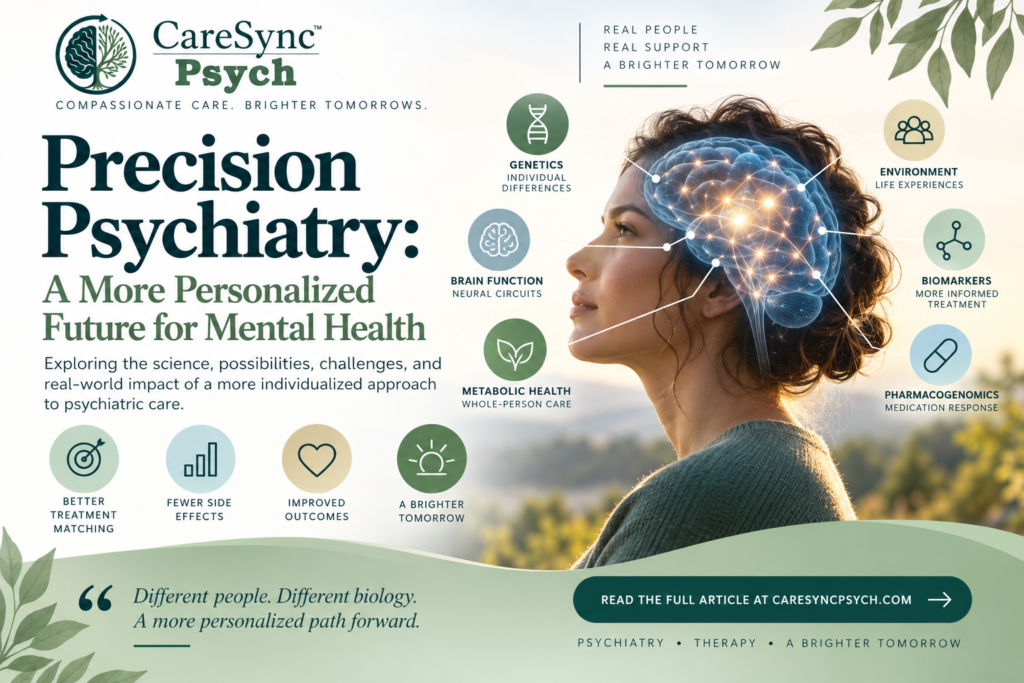
Precision Psychiatry: A More Personalized Future for Mental Health

Precision Psychiatry: A More Personalized Future for Mental Health

what it really means

Precision Psychiatry & Personalized Mental Health Care | CareSync Psych

CareSync Psych • Evidence-Based Psychiatry

Precision Psychiatry: Can Mental Health Treatment Become More Personalized?

What if psychiatric treatment could move beyond asking only, "What usually works for people with this diagnosis?" and increasingly ask, "What is most likely to work for this particular person?"

That is the promise of precision psychiatry—but the science is more complex, and more interesting, than simply taking a genetic test.

Why Psychiatry Is Moving Toward Greater Precision

Two people can meet criteria for the same psychiatric diagnosis and have remarkably different experiences.

Two patients diagnosed with major depressive disorder, for example, may differ in sleep, appetite, cognition, anxiety, inflammation, trauma exposure, metabolic health, genetics, brain circuitry, medication response, side effects, and functional impairment.

Yet our current diagnostic systems primarily organize psychiatric conditions according to clusters of symptoms.

Those systems remain extremely useful. They give patients, clinicians, researchers, insurers, and health systems a shared language.

But a diagnosis does not necessarily tell us exactly why a particular person's symptoms developed—or which treatment that individual will respond to best.

Precision psychiatry asks a different question:

Can we combine clinical symptoms with biological, behavioral, environmental, and other measurable information to make psychiatric diagnosis and treatment more individualized?

What Is Precision Psychiatry?

Precision psychiatry is an emerging approach that aims to use individual differences to improve how mental health conditions are understood, classified, prevented, and treated.

Rather than relying exclusively on diagnostic labels, researchers are investigating whether multiple types of information can help identify clinically meaningful subgroups and predict treatment response.

1

Symptoms & Clinical History

Mood patterns, anxiety, cognition, sleep, psychosis, trauma, substance use, previous treatment response, side effects, medical history, and functional impairment remain essential.

2

Genetics

Genetic variation may influence vulnerability to illness as well as how some medications are metabolized or tolerated.

3

Brain Function

Researchers are studying neuroimaging, EEG, neural circuitry, and other measures of brain function as potential biomarkers.

4

Metabolic & Biological Health

Metabolism, inflammatory signaling, hormones, sleep, cardiovascular health, and other physiological systems may provide clinically useful information in selected circumstances.

5

Environment & Experience

Trauma, chronic stress, relationships, socioeconomic factors, lifestyle, substance exposure, and other environmental influences interact with biology.

6

Digital & Behavioral Data

Future models may incorporate carefully validated information from sleep tracking, activity, cognitive testing, symptom monitoring, speech, or other behavioral measurements.

Isn't This Just Personalized Psychiatry?

There is substantial overlap, but the terms are not exactly identical.

Good psychiatric care has always been personalized. Clinicians already consider age, symptoms, medical history, family history, previous medications, treatment preferences, pregnancy considerations, substance use, side effects, lifestyle, and many other factors.

Precision psychiatry attempts to add validated predictive information to that clinical judgment.

The long-term goal is not merely to personalize the conversation. It is to improve our ability to predict which intervention is most appropriate for which patient.

Precision Psychiatry vs. Stratified Psychiatry

An important distinction in the research literature is between precision psychiatry and stratified psychiatry.

True precision psychiatry might eventually create highly individualized models incorporating numerous biological and clinical characteristics.

Stratified psychiatry takes a more immediately practical approach: identify subgroups of patients who share a measurable characteristic that predicts response to an existing treatment.

Instead of asking:
"What treatment works for depression?"

researchers might ask:
"Which subgroup of patients with depression is most likely to benefit from this particular treatment?"

This may represent one of the more realistic near-term paths toward greater precision in everyday psychiatric practice.

Pharmacogenomics: One Piece of Precision Psychiatry

Pharmacogenomics—or PGx—is probably the precision psychiatry tool patients encounter most often today.

Pharmacogenomic testing examines genetic variants that may affect how the body processes or responds to certain medications.

Some of the strongest psychiatric pharmacogenomic evidence involves drug-metabolizing enzymes such as:

  • CYP2D6
  • CYP2C19
  • CYP2B6

Certain HLA variants also have important implications for specific medication-related adverse reactions.

What Pharmacogenomics Can Potentially Tell Us

For selected medications, genetic information may help clinicians understand whether someone is likely to metabolize a medication more slowly or rapidly than expected and whether dosing modifications or alternative medications should be considered.

What It Cannot Reliably Tell Us

A pharmacogenomic test generally cannot look at a list of psychiatric medications and definitively identify:

  • the medication that will work best;
  • whether a medication will completely relieve symptoms;
  • whether someone has depression, bipolar disorder, ADHD, or another diagnosis;
  • whether psychotherapy will work;
  • the complete likelihood of side effects; or
  • the biological "cause" of a person's psychiatric symptoms.
Pharmacogenomics is a clinical decision-support tool—not a psychiatric crystal ball.

Precision Psychiatry: What Is Real Today and What Is Still Emerging?

More Clinically Established

  • Detailed clinical phenotyping
  • Medication-response history
  • Selected pharmacogenomic drug-gene relationships
  • Therapeutic drug monitoring for appropriate medications
  • Relevant laboratory and medical evaluation
  • Measurement-based psychiatric care
  • Individualized risk-benefit assessment

Promising but Still Developing

  • Routine psychiatric diagnosis from brain scans
  • AI selecting a perfect medication from biomarkers
  • Blood tests that definitively diagnose most psychiatric disorders
  • Routine inflammatory subtyping of psychiatric illness
  • Whole-genome prediction of psychiatric treatment response
  • Digital biomarkers used independently to diagnose illness
  • Completely individualized brain-circuit treatment for routine care

Brain Circuits May Change How We Think About Diagnosis

Psychiatric diagnoses are currently defined largely by symptoms, but different symptoms may arise from disruptions in overlapping brain networks.

Researchers are therefore investigating whether treatment can increasingly target dysfunctional neural circuits rather than diagnostic categories alone.

This concept is particularly relevant to emerging forms of neuromodulation and brain stimulation.

Future treatment may increasingly ask not only, "What disorder does this patient have?" but also, "Which neural system appears to be contributing to this patient's symptoms?"

Precision Psychiatry Is Not "Biology Instead of Psychology"

A biology-informed approach does not mean that trauma, relationships, stress, culture, environment, behavior, and life experiences suddenly become irrelevant.

Quite the opposite.

Modern precision models increasingly examine the interaction between biology and the environment.

The 2025 Precision Psychiatry Roadmap discusses the concept of the exposome—the collection of environmental exposures and experiences that interact with a person's biology throughout life.

These can include factors such as:

  • stress;
  • trauma and adverse experiences;
  • lifestyle;
  • social environment;
  • socioeconomic conditions;
  • environmental exposures;
  • inflammation;
  • microbiome-related factors; and
  • other internal and external influences.
The future of psychiatry is unlikely to be purely biological or purely psychological. It is increasingly about understanding how biology and experience interact.

Where Does Metabolic Psychiatry Fit?

Metabolic psychiatry and precision psychiatry overlap in an important way: both recognize that psychiatric symptoms occur within a biological system that extends beyond neurotransmitters alone.

Metabolic information—including glucose regulation, insulin sensitivity, lipids, medication-related metabolic effects, nutrition, sleep, and other health factors—may provide clinically meaningful information for selected patients.

However, metabolic abnormalities are not currently standalone diagnostic tests for most psychiatric disorders.

Learn more about Metabolic Psychiatry at CareSync Psych →

Potential Benefits of Precision Psychiatry

Less Trial and Error

Better predictors of treatment response could eventually help patients reach effective treatment sooner.

Better Medication Tolerability

Validated pharmacogenomic and biological information may help identify situations in which medication exposure or adverse-effect risk differs between patients.

Earlier Intervention

Future biomarkers may help identify clinically important changes before a condition becomes more severe, although substantial research remains.

Better Treatment Matching

Instead of treating every patient with the same diagnosis similarly, clinicians may eventually identify subgroups that respond differently to particular treatments.

New Treatment Targets

Understanding brain circuits, immune signaling, metabolism, genetics, and other mechanisms may reveal therapies that would not emerge from symptom-based research alone.

More Objective Information

Validated biomarkers could complement—not replace—the patient's experience and clinician's assessment.

What Are the Risks and Challenges?

Precision psychiatry has enormous potential, but enthusiasm needs to be balanced with scientific caution.

1. Biomarkers Can Be Oversold

A statistical association in a research study does not automatically make something useful as a clinical test.

A biomarker must demonstrate reliability, replication, predictive accuracy, and meaningful improvement in patient outcomes before it should guide routine care.

2. False Precision

Sophisticated-looking reports, algorithms, brain scans, or genetic results can create an impression of certainty that the underlying science may not support.

More data does not automatically mean more accurate treatment.

3. Privacy

Genetic, biological, behavioral, and digital information can be highly sensitive. As precision psychiatry expands, strong protections for data privacy and informed consent will be essential.

4. Bias & Representation

Predictive models are only as representative as the populations used to develop them. Underrepresentation in genomic, imaging, and clinical datasets can reduce accuracy for populations that were not adequately included in research.

5. Cost & Access

Advanced testing may increase health disparities if useful precision tools are available only to patients who can afford them.

6. Incidental Findings

Genomic and imaging studies can occasionally reveal information unrelated to the original psychiatric question, creating additional ethical and clinical considerations.

7. Losing the Person in the Data

A patient's values, relationships, goals, trauma history, environment, preferences, and lived experience cannot be reduced to a biomarker.

The goal of precision psychiatry should be more individualized human care—not replacing human care with laboratory values and algorithms.

What Role Could Artificial Intelligence Play?

Precision psychiatry potentially creates enormous amounts of information. A future psychiatric model might combine clinical symptoms with genetics, laboratory data, imaging, medication history, sleep patterns, cognition, and longitudinal behavioral information.

Machine-learning and artificial-intelligence systems may eventually help researchers identify patterns within these complex datasets that would be difficult for humans to recognize independently.

Clinical Data
Biology
Behavior
Predictive Models
Treatment Matching

But an algorithm is only useful if it has been rigorously validated in appropriate populations and shown to improve meaningful clinical outcomes.

AI-generated predictions should therefore be viewed as potential clinical decision support rather than replacements for psychiatric assessment or shared decision-making.

What Could the Future of Precision Psychiatry Look Like?

Imagine a future psychiatric evaluation in which diagnosis is still informed by conversation and symptoms—but additional validated information helps refine treatment.

A clinician might eventually combine:

  • symptom patterns;
  • family and treatment history;
  • pharmacogenomic information;
  • metabolic and laboratory markers;
  • cognitive testing;
  • sleep and circadian information;
  • EEG or neuroimaging when clinically validated;
  • longitudinal behavioral information; and
  • environmental and psychosocial factors.

A validated model might then estimate which treatment strategies have the strongest likelihood of benefit for patients sharing that particular profile.

The result would not necessarily be a completely unique treatment for every person. More realistically, many patients may be assigned to biologically or clinically meaningful subgroups that guide treatment.

What Research Still Needs to Answer

Before precision psychiatry becomes routine, researchers need to answer several important questions:

  • Which biomarkers are reproducible across independent populations?
  • Do they predict treatment response better than careful clinical assessment?
  • Does using them actually improve patient outcomes?
  • How should multiple biomarkers be combined?
  • How stable are biomarkers over time?
  • How do age, sex, ancestry, medications, medical illness, trauma, environment, and lifestyle influence results?
  • Can predictive models generalize across diverse populations?
  • How should genetic and digital mental health data be protected?
  • Who pays for testing?
  • How can precision medicine improve care without increasing health disparities?

The 2025 Precision Psychiatry Roadmap specifically calls for global collaboration, standardized methods, harmonized datasets, validation of predictive findings, and continued translation of emerging science into clinically meaningful frameworks.

What Does Precision Mental Health Care Mean Today?

We do not need to wait for futuristic brain scans or artificial intelligence to make psychiatric treatment more individualized.

Precision-minded care today can begin with a careful psychiatric evaluation that considers:

  • your symptoms—not simply your diagnostic label;
  • your medical history;
  • previous medications and treatment responses;
  • medication side effects;
  • sleep;
  • nutrition and metabolic health when relevant;
  • substance use;
  • trauma and psychosocial stressors;
  • family history;
  • laboratory evaluation when clinically appropriate;
  • psychotherapy needs;
  • your goals and preferences; and
  • ongoing measurement of whether treatment is actually helping.
Precision psychiatry begins with a simple principle: the diagnosis matters—but so does the individual living with it.

Explore CareSync Psych

Learn more about individualized, evidence-informed mental health care:

Metabolic Psychiatry
Explore connections between metabolic health, brain function, and psychiatric treatment.
Psychotherapy
Learn about individualized psychotherapy and behavioral interventions.
Areas of Focus
Explore mental health conditions treated at CareSync Psych.
Check Insurance Coverage
Review available insurance coverage options.
Insurance & Self-Pay
Explore CareSync Psych insurance and self-pay options.
Book an Appointment
Schedule a psychiatric evaluation or follow-up appointment.

Mental Health Treatment Should Be About More Than Checking a Diagnostic Box

At CareSync Psych, psychiatric care considers the individual behind the diagnosis. Evaluation may include psychiatric symptoms, medication history, medical conditions, sleep, behavioral health, metabolic factors, psychosocial stressors, laboratory information when clinically appropriate, and your personal treatment goals.

Our goal is not to chase every new biomarker or technology. It is to use evidence thoughtfully as psychiatry continues moving toward more individualized care.

Book an Appointment Contact CareSync Psych

Featured Research

Kas, M. J. H., Penninx, B. W. J. H., Knudsen, G. M., Cuthbert, B., Falkai, P., Sachs, G. S., et al. (2025). Precision psychiatry roadmap: Towards a biology-informed framework for mental disorders. Molecular Psychiatry, 30(8), 3846–3855.

Arns, M., van Dijk, H., Luykx, J. J., van Wingen, G., & Olbrich, S. (2022). Stratified psychiatry: Tomorrow's precision psychiatry? European Neuropsychopharmacology, 55, 14–19.

Scangos, K. W., State, M. W., Miller, A. H., Baker, J. T., & Williams, L. M. (2023). New and emerging approaches to treat psychiatric disorders. Nature Medicine, 29(2), 317–333.

Bousman, C. A., Al Maruf, A., Marques, D. F., Brown, L. C., & Müller, D. J. (2023). The emergence, implementation, and future growth of pharmacogenomics in psychiatry: A narrative review. Psychological Medicine, 53(16), 7983–7993.

Medical Disclaimer: This article is provided for educational purposes and does not constitute individualized medical, psychiatric, genetic, or pharmacogenomic advice. Precision psychiatry is an evolving field, and many proposed biomarkers and predictive technologies remain investigational.

Pharmacogenomic results should be interpreted in the context of a patient's complete clinical picture and should not be used independently to diagnose a psychiatric condition or make medication changes. Do not start, stop, or substantially change psychiatric medication without discussing the risks and benefits with the prescribing clinician.

CareSync Psych is not a crisis center. If you are experiencing a psychiatric or medical emergency, call 911 or go to the nearest emergency department. The 988 Suicide & Crisis Lifeline is available by calling or texting 988.

About CareSync Psych

Mental health care that sees the whole person.

CareSync Psych is an outpatient mental health practice providing thoughtful, individualized psychiatric care with an integrated understanding of both mental and physical health.

Our approach combines evidence-based psychiatric care with collaboration, education, and attention to the medical, psychological, behavioral, and social factors that can influence how a person feels and functions.

Care is provided by a nurse practitioner who is dual board certified in Psychiatric-Mental Health and Family Medicine, bringing both perspectives into the assessment and treatment process.

Book an Appointment Contact CareSync Psych
CareSync Psych whole-person outpatient mental health and psychiatric care
Whole-Person Clinical Perspective Dual Board Certified in Psychiatric-Mental Health & Family Medicine
Multi-State Care

Licensed in Five States

FLORIDA  •  WASHINGTON  •  ARIZONA  •  TEXAS  •  IOWA

Telehealth availability depends on patient location, clinical appropriateness, and applicable practice requirements. In-person care is available in Lakeland, Florida.

Who We Are

Psychiatric care with a broader clinical perspective.

Mental health is rarely influenced by one factor alone. CareSync Psych approaches treatment with that complexity in mind.

Diagnosis, medication, psychotherapy, and symptom measurement are important parts of psychiatric care. But they exist within a larger picture that may include physical health, sleep, nutrition, stress, relationships, medications, hormones, metabolic factors, life experiences, environment, and behavior.

CareSync Psych was developed around a whole-person approach: understand the psychiatric symptoms while also considering relevant factors that may contribute to them, worsen them, or affect treatment.

This does not mean every patient needs every type of intervention. It means treatment begins with careful assessment and is individualized to the person rather than automatically applying the same approach to everyone.

Treating mental health sometimes requires understanding more than mental health alone.
CareSync Psych nurse practitioner dual board certified in psychiatric mental health and family medicine
Clinical Expertise

Two specialties. One integrated view of the patient.

Dual Board Certified Nurse Practitioner Psychiatric-Mental Health & Family Medicine

CareSync Psych is led clinically by a nurse practitioner with board certification spanning both psychiatric-mental health and family medicine.

That combination supports a broader clinical perspective. Psychiatric symptoms can intersect with sleep, chronic illness, medications, metabolic health, hormonal changes, nutrition, pain, neurological symptoms, and other medical considerations.

The goal is not to turn every psychiatric visit into a primary care visit. It is to recognize when the broader medical picture may matter, understand the potential connections, and incorporate that perspective into appropriate psychiatric assessment, treatment planning, monitoring, education, and referral.

Psychiatric Perspective Assessment, diagnosis, medication management, psychotherapy, behavioral health, and ongoing psychiatric treatment.
Medical Perspective Awareness of relevant physical health conditions, medications, laboratory findings, metabolic factors, and other medical considerations that may intersect with mental health.
Integrated Perspective A treatment plan that considers the person as a whole while remaining within the appropriate scope of each service.
The Patient Experience

What we want mental health care to feel like.

Clinical care should be professional without feeling impersonal. Patients should be able to ask questions, understand their options, and participate meaningfully in treatment decisions.

01

Thorough Enough to Understand

Treatment decisions are stronger when there is time to understand symptoms, history, context, previous treatment, medical considerations, concerns, and what matters to the patient.

02

Clear, Not Mysterious

Patients should understand what is being treated, why an option is being considered, potential benefits and risks, and what happens next.

03

Collaborative

Clinical expertise helps guide treatment, while the patient's experiences, goals, concerns, values, and preferences remain important parts of decision-making.

04

Flexible Enough to Change

Symptoms, health, goals, medications, relationships, and life circumstances change. Treatment should be reassessed and adjusted when appropriate.

05

Respectful of Choice

Patients may have different preferences regarding medication, psychotherapy, lifestyle changes, and other interventions. Those preferences deserve thoughtful discussion.

06

Focused on Real Life

Progress is more than a symptom score. It may mean sleeping better, returning to work, improving relationships, functioning more consistently, or enjoying life again.

Our Values

The principles behind our care.

These values influence how CareSync Psych approaches assessment, treatment, communication, and ongoing care.

Curiosity We do not assume the first explanation is always the complete explanation. Understanding comes before intervention.
Transparency Patients deserve understandable information about treatment options, potential risks and benefits, uncertainties, and reasonable alternatives.
Respect Mental health care should preserve dignity and recognize that patients bring their own experiences, priorities, cultures, values, and preferences to treatment.
Clinical Responsibility Compassion and evidence belong together. Treatment decisions should remain grounded in appropriate assessment, monitoring, safety, and clinical judgment.
Whole-Person Thinking Psychological and physiological health can intersect. Relevant physical health factors should not automatically be separated from the mental health conversation.
Setting Expectations

What CareSync Psych is—and what it is not.

A good fit matters. We want patients to understand the kind of outpatient mental health practice they are choosing.

CareSync Psych Is

  • An outpatient psychiatric and mental health practice
  • A setting for psychiatric evaluation and ongoing treatment
  • A collaborative treatment environment
  • A practice where medication may be used when clinically appropriate
  • A setting where psychotherapy and behavioral strategies may be incorporated into care
  • A practice that considers relevant psychological, medical, metabolic, lifestyle, and social context
  • A practice informed by both psychiatric-mental health and family medicine perspectives
  • A place where questions and shared decision-making are encouraged

CareSync Psych Is Not

  • A one-size-fits-all prescribing clinic
  • A practice where every concern automatically requires medication
  • A substitute for emergency psychiatric or medical care
  • A setting where physical health is ignored when it may be relevant to psychiatric treatment
  • A replacement for a patient's primary care provider or medical specialist
  • A place where patients are expected to agree with treatment without understanding their options
  • A promise that one treatment approach will work for everyone
Continuity Matters

Treatment is a process, not a single appointment.

Mental health care often works best with continuity— time to observe patterns, evaluate response, make adjustments, and understand how treatment is functioning in everyday life.

Follow-up visits may involve much more than renewing a prescription. They can include reviewing progress, discussing side effects, understanding new stressors, reassessing symptoms or diagnoses, reviewing sleep and functioning, considering relevant health changes, revisiting goals, and changing direction when appropriate.

That ongoing relationship is an important part of the CareSync Psych approach.

Explore Our Services
Person walking outdoors representing progress reflection and continuity in mental health care
Care Across Five States

Licensed in FL, WA, AZ, TX & IA.

CareSync Psych expands access through telehealth for eligible patients located in states where the provider is licensed, with in-person care available in Lakeland, Florida.

FL Florida
WA Washington
AZ Arizona
TX Texas
IA Iowa
Book an Appointment

Telehealth services are subject to patient location, provider licensure, clinical appropriateness, and applicable state and federal requirements.

Our Lakeland Office

In-person care in South Lakeland. Telehealth across five states.

For patients who prefer face-to-face care, CareSync Psych offers a private outpatient setting in Lakeland, Florida.

180 Fitzgerald Road
Suite 2
Lakeland, Florida 33813

Telehealth provides another option for eligible patients located in Florida, Washington, Arizona, Texas, and Iowa.

In-Person Mental Health Care Private outpatient appointments at our South Lakeland office.
Multi-State Telehealth Virtual care for eligible patients in FL, WA, AZ, TX & IA.
Outpatient Services Psychiatric evaluation, medication management, psychotherapy, and ongoing mental health treatment.
Integrated Perspective Care informed by dual board certification in Psychiatric-Mental Health and Family Medicine.
Book an Appointment Contact CareSync Psych
CareSync Psych

Mental health care with the whole person in mind.

CareSync Psych provides individualized outpatient mental health care grounded in clinical evidence, thoughtful collaboration, and an integrated understanding of psychological and physical health.

Dual Board Certified Nurse Practitioner in Psychiatric-Mental Health & Family Medicine
Licensed in Florida • Washington • Arizona • Texas • Iowa

Book an Appointment Email CareSync Psych

Therapy sessions that meet you where you are — not where you “should” be.

Ready to Begin Your Journey?

Book an Appointment Today.

Book an Appointment

CareSync Psych™ | Whole-Person Psychiatric Care

Dual Board-Certified in Family and Psychiatric-Mental Health Care

Jennifer Sanri is a dual board-certified Family Nurse Practitioner and Psychiatric-Mental Health Nurse Practitioner. Her advanced preparation in both family health and psychiatry supports an integrated approach that considers mental health symptoms alongside physical health, medications, sleep, nutrition, metabolic factors, and chronic medical conditions.

CareSync Psych provides personalized psychiatric evaluations, medication management, and psychotherapy-informed treatment. Although the practice serves people with a broad range of psychiatric and emotional concerns, Jennifer has a particular clinical focus on panic disorder, obsessive-compulsive disorder, and social anxiety disorder.

Panic Disorder

Thoughtful evaluation and individualized treatment for panic attacks, anticipatory anxiety, physical symptoms, avoidance, and fear of experiencing another episode.

OCD & Intrusive Thoughts

Evidence-informed psychiatric care for obsessive thoughts, compulsive behaviors, distressing intrusive thoughts, and related anxiety, with medication and therapy coordination when appropriate.

Social Anxiety

Personalized care for fear of judgment, performance anxiety, avoidance, physical anxiety symptoms, and difficulty participating comfortably in relationships, school, work, or social situations.

Comprehensive Psychiatric Care

CareSync Psych evaluates and treats a broad range of psychiatric conditions, including depression, generalized anxiety, trauma-related symptoms, PTSD, ADHD, bipolar disorders, insomnia, adjustment difficulties, and other mental health concerns. Services are provided when clinically appropriate and within the scope of an outpatient psychiatric practice.

Care options: In-person and telehealth psychiatric care are available in Florida. CareSync Psych provides fully remote telehealth services in Arizona, Washington, and Iowa, subject to licensure, clinical appropriateness, and applicable prescribing requirements.

Book an Appointment Meet Your Provider

Jennifer Sanri, APRN, FNP-BC, PMHNP-BC

Dual Board-Certified
Family Health + Psychiatric-Mental Health

Error: Contact form not found.

CareSync Psych

Ready to take the next step?

Explore appointment options, check your insurance coverage, or contact our office with questions about getting started.

Book an Appointment Check Insurance
CareSync Psych – Psychiatry and Mental Health Care
CareSync Psych

Personalized psychiatry, psychotherapy, medication management, and whole-person mental health care.

Explore Mental Health Care →
CareSync Wellness – Mind Body Wellness
CareSync Wellness

Personalized wellness services supporting metabolic health, healthy aging, and whole-person wellness.

Explore Wellness Care →

CareSync Psych

Lakeland Office 180 Fitzgerald Road, Suite 2
Lakeland, FL 33813
Phone 863-858-5554
Email info@caresyncpsych.com
View on Google Maps →

Patient Care

Book an Appointment Check Insurance Pricing & Self-Pay Psychotherapy Metabolic Psychiatry Areas of Focus

Explore

Home About Us Contact FREE Mental Health Worksheets Mental Health Support Mental Health Crisis Support Mental Health Articles CareSync Wellness →

Telehealth Care

Telehealth may be available for eligible patients physically located in states where the provider is licensed.

Arizona
Florida
Iowa
Washington
Not sure where to begin?

Contact us with general questions about services or scheduling.

Contact Our Office →
Need immediate help? If you are experiencing a crisis or emergency, call or text 988, dial 911, or go to the nearest emergency room. Online forms and routine office messages are not monitored 24/7.
© 2026 CareSync Psych. All rights reserved.
Privacy Terms Contact