
Call us (863) 858-5554
HealthFlex
×
  • Home
  • About Us
    • Check Your Coverage
    • Insurance & Self-pay Options
    • Client-Centered Therapy
    • Sidebar – Blog
    • Crisis and After-Hours Care
    • Privacy Policy
  • Specializing In
    • Specializing In
    • Metabolic Psychiatry
    • Weight Management & Binge Eating
  • Services
    • Services
    • Medication Management for Mental Health
    • Telehealth
    • Client-Centered Therapy
    • Metabolic Psychiatry
  • Book An Appointment
  • Contact Us
    • Mental Health Crisis

Neuroimmunity and Mental Health: Why the Immune System in the Brain Matters More Than We Once Thought

Neuroimmunity and Mental Health: Why the Immune System in the Brain Matters More Than We Once Thought

Neuroimmunity and Mental Health:

Why the Immune System in the Brain Matters More Than We Once Thought

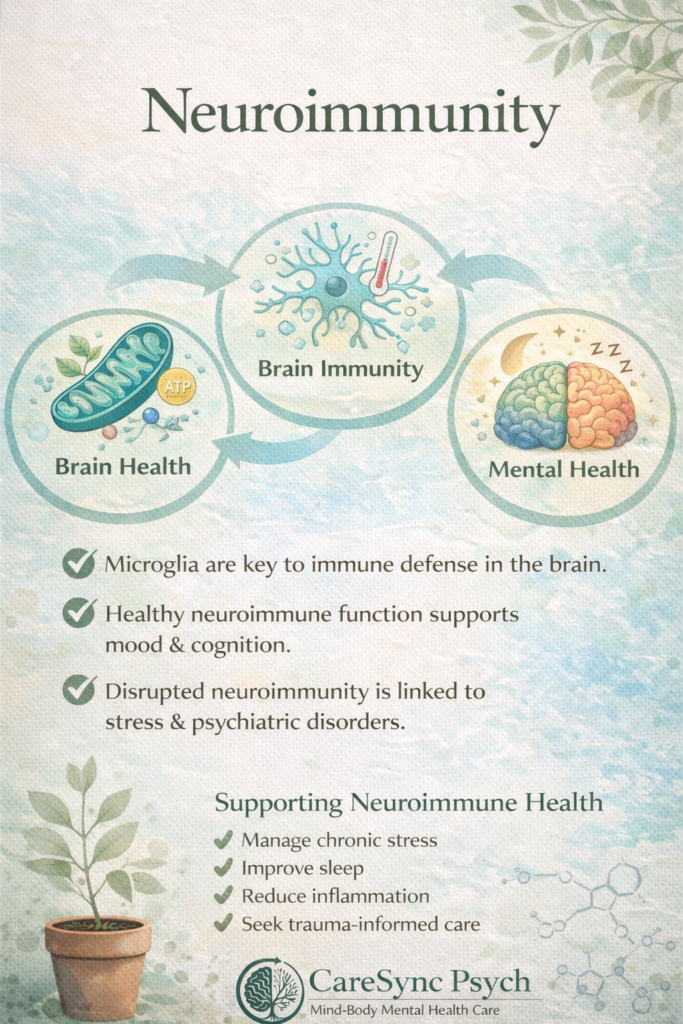
Why Neuroimmunity Is Important for Mental Health

Stress Directly Alters Brain Immune Function

Chronic psychological stress does not just affect mood—it reprograms microglial activity. Prolonged stress exposure can lead to:

  • Increased neuroinflammation

  • Impaired synaptic plasticity

  • Altered emotional processing

This helps explain why chronic stress increases vulnerability to depression, anxiety, and trauma-related disorders (Sequeira & Bolton, 2023).

Bipolar Disorder and Neuroimmune Dysregulation

Recent evidence supports a neuroimmune hypothesis of bipolar disorder, suggesting that microglial dysfunction contributes to mood instability, neuroprogression, and cognitive changes.

Chaves-Filho et al. (2024) describe how altered microglial signaling and inflammatory markers are consistently observed in bipolar disorder, even outside of acute mood episodes. This suggests that immune dysregulation may be a core feature, not just a secondary effect.

Metabolic Psychiatry

PTSD, Anhedonia, and Immune Suppression

Neuroimmunity is not always about excessive inflammation. In some conditions, immune activity may be suppressed or dysregulated in the opposite direction.

Bonomi et al. (2024) found that microglia-mediated neuroimmune suppression in PTSD was associated with anhedonia, the inability to experience pleasure. This highlights how both overactivation and underactivation of neuroimmune pathways can impair emotional functioning.

Supporting the brain’s immune system is not alternative—it is emerging neuroscience.

What Neuroimmunity Means for Brain Health

Healthy neuroimmune function supports:

  • Cognitive clarity

  • Emotional regulation

  • Stress resilience

  • Neural repair and plasticity

Dysregulated neuroimmunity is increasingly linked to:

  • Depression

  • Bipolar disorder

  • PTSD

  • Cognitive impairment

  • Fatigue and brain fog

This shifts mental health care away from a purely “chemical imbalance” model toward a systems-based brain health model.

Medication Management for Mental Health

What We Can Do to Support Neuroimmune Health

Neuroimmunity is modifiable. While not everything is within personal control, evidence suggests several modifiable factors influence microglial health.

1. Reduce Chronic Stress Load

Persistent stress is one of the strongest drivers of neuroimmune dysregulation. Therapy, nervous system regulation, and adequate recovery time are foundational.


2. Address Sleep and Circadian Health

Sleep disruption directly alters microglial activity. Restorative sleep is essential for immune regulation in the brain.


3. Support Metabolic Health

Insulin resistance, obesity, and metabolic dysfunction are associated with systemic inflammation that crosses into the brain. Metabolic psychiatry recognizes this brain–body link

4. Treat Psychiatric Conditions Early and Consistently

Untreated or recurrent episodes of mood and trauma-related disorders may contribute to neuroimmune sensitization over time.


5. Consider a Whole-Person Treatment Model

Psychotherapy, medication when appropriate, lifestyle interventions, and medical evaluation work together to reduce neuroimmune burden.

Immunity and Mental Health

A CareSync Psych Perspective

At CareSync Psych, neuroimmunity reinforces an important truth:
Mental health is not separate from physical health.

The brain responds to stress, trauma, metabolism, sleep, and inflammation. When we treat mental health through a whole-person lens, we are supporting the immune system of the brain—not just neurotransmitters.

This perspective does not replace therapy or medication—it enhances their effectiveness by addressing upstream contributors to psychiatric symptoms.

Understanding neuroimmune health moves mental health care toward precision, prevention, and integration.

Supporting the brain’s immune system is not alternative—it is emerging neuroscience.

Anxiety Treatment at CareSync Psych

References (APA)

Bonomi, R., Hillmer, A. T., Woodcock, E., Bhatt, S., Rusowicz, A., Angarita, G. A., et al. (2024). Microglia-mediated neuroimmune suppression in PTSD is associated with anhedonia. Proceedings of the National Academy of Sciences, 121(35), e2406005121. https://doi.org/10.1073/pnas.2406005121

Chaves-Filho, A., Eyres, C., Blöbaum, L., Landwehr, A., & Tremblay, M. È. (2024). The emerging      neuroimmune hypothesis of bipolar disorder: An updated overview of neuroimmune and microglial findings. Journal of Neurochemistry, 168(9), 1780–1816.

Sequeira, M. K., & Bolton, J. L. (2023). Stressed microglia: Neuroendocrine–neuroimmune interactions in the stress response. Endocrinology, 164(7), bqad088. https://doi.org/10.1210/endocr/bqad088
Understanding Glucose Metabolism Disorders & Inflammation

Understanding Glucose Metabolism Disorders & Inflammation

Metabolic Psychiatry

Understanding Glucose Metabolism Disorders & Inflammation

Metabolic Psychiatry is an emerging approach that focuses on how your health and metabolism impact your brain.

(And how it matters for mental health and overall wellness)


What do we mean by “glucose metabolism disorders”?

Book an Appointment

At its simplest: glucose metabolism refers to how your body handles sugar (glucose) — absorbing, using, storing, and regulating it. A “disorder” of glucose metabolism implies that one or more steps in that process is impaired, such that blood sugar levels run too high (hyperglycemia) or variably swing.

Common clinical entities include:


    • Insulin resistance — when cells (muscle, fat, liver) become less responsive to insulin, so more insulin is needed to keep blood sugar in check. Wikipedia+1
    • Prediabetes / impaired glucose tolerance — early dysregulation before full-blown type 2 diabetes
    • Type 2 diabetes mellitus — sustained hyperglycemia because the system (insulin secretion + insulin sensitivity) fails to compensate adequately
    • Hyperglycemia / elevated postprandial glucose — spikes of blood sugar after meals that stress the system Wikipedia+1

These metabolic disturbances are not just “lab numbers” — they interact deeply with inflammation, cell signaling, and systemic health, and may even influence cancer risk. Piątkiewicz & Czech (2011) review how altered glucose metabolism is implicated in cancer risk through pathways like oxidative stress, chronic inflammation, and dysregulation in cell proliferation. PubMed+2ResearchGate+2


Why is inflammation involved?

Inflammation and glucose dysregulation are tightly linked — each can exacerbate the other in a vicious cycle.


    • In states of insulin resistance or hyperglycemia, there is increased oxidative stress and production of reactive oxygen species, which can trigger inflammatory pathways. Wiley Online Library+2PMC+2
    • Pro-inflammatory cytokines (e.g. TNF-α, IL-6) impair insulin signaling and contribute to further insulin resistance. PMC+2AHADigital+2
    • Metabolic inflammation (sometimes called “meta-inflammation”) is a low-grade, chronic inflammatory state associated with obesity, excess fat in tissues, dysregulated adipokines, and immune cell infiltration into metabolic organs (liver, fat, muscle). AHADigital+2JA Clinical Online+2
    • In the Piątkiewicz & Czech framework, chronic dysregulation of glucose and insulin may also impair anti-cancer surveillance (for instance via effects on NK cells) and promote the microenvironment favoring tumorigenesis. Spandidos Publications+3PubMed+3ResearchGate+3

In short: when glucose metabolism is out of balance, it tends to fuel inflammation. In turn, that inflammation worsens metabolic regulation. Breaking the cycle is a key therapeutic goal.


Mental health, inflammation, and glucose metabolism

Because CareSync Psych is focused on psychiatric/psychological well-being, it’s worth noting:


    • Inflammation is implicated in mood disorders, cognitive dysregulation, and neuropsychiatric conditions.
    • Insulin resistance and hyperglycemia can influence brain energy metabolism, neuroinflammation, and neurotransmitter systems.
    • Many psychotropic medications (e.g. some antipsychotics, mood stabilizers) have metabolic side effects — weight gain, insulin resistance — which increase vulnerability to glucose dysregulation and inflammation.

Thus, supporting better glucose homeostasis can have synergy with psychiatric care, improving not just physical health but potentially mental health outcomes.


What does the science say about Metabolic Psychiatry ?

Evidence-Based Strategies to Reduce Inflammation & Support Healthy Glucose Metabolism

Below are examples of possible strategies:


1. Dietary / Nutritional Modulation


    • Emphasize whole, minimally processed foods: lots of vegetables, legumes, whole grains, lean proteins, nuts. This helps supply fiber, phytonutrients, antioxidants. PMC+3JA Clinical Online+3JACC+3
    • Choose low-glycemic index/load carbohydrates to avoid huge post-meal glucose spikes. JACC+1
    • Include anti-oxidant and anti-inflammatory nutrients — e.g. polyphenols, flavonoids, vitamins (C, E), carotenoids. The LWW article you referenced deals with how antioxidants may help buffer oxidative stress in the context of glucose disorders. Lippincott Journals
    • Prioritize omega-3 fatty acids (from fatty fish, flax, chia) — these can help counter pro-inflammatory lipid signaling.
    • Avoid or reduce ultraprocessed foods, added sugars, refined carbs — these contribute to inflammation, insulin spikes, and lipotoxicity. JA Clinical Online+2Wiley Online Library+2
    • Consider “nutritional timing” / meal sequencing: Some research suggests that eating protein and fiber before carbs, or spreading carbs across the day, may blunt postprandial glycemic responses. JACC+1
    • Modulate the gut microbiome: Dietary fiber (prebiotics), fermented foods, and supporting microbial diversity help maintain gut barrier integrity and reduce systemic endotoxin-driven inflammation. Wikipedia+1


2. Physical Activity & Exercise


    • Exercise improves insulin sensitivity (especially in muscle) and helps glucose uptake independent of insulin.
    • It also stimulates AMP-activated protein kinase (AMPK), a cellular “energy sensor” that helps shift metabolism toward more efficient, healthier processing. JA Clinical Online+3arXiv+3Nature+3
    • Both aerobic and resistance training are beneficial; consistency is more important than intensity for most clients.
    • Even moderate daily movement (e.g. walking after meals) can moderate postprandial glucose spikes and reduce inflammation.


3. Weight Management & Body Composition


    • Excess adiposity (especially visceral fat) is strongly pro-inflammatory and contributes to insulin resistance.
    • Gradual, sustainable weight loss can reduce inflammation, improve insulin sensitivity, and relieve metabolic stress. AHADigital+2PMC+2


4. Sleep, Circadian Rhythm & Stress Regulation


    • Poor or insufficient sleep is associated with worse insulin sensitivity, dysregulated appetite hormones, and elevated inflammatory markers.
    • Aligning eating/fasting windows with circadian rhythms (for example, avoiding late-night eating) may help glycemic control.
    • Stress (psychological or physiological) raises cortisol, which antagonizes insulin and can push glucose higher — meditation, biofeedback, breathwork, psychotherapy are all relevant.


5. Pharmacological / Medical Adjuncts (in collaboration with providers)


    • Some glucose-lowering medications also have anti-inflammatory effects. For example, metformin is believed to act beyond glucose, modulating inflammation via AMPK pathways. Wikipedia+2Nature+2
    • Newer agents (e.g. semaglutide) are being studied for both metabolic and anti-inflammatory benefits. ScienceDirect
    • In diabetes, certain drugs (e.g. thiazolidinediones) may reduce inflammation more than others for the same glycemic reduction. PMC+1
    • Some studies are exploring immunometabolism (targeting metabolic pathways in immune cells) as a future anti-inflammatory strategy. Nature


6. Antioxidant Support & Supplementation (with caution)


    • Because oxidative stress is a mediator between hyperglycemia and inflammation, antioxidants (dietary or supplemental) may help buffer the damage.
    • But: indiscriminate high-dose antioxidant supplementation can have drawbacks (e.g. interfering with beneficial reactive oxygen signaling).
    • It’s safer to prioritize obtaining antioxidants via whole foods (berries, dark greens, nuts, colorful vegetables) rather than “megadoses” of supplements.
    • Book an Appointment


    Metabolic Psychiatry involves how you eat, sleep, move, manage stress, and control blood sugar all change how your brain functions.

    So instead of focusing only on symptoms like anxiety or depression, metabolic psychiatry also explores things like:

    • inflammation

    • insulin resistance

    • nutrient deficiencies

    • symptoms

    • chronic stress hormones

    • sleep and circadian rhythm

    The goal is to treat mental health from both sides:
    brain chemistry + whole-body biology.

    Metabolic Psychiatry in Lakeland, Florida. In-person or telehealth available for the whole state of Florida.

    References

    Azzi, A., Davies, K. J., & Kelly, F. (2004). Free radical biology—Terminology and critical thinking. FEBS Letters, 558(1–3), 3–6.

    Bastard, J. P., Maachi, M., Lagathu, C., Kim, M. J., Caron, M., Vidal, H., Capeau, J., & Feve, B. (2006). Recent advances in the relationship between obesity, inflammation, and insulin resistance. European Cytokine Network, 17(1), 4–12.

    Czech, A., & Piątkiewicz, P. (2011). Glucose metabolism disorders and the risk of cancer. Archivum Immunologiae et Therapiae Experimentalis, 59(3), 215–230.

    Dandona, P., Aljada, A., & Bandyopadhyay, A. (2004). Inflammation: The link between insulin resistance, obesity, and diabetes. Trends in Immunology, 25(1), 4–7. https://doi.org/10.1016/j.it.2003.10.013

    Evans, J. L., Goldfine, I. D., Maddux, B. A., & Grodsky, G. M. (2002). Oxidative stress and stress-activated signaling pathways: A unifying hypothesis of type 2 diabetes. Endocrine Reviews, 23(5), 599–622. https://doi.org/10.1210/er.2001-0039

    Giugliano, D., Ceriello, A., & Esposito, K. (2006). The effects of diet on inflammation: Emphasis on the metabolic syndrome. Journal of the American College of Cardiology, 48(4), 677–685. https://doi.org/10.1016/j.jacc.2006.03.052

    Grundy, S. M. (2016). Metabolic syndrome update. Trends in Cardiovascular Medicine, 26(4), 364–373. https://doi.org/10.1016/j.tcm.2015.10.004

    Hawley, J. A., & Lessard, S. J. (2008). Exercise training-induced improvements in insulin action. Acta Physiologica, 192(1), 127–135. https://doi.org/10.1111/j.1748-1716.2007.01783.x

    Hotamisligil, G. S. (2017). Inflammation, metaflammation, and immunometabolic disorders. Nature, 542(7640), 177–185. https://doi.org/10.1038/nature21363

    Piątkiewicz, P., & Czech, A. (2010). Antioxidants and glucose metabolism disorders. Current Opinion in Clinical Nutrition & Metabolic Care, 13(4), 512–518.

    Rains, J. L., & Jain, S. K. (2011). Oxidative stress, insulin signaling, and diabetes. Free Radical Biology & Medicine, 50(5), 567–575. https://doi.org/10.1016/j.freeradbiomed.2010.12.006

    Reaven, G. M. (2005). The insulin resistance syndrome: Definition and dietary approaches to treatment. Annual Review of Nutrition, 25(1), 391–406. https://doi.org/10.1146/annurev.nutr.24.012003.132155

    Vozarova, B., Weyer, C., Hanson, K., Tataranni, P. A., Bogardus, C., & Pratley, R. E. (2001). Circulating interleukin-6 in relation to adiposity, insulin action, and insulin secretion. Obesity Research, 9(7), 414–417. https://doi.org/10.1038/oby.2001.54

    Xu, H., Barnes, G. T., Yang, Q., Tan, G., Yang, D., Chou, C. J., … & Chen, H. (2003). Chronic inflammation in fat plays a crucial role in the development of obesity-related insulin resistance. Journal of Clinical Investigation, 112(12), 1821–1830. https://doi.org/10.1172/JCI19451

    About CareSync Psych

    Mental health care that sees the whole person.

    CareSync Psych is an outpatient mental health practice providing thoughtful, individualized psychiatric care with an integrated understanding of both mental and physical health.

    Our approach combines evidence-based psychiatric care with collaboration, education, and attention to the medical, psychological, behavioral, and social factors that can influence how a person feels and functions.

    Care is provided by a nurse practitioner who is dual board certified in Psychiatric-Mental Health and Family Medicine, bringing both perspectives into the assessment and treatment process.

    Book an Appointment Contact CareSync Psych
    CareSync Psych whole-person outpatient mental health and psychiatric care
    Whole-Person Clinical Perspective Dual Board Certified in Psychiatric-Mental Health & Family Medicine
    Multi-State Care

    Licensed in Five States

    FLORIDA  •  WASHINGTON  •  ARIZONA  •  TEXAS  •  IOWA

    Telehealth availability depends on patient location, clinical appropriateness, and applicable practice requirements. In-person care is available in Lakeland, Florida.

    Who We Are

    Psychiatric care with a broader clinical perspective.

    Mental health is rarely influenced by one factor alone. CareSync Psych approaches treatment with that complexity in mind.

    Diagnosis, medication, psychotherapy, and symptom measurement are important parts of psychiatric care. But they exist within a larger picture that may include physical health, sleep, nutrition, stress, relationships, medications, hormones, metabolic factors, life experiences, environment, and behavior.

    CareSync Psych was developed around a whole-person approach: understand the psychiatric symptoms while also considering relevant factors that may contribute to them, worsen them, or affect treatment.

    This does not mean every patient needs every type of intervention. It means treatment begins with careful assessment and is individualized to the person rather than automatically applying the same approach to everyone.

    Treating mental health sometimes requires understanding more than mental health alone.
    CareSync Psych nurse practitioner dual board certified in psychiatric mental health and family medicine
    Clinical Expertise

    Two specialties. One integrated view of the patient.

    Dual Board Certified Nurse Practitioner Psychiatric-Mental Health & Family Medicine

    CareSync Psych is led clinically by a nurse practitioner with board certification spanning both psychiatric-mental health and family medicine.

    That combination supports a broader clinical perspective. Psychiatric symptoms can intersect with sleep, chronic illness, medications, metabolic health, hormonal changes, nutrition, pain, neurological symptoms, and other medical considerations.

    The goal is not to turn every psychiatric visit into a primary care visit. It is to recognize when the broader medical picture may matter, understand the potential connections, and incorporate that perspective into appropriate psychiatric assessment, treatment planning, monitoring, education, and referral.

    Psychiatric Perspective Assessment, diagnosis, medication management, psychotherapy, behavioral health, and ongoing psychiatric treatment.
    Medical Perspective Awareness of relevant physical health conditions, medications, laboratory findings, metabolic factors, and other medical considerations that may intersect with mental health.
    Integrated Perspective A treatment plan that considers the person as a whole while remaining within the appropriate scope of each service.
    The Patient Experience

    What we want mental health care to feel like.

    Clinical care should be professional without feeling impersonal. Patients should be able to ask questions, understand their options, and participate meaningfully in treatment decisions.

    01

    Thorough Enough to Understand

    Treatment decisions are stronger when there is time to understand symptoms, history, context, previous treatment, medical considerations, concerns, and what matters to the patient.

    02

    Clear, Not Mysterious

    Patients should understand what is being treated, why an option is being considered, potential benefits and risks, and what happens next.

    03

    Collaborative

    Clinical expertise helps guide treatment, while the patient's experiences, goals, concerns, values, and preferences remain important parts of decision-making.

    04

    Flexible Enough to Change

    Symptoms, health, goals, medications, relationships, and life circumstances change. Treatment should be reassessed and adjusted when appropriate.

    05

    Respectful of Choice

    Patients may have different preferences regarding medication, psychotherapy, lifestyle changes, and other interventions. Those preferences deserve thoughtful discussion.

    06

    Focused on Real Life

    Progress is more than a symptom score. It may mean sleeping better, returning to work, improving relationships, functioning more consistently, or enjoying life again.

    Our Values

    The principles behind our care.

    These values influence how CareSync Psych approaches assessment, treatment, communication, and ongoing care.

    Curiosity We do not assume the first explanation is always the complete explanation. Understanding comes before intervention.
    Transparency Patients deserve understandable information about treatment options, potential risks and benefits, uncertainties, and reasonable alternatives.
    Respect Mental health care should preserve dignity and recognize that patients bring their own experiences, priorities, cultures, values, and preferences to treatment.
    Clinical Responsibility Compassion and evidence belong together. Treatment decisions should remain grounded in appropriate assessment, monitoring, safety, and clinical judgment.
    Whole-Person Thinking Psychological and physiological health can intersect. Relevant physical health factors should not automatically be separated from the mental health conversation.
    Setting Expectations

    What CareSync Psych is—and what it is not.

    A good fit matters. We want patients to understand the kind of outpatient mental health practice they are choosing.

    CareSync Psych Is

    • An outpatient psychiatric and mental health practice
    • A setting for psychiatric evaluation and ongoing treatment
    • A collaborative treatment environment
    • A practice where medication may be used when clinically appropriate
    • A setting where psychotherapy and behavioral strategies may be incorporated into care
    • A practice that considers relevant psychological, medical, metabolic, lifestyle, and social context
    • A practice informed by both psychiatric-mental health and family medicine perspectives
    • A place where questions and shared decision-making are encouraged

    CareSync Psych Is Not

    • A one-size-fits-all prescribing clinic
    • A practice where every concern automatically requires medication
    • A substitute for emergency psychiatric or medical care
    • A setting where physical health is ignored when it may be relevant to psychiatric treatment
    • A replacement for a patient's primary care provider or medical specialist
    • A place where patients are expected to agree with treatment without understanding their options
    • A promise that one treatment approach will work for everyone
    Continuity Matters

    Treatment is a process, not a single appointment.

    Mental health care often works best with continuity— time to observe patterns, evaluate response, make adjustments, and understand how treatment is functioning in everyday life.

    Follow-up visits may involve much more than renewing a prescription. They can include reviewing progress, discussing side effects, understanding new stressors, reassessing symptoms or diagnoses, reviewing sleep and functioning, considering relevant health changes, revisiting goals, and changing direction when appropriate.

    That ongoing relationship is an important part of the CareSync Psych approach.

    Explore Our Services
    Person walking outdoors representing progress reflection and continuity in mental health care
    Care Across Five States

    Licensed in FL, WA, AZ, TX & IA.

    CareSync Psych expands access through telehealth for eligible patients located in states where the provider is licensed, with in-person care available in Lakeland, Florida.

    FL Florida
    WA Washington
    AZ Arizona
    TX Texas
    IA Iowa
    Book an Appointment

    Telehealth services are subject to patient location, provider licensure, clinical appropriateness, and applicable state and federal requirements.

    Our Lakeland Office

    In-person care in South Lakeland. Telehealth across five states.

    For patients who prefer face-to-face care, CareSync Psych offers a private outpatient setting in Lakeland, Florida.

    180 Fitzgerald Road
    Suite 2
    Lakeland, Florida 33813

    Telehealth provides another option for eligible patients located in Florida, Washington, Arizona, Texas, and Iowa.

    In-Person Mental Health Care Private outpatient appointments at our South Lakeland office.
    Multi-State Telehealth Virtual care for eligible patients in FL, WA, AZ, TX & IA.
    Outpatient Services Psychiatric evaluation, medication management, psychotherapy, and ongoing mental health treatment.
    Integrated Perspective Care informed by dual board certification in Psychiatric-Mental Health and Family Medicine.
    Book an Appointment Contact CareSync Psych
    CareSync Psych

    Mental health care with the whole person in mind.

    CareSync Psych provides individualized outpatient mental health care grounded in clinical evidence, thoughtful collaboration, and an integrated understanding of psychological and physical health.

    Dual Board Certified Nurse Practitioner in Psychiatric-Mental Health & Family Medicine
    Licensed in Florida • Washington • Arizona • Texas • Iowa

    Book an Appointment Email CareSync Psych

    Therapy sessions that meet you where you are — not where you “should” be.

    Ready to Begin Your Journey?

    Book an Appointment Today.

    Book an Appointment

    CareSync Psych™ | Whole-Person Psychiatric Care

    Dual Board-Certified in Family and Psychiatric-Mental Health Care

    Jennifer Sanri is a dual board-certified Family Nurse Practitioner and Psychiatric-Mental Health Nurse Practitioner. Her advanced preparation in both family health and psychiatry supports an integrated approach that considers mental health symptoms alongside physical health, medications, sleep, nutrition, metabolic factors, and chronic medical conditions.

    CareSync Psych provides personalized psychiatric evaluations, medication management, and psychotherapy-informed treatment. Although the practice serves people with a broad range of psychiatric and emotional concerns, Jennifer has a particular clinical focus on panic disorder, obsessive-compulsive disorder, and social anxiety disorder.

    Panic Disorder

    Thoughtful evaluation and individualized treatment for panic attacks, anticipatory anxiety, physical symptoms, avoidance, and fear of experiencing another episode.

    OCD & Intrusive Thoughts

    Evidence-informed psychiatric care for obsessive thoughts, compulsive behaviors, distressing intrusive thoughts, and related anxiety, with medication and therapy coordination when appropriate.

    Social Anxiety

    Personalized care for fear of judgment, performance anxiety, avoidance, physical anxiety symptoms, and difficulty participating comfortably in relationships, school, work, or social situations.

    Comprehensive Psychiatric Care

    CareSync Psych evaluates and treats a broad range of psychiatric conditions, including depression, generalized anxiety, trauma-related symptoms, PTSD, ADHD, bipolar disorders, insomnia, adjustment difficulties, and other mental health concerns. Services are provided when clinically appropriate and within the scope of an outpatient psychiatric practice.

    Care options: In-person and telehealth psychiatric care are available in Florida. CareSync Psych provides fully remote telehealth services in Arizona, Washington, and Iowa, subject to licensure, clinical appropriateness, and applicable prescribing requirements.

    Book an Appointment Meet Your Provider

    Jennifer Sanri, APRN, FNP-BC, PMHNP-BC

    Dual Board-Certified
    Family Health + Psychiatric-Mental Health

    Error: Contact form not found.

    CareSync Psych

    Ready to take the next step?

    Explore appointment options, check your insurance coverage, or contact our office with questions about getting started.

    Book an Appointment Check Insurance
    CareSync Psych – Psychiatry and Mental Health Care
    CareSync Psych

    Personalized psychiatry, psychotherapy, medication management, and whole-person mental health care.

    Explore Mental Health Care →
    CareSync Wellness – Mind Body Wellness
    CareSync Wellness

    Personalized wellness services supporting metabolic health, healthy aging, and whole-person wellness.

    Explore Wellness Care →

    CareSync Psych

    Lakeland Office 180 Fitzgerald Road, Suite 2
    Lakeland, FL 33813
    Phone 863-858-5554
    Email info@caresyncpsych.com
    View on Google Maps →

    Patient Care

    Book an Appointment Check Insurance Pricing & Self-Pay Psychotherapy Metabolic Psychiatry Areas of Focus

    Explore

    Home About Us Contact FREE Mental Health Worksheets Mental Health Support Mental Health Crisis Support Mental Health Articles CareSync Wellness →

    Telehealth Care

    Telehealth may be available for eligible patients physically located in states where the provider is licensed.

    Arizona
    Florida
    Iowa
    Washington
    Not sure where to begin?

    Contact us with general questions about services or scheduling.

    Contact Our Office →
    Need immediate help? If you are experiencing a crisis or emergency, call or text 988, dial 911, or go to the nearest emergency room. Online forms and routine office messages are not monitored 24/7.
    © 2026 CareSync Psych. All rights reserved.
    Privacy Terms Contact