Call us (863) 858-5554
HealthFlex
×
  • Home
  • About Us
    • Check Your Coverage
    • Insurance & Self-pay Options
    • Client-Centered Therapy
    • Crisis and After-Hours Care
    • Privacy Policy
  • Specializing In
    • Specializing In
    • Metabolic Psychiatry
    • Weight Management & Binge Eating
  • Services
    • Services
    • Medication Management for Mental Health
    • Telehealth
    • Client-Centered Therapy
    • Metabolic Psychiatry
  • Book An Appointment
  • Contact Us

The Power of the Unconscious | Mental Health Growth and Self-Awareness | CareSync Psych

The Power of the Unconscious | Mental Health Growth and Self-Awareness | CareSync Psych

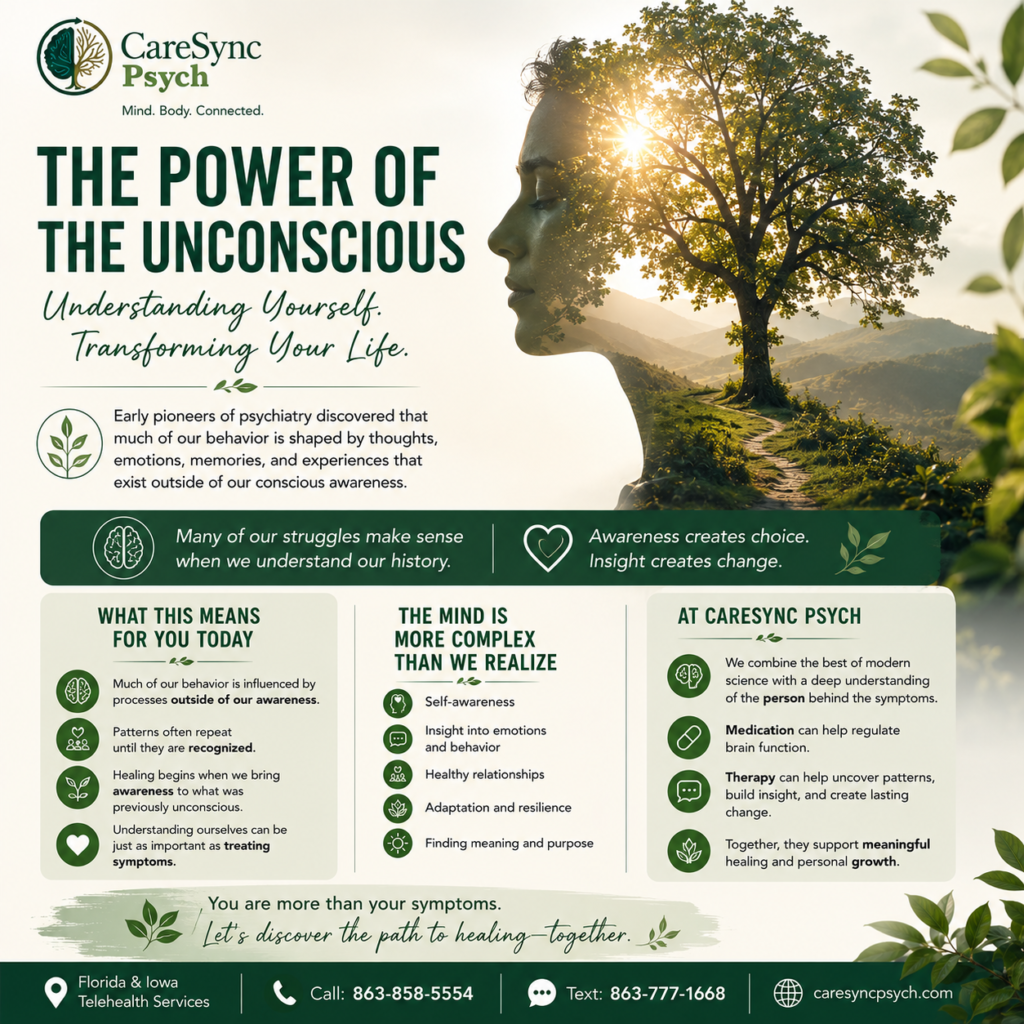
Modern psychiatry often focuses on neurotransmitters, medications, and evidence-based therapies—but long before brain scans and psychopharmacology, pioneers of dynamic psychiatry were asking a different question:

"Why do we think, feel, and behave the way we do?"

One of the most interesting themes from this work is the idea that much of human behavior is influenced by processes occurring outside of conscious awareness. Long before modern neuroscience confirmed that many brain functions occur automatically, clinicians observed that unresolved experiences, beliefs, conflicts, and emotions could shape thoughts, relationships, and even physical symptoms.

Book an Appointment Using Insurance 

Learn More About Our Services

Affordable Self-Pay Options

Telehealth Options (FL, WA, IA)

 Sometimes our reactions make sense when we understand our history.

What Does This Mean Today?

While modern psychiatry has advanced tremendously, the core insight remains relevant:

Understanding ourselves can be just as important as treating symptoms.

🧠 The Mind Remembers What We Don’t Always See

Modern psychiatry has come a long way, but one truth still matters:
healing often begins when we understand the story behind our symptoms.

✨

Your Reactions Have Roots

Sometimes the way we respond today makes sense when we understand what we’ve been through.

🔁

Patterns Repeat Until They’re Seen

Relationship struggles, anxiety loops, and coping habits often shift once we recognize them.

🌱

Awareness Creates Change

Healing begins when hidden thoughts, emotions, and experiences come into the light safely.

💚

You Are More Than Symptoms

Understanding yourself can be just as important as treating anxiety, depression, or stress.

Many people enter treatment believing they simply need to “stop feeling anxious” or “get rid of depression.” While symptom relief is important, meaningful growth often comes from discovering deeper patterns involving self-worth, relationships, attachment, trauma, and coping strategies.

The Mind Is More Complex Than We Realize

Ellenberger’s work reminds us that mental health is not simply the absence of symptoms. It involves:

🧠 Self-awareness
💬 Insight into emotions and behavior
🤝 Healthy relationships
🌿 Adaptation and resilience
❤️ Finding meaning and purpose

 Healing begins when we bring awareness to what was previously unconscious.

At CareSync Psych

We believe effective mental health care combines the best of modern science with a genuine understanding of the person behind the symptoms.

Medication may help regulate brain function. Therapy can help uncover patterns, build insight, and create lasting change. Together, they can support meaningful healing and personal growth.

Because sometimes the most important discoveries are not made in a laboratory—they are made within ourselves.

Book an Appointment Using Insurance 

Learn More About Our Services

Affordable Self-Pay Options

Telehealth Options (FL, WA, IA)

Patterns often repeat until they are recognized.  

What if some of the most important influences on your life operate outside of your awareness?

Henri Ellenberger’s The Discovery of the Unconscious explores how pioneers of psychology and psychiatry helped uncover the hidden forces that shape thoughts, emotions, relationships, and behavior.

Many struggles aren’t signs of weakness—they may be patterns developed to adapt, survive, or cope.

Through therapy, self-reflection, and evidence-based treatment, those patterns can become opportunities for growth.

✨ Awareness creates choice.
✨ Insight creates change.
✨ Healing starts with understanding.

Group Psychology Can Change Society

Group Psychology Can Change Society

In today’s world, people are more connected digitally than at any other point in history—yet many individuals feel increasingly anxious, polarized, isolated, and emotionally overwhelmed.

Two influential works that explore these dynamics are:

The Psychology of Totalitarianism by Mattias Desmet and Group Psychology and the Analysis of the Ego by Sigmund Freud.

Although written generations apart, both books explore an important psychological question:

At CareSync Psych, we believe psychological insight can empower individuals to better understand themselves, their relationships, and the world around them.

Without self-awareness, people may mistake emotional intensity for truth.

How does group influence shape individual thinking, emotions, identity, and behavior?

The Human Need for Belonging

Humans are social beings. We naturally seek:

  • Connection
  • Meaning
  • Identity
  • Safety
  • Community

When people feel disconnected, fearful, uncertain, or emotionally distressed, group dynamics can become incredibly powerful.

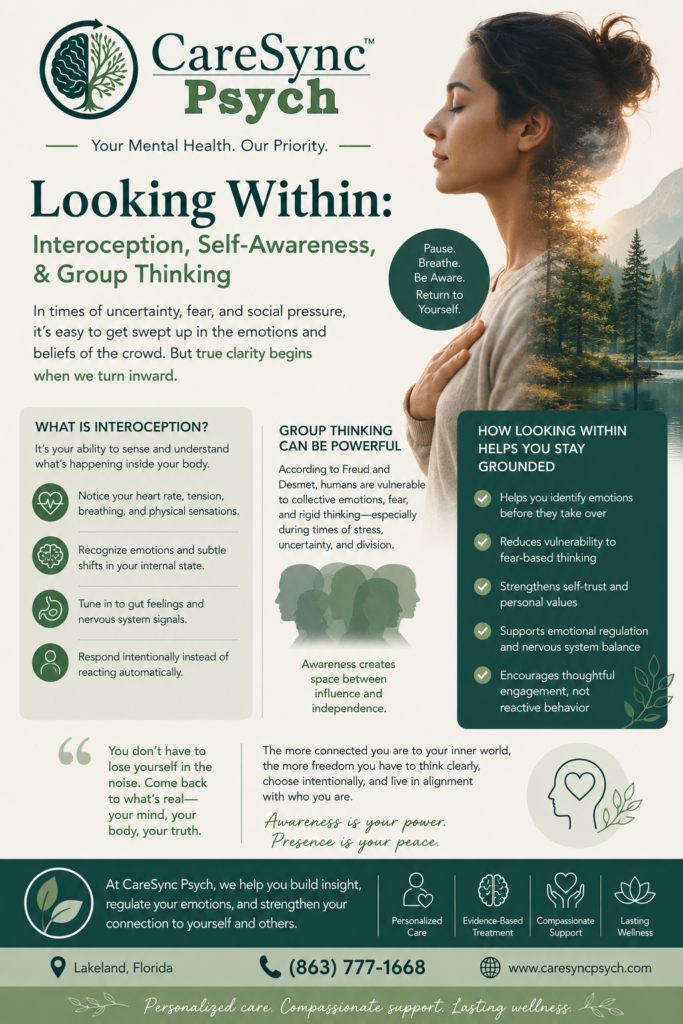
Freud discussed how individuals in groups may unconsciously shift parts of their identity toward the group itself, sometimes leading emotions and collective thinking to overpower individual reasoning.

Desmet expands on this concept by exploring how fear, chronic stress, loneliness, uncertainty, and social fragmentation may increase susceptibility to rigid collective thinking and emotional contagion.

Mental health does not exist in isolation from society.

When individuals are chronically stressed, isolated, sleep-deprived, overstimulated, or emotionally dysregulated, they may become more vulnerable to external emotional influence and black-and-white thinking.

Chronic stress, fear, social division, and constant exposure to emotionally charged information can affect:

  • Anxiety levels
  • Emotional regulation
  • Critical thinking
  • Relationships
  • Sense of identity
  • Nervous system activation

Many people today report feeling:

  • Emotionally exhausted
  • Hypervigilant
  • Disconnected
  • Angry or fearful
  • Overstimulated by media and social conflict

Understanding group psychology can help individuals become more aware of:
✔ Emotional influence
✔ Cognitive bias
✔ Fear-based thinking
✔ Social pressure
✔ Identity and belonging needs
✔ The impact of chronic societal stress on mental health

At CareSync Psych, we believe psychological insight can empower individuals to better understand themselves, their relationships, and the world around them.

Without self-awareness, people may mistake emotional intensity for truth.

Awareness Is Protective

Awareness can help people:

  • Pause before reacting emotionally
  • Think more independently
  • Build healthier relationships
  • Reduce black-and-white thinking
  • Stay grounded during uncertainty
  • Strengthen emotional resilience

Mental wellness includes not only caring for ourselves individually, but also understanding the environments and systems that influence how we think, feel, and relate to others.

Social Anxiety

Understanding Political Beliefs & The Psychology of Politics

Understanding Panic Disorder: Breaking the Cycle of Fear

Humans are neurologically wired for connection. Emotions spread socially.

When emotions run high in groups, people may:

  • React impulsively
  • Adopt beliefs without reflection
  • Feel pressured to conform
  • Seek safety in certainty
  • Lose connection with their individual emotional awareness

This is where introspection and interoception become deeply important.

The ability to ask ourselves:

  • “What am I actually feeling right now?”
  • “Is this fear mine, or am I absorbing collective fear?”
  • “Am I reacting emotionally or thoughtfully?”
  • “What is happening in my body as I consume this information?”
  • “Am I grounded, or emotionally overwhelmed?”

can create space between emotional contagion and conscious decision-making.

The more connected we become to our inner world, the less likely we are to lose ourselves completely in external noise.

At CareSync Psych, we believe psychological insight can empower individuals to better understand themselves, their relationships, and the world around them.

The Nervous System and Emotional Contagion

Fear spreads.
Anger spreads.
Panic spreads.
Calm spreads too.

At CareSync Psych, we believe emotional insight and self-awareness are essential components of mental wellness

When individuals are chronically stressed, isolated, sleep-deprived, overstimulated, or emotionally dysregulated, they may become more vulnerable to external emotional influence and black-and-white thinking.

References Desmet, M. (2022). The psychology of totalitarianism. Chelsea Green Publishing. Freud, S., & Strachey, J. (2024). Group psychology and the analysis of the ego: Illustrated & psychology glossary & index added inside. E-Kitap Projesi & Cheapest Books.

Mental Health Awareness

Mental Health Awareness

 Mental Health Awareness Month 2026: Where We Started, Where We Are, and Where We’re Going

Each May, we recognize Mental Health Awareness Month—a movement that began in 1949, initiated by what is now the Mental Health America. The goal was simple but powerful: reduce stigma, educate the public, and promote mental wellness for all.

Where We Are Now

Fast forward to 2026, and mental health has become a central part of overall health. The World Health Organization emphasizes that mental health is essential to well-being, yet millions worldwide still lack access to care (WHO, 2022).

At CareSync Psych, we believe mental health care should be accessible, personalized, and free of judgment. Mental Health Awareness Month is more than a campaign—it’s a reminder that seeking support is a sign of strength, not weakness.

You don’t have to wait until things feel overwhelming.
You deserve support, clarity, and a path forward—every single day.

Some important realities:

  • 1 in 8 people globally live with a mental health condition (WHO, 2022)

  • Anxiety and depression remain among the most common disorders

  • Access to care continues to be a major barrier, especially in underserved communities

Book an Appointment Now

At the same time, we’ve made some progress:

  • Increased openness in discussing mental health
  • Integration of mental health into primary care
  • Expansion of telehealth and digital services
  • Greater use of social media to spread awareness and education

Research shows that social media can be used for wellness andsignificantly improve awareness, reduce stigma, and encourage help-seeking behaviors when used responsibly (Latha et al., 2020).

Interesting Shifts in Mental Health Awareness

  • Mental health is now viewed as part of whole-person care, not separate from physical health
  • Younger generations are more likely to seek help and talk openly about struggles
  • Preventative mental health (stress management, therapy, lifestyle changes) is gaining attention—not just crisis care

How We Can Improve as a Society

  • 1. Normalize Mental Health Conversations
    Talking about mental health should feel as natural as discussing physical health. Reducing stigma starts with everyday conversations.

    2. Improve Access to Care
    Expanding affordable, accessible services—including telehealth—can help reach more individuals in need.

    3. Focus on Early Intervention
    Addressing symptoms early can prevent worsening conditions and improve long-term outcomes.

    4. Use Social Media Intentionally
    Social platforms can be powerful tools for education, connection, and support—but should promote accurate, evidence-based information.

    5. Embrace a Whole-Person Approach
    Mental health is influenced by biology, environment, relationships, and lifestyle. Effective care considers all of these factors.

Book an Appointment Now

Mental Wellness

A Message from CareSync Psych

At CareSync Psych, we believe mental health care should be accessible, personalized, and free of judgment. Mental Health Awareness Month is more than a campaign—it’s a reminder that seeking support is a sign of strength, not weakness.

You don’t have to wait until things feel overwhelming.
You deserve support, clarity, and a path forward—every single day.

References

Latha, K., Meena, K. S., Pravitha, M. R., Dasgupta, M., & Chaturvedi, S. K. (2020). Effective use of social media platforms for promotion of mental health awareness. Journal of Education and Health Promotion, 9(1), 124.

World Health Organization. (2022). World mental health report: Transforming mental health for all.

Mental Health America. Mental Health Awareness Month.

Book an Appointment Now

Mental Wellness

Mental Wellness

What Is Mental Wellness?

And How Do We Actually Achieve It?

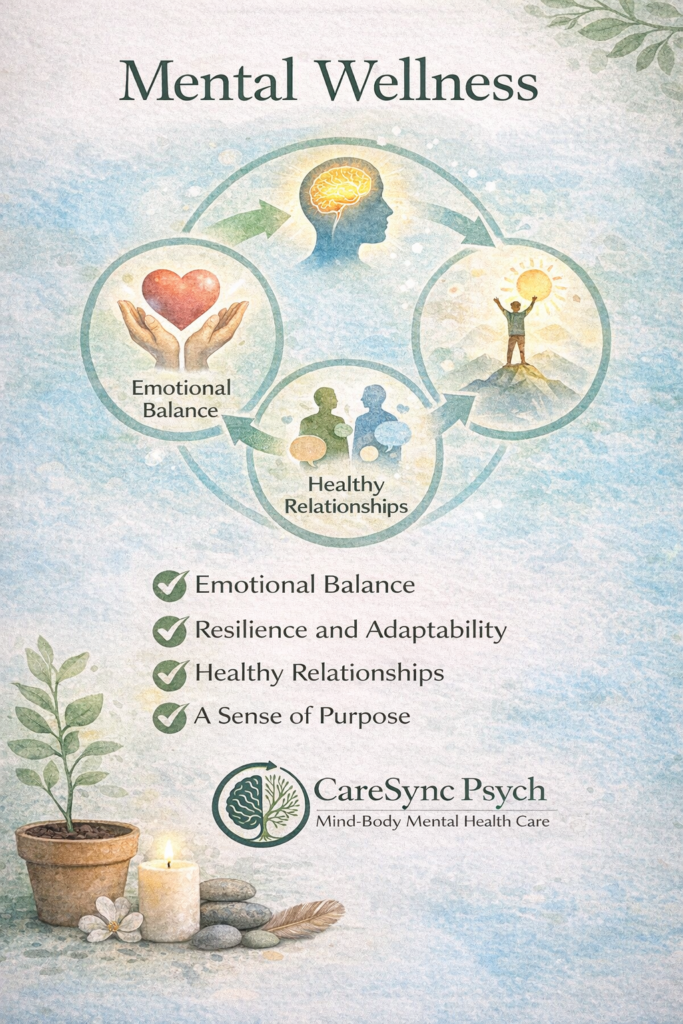
Mental wellness is more than the absence of mental illness. It is a dynamic, evolving state of emotional balance, psychological resilience, social connection, and purpose.

At CareSync Psych, we view mental wellness as the ability to:

  • Regulate emotions effectively

  • Adapt to stress

  • Maintain meaningful relationships

  • Experience purpose and fulfillment

  • Function in daily life with clarity and stability

This definition aligns with contemporary psychiatric literature emphasizing that mental well-being is multidimensional and influenced by biological, psychological, and social factors (Gautam et al., 2024).

Home

Mental Health vs. Mental Wellness

Mental health often refers to diagnosable conditions (e.g., anxiety disorders, depression, bipolar disorder).

Mental wellness refers to:

  • How well you are functioning

  • How resilient you feel

  • How connected and purposeful your life feels

Gautam et al. (2024) describe mental well-being as shaped by determinants such as:

  • Genetics and neurobiology

  • Life experiences and trauma

  • Socioeconomic context

  • Social support

  • Coping skills

In other words, mental wellness is not just internal—it is influenced by environment and lived experience.

What Impacts Mental Wellness?

Research consistently shows that stress is one of the strongest predictors of reduced mental well-being.

Slimmen et al. (2022) found that stressors and perceived stress significantly influence mental well-being, particularly when individuals lack effective coping strategies. Importantly, it is not only the presence of stress—but how we interpret and manage it—that determines outcomes.

Common stress-related disruptors of mental wellness include:

  • Chronic workload or academic pressure

  • Financial strain

  • Relationship conflict

  • Poor sleep

  • Social isolation

  • Unresolved trauma

When stress becomes chronic, it affects emotional regulation, immune function, sleep cycles, and cognitive clarity.

The Components of Mental Wellness

Cardozo et al. (2023) describe mental wellness as involving:

1. Emotional Regulation

The ability to identify and manage feelings without becoming overwhelmed.

2. Cognitive Flexibility

Being able to adapt to change and shift perspective.

3. Social Connectedness

Healthy relationships are protective factors for mental well-being.

4. Purpose and Meaning

A sense that one’s life has direction and value.

5. Self-Efficacy

Belief in one’s ability to handle challenges.

Mental wellness is therefore both internal (mindset, coping) and external (relationships, environment, lifestyle).

Self-Optimization Support

How Do We Accomplish Mental Wellness?

Mental wellness is not achieved through a single intervention. It is cultivated.

Here are evidence-informed ways to strengthen mental wellness:

1. Develop Adaptive Coping Skills

Healthy coping includes:

  • Problem-solving

  • Mindfulness practices

  • Cognitive reframing

  • Emotional expression

Maladaptive coping (avoidance, substance reliance, rumination) tends to reduce long-term wellness (Gautam et al., 2024).


2. Manage Stress Proactively

Stress reduction strategies may include:

  • Structured routines

  • Sleep regulation

  • Time boundaries

  • Therapy

  • Physical activity

Slimmen et al. (2022) emphasize that perceived stress mediates the relationship between life stressors and well-being—meaning our regulation strategies matter deeply.


3. Strengthen Social Support

Humans are relational. Social connection protects against anxiety and depressive symptoms. Even small improvements in connection can enhance mental wellness.


4. Align Lifestyle With Brain Health

Sleep, nutrition, movement, and metabolic health influence mood regulation, inflammation, and cognitive clarity.

Mental wellness is biological as much as psychological.


5. Seek Professional Support When Needed

Therapy and medication are not signs of weakness. They are tools for restoring balance when stress overwhelms coping capacity.

At CareSync Psych, we integrate:

  • Medication management (when appropriate)

  • Psychotherapy

  • Lifestyle interventions

  • Education and skill-building

Because wellness is comprehensive.

Mental Wellness Is Not Perfection

It does not mean:

  • Always feeling happy

  • Never experiencing stress

  • Being “productive” at all times

It means having the capacity to navigate difficulty without losing stability.

Wellness fluctuates. Resilience grows.

Obsessive-Compulsive Disorder (OCD)

The CareSync Psych Perspective

Mental wellness is not something you either have or do not have—it is something you cultivate.

Through supportive care, structured coping strategies, metabolic awareness, and relational healing, mental wellness becomes attainable.

It is not about eliminating struggle.
It is about strengthening your ability to move through it.

.

References

Cardozo, F., Pahuja, V., Samvedi, D., Madat, O., & Bhatia, G. (2023). Mental wellness—Mind matters. In     International Conference on Information and Communication Technology for Intelligent Systems (pp. 295–304). Springer Nature Singapore.

Gautam, S., Jain, A., Chaudhary, J., Gautam, M., Gaur, M., & Grover, S. (2024). Concept of mental health and mental well-being, its determinants and coping strategies. Indian Journal of Psychiatry, 66(Suppl 2), S231–S244.

Slimmen, S., Timmermans, O., Mikolajczak-Degrauwe, K., & Oenema, A. (2022). How stress-related factors affect mental wellbeing of university students: A cross-sectional study to explore the associations between stressors, perceived stress, and mental wellbeing. PLOS ONE, 17(11), e0275925.

The Brain-Gut Connection: New Research

The Brain-Gut Connection: New Research

The Brain–Gut Connection: What New Research Tells Us About Mental Health

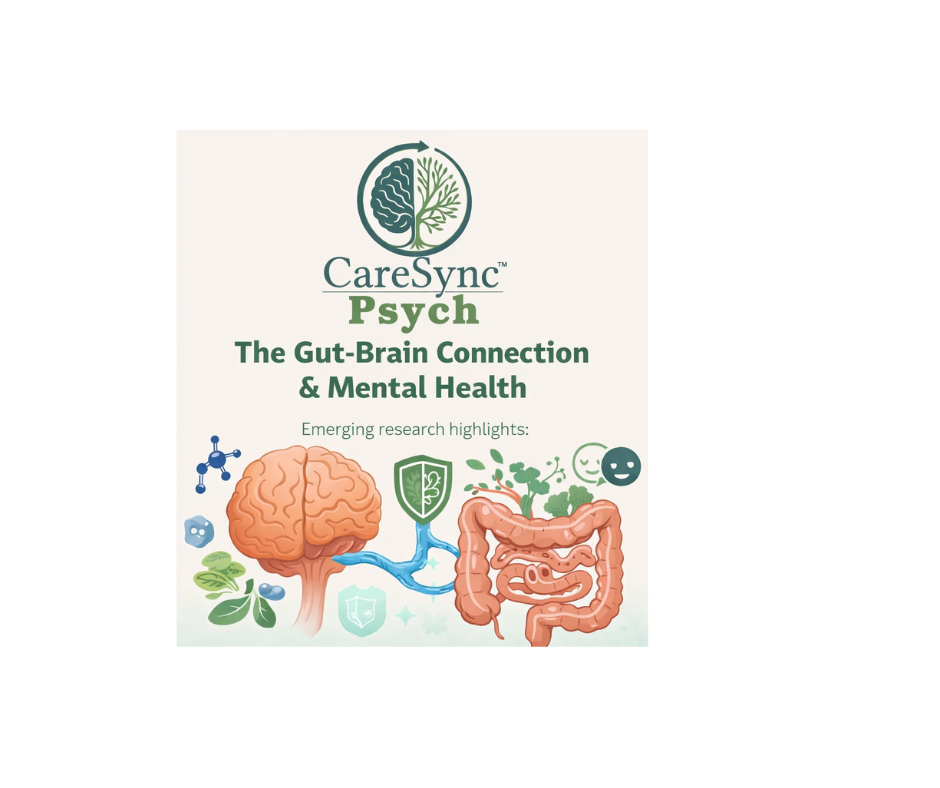
Recent scientific studies are shedding transformative light on how our gut and brain communicate — not just in digestion, but in mood, cognition, and overall mental wellness. This gut–brain connection is becoming a central pillar in understanding resilience, stress regulation, and even neurodevelopmental health.

About Us

The Microbiome as a “Second Brain”

Research by Gwak & Chang (2021) highlights the role of the gut microbiome — the trillions of bacteria living in our digestive tract — in influencing the brain through immune, endocrine, and neural pathways. These microbial communities help regulate:

  • Neurotransmitter production

  • Inflammation and immune response

  • Gut barrier integrity

When the gut barrier weakens (“leaky gut”), inflammatory signaling can travel to the brain, which may affect mood and cognition. This underscores that maintaining gut health is not just physical — it’s deeply psychological.

Takeaway: A balanced microbial ecosystem may help support emotional regulation and stress resilience.

Synaptic Plasticity & Development

Damiani, Cornuti & Tognini (2023) expand this picture, showing that gut microbes can influence neuroplasticity, the brain’s capacity to change and adapt. Their work suggests:

  • Gut microbiota may impact brain development

  • Alterations in microbiome composition are associated with neurodevelopmental disorders

  • Microbial metabolites can modulate synaptic signaling

This research invites us to think beyond traditional psychiatry: early-life microbial exposures and diet might play a role in shaping lifelong mental health trajectories.

In a recent review, Manske (2024) outlines how gut–brain dynamics are relevant across the lifespan. Key points include:

  • Bidirectional communication through the vagus nerve and immune signals

  • How stress and mood influence gastrointestinal function

  • The potential for dietary and lifestyle interventions to support both gut and mental health

This integrative lens encourages clinicians and patients alike to value holistic care — from nourishing foods and sleep to stress management and movement.

Hormones & Mental Health: Why Your Biology Matters

Hey! I am first heading line feel free to change me

Small, sustainable lifestyle choices can ripple into both gut and brain health.

A Future of Connected Care

As research continues to unfold, the brain–gut axis stands out as a bridge between mental and physical health — reminding us that healing pathways are interconnected. By integrating science with compassionate care, we can help people thrive both emotionally and biologically

Metabolic Psychiatry

Vision Boards and Mental Health: The Psychology, Science, and How to Make Them Actually Work

Vision Boards and Mental Health: The Psychology, Science, and How to Make Them Actually Work

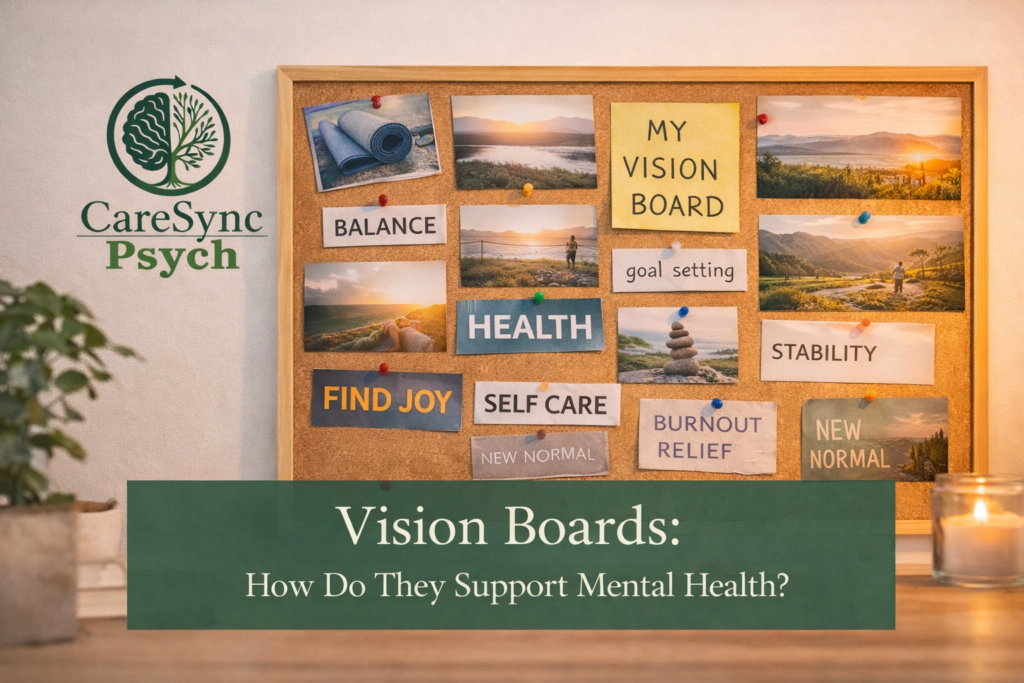
Vision boards are often dismissed as trendy or superficial—something associated with wishful thinking rather than real psychological change. Yet research in psychology, behavioral science, and therapeutic practice suggests that visualization tools like vision boards can be effective when grounded in intention, reflection, and action.

At CareSync Psych, we take a science-informed approach to tools that support mental health, motivation, and sustainable behavior change. Vision boards are not magic—but when used correctly, they can support clarity, hope, and goal-directed behavior.

Vision boards don’t create change on their own—but they can help you see what you’re working toward.

Home

What Is a Vision Board (Psychologically Speaking)?

A vision board is a visual representation of goals, values, and desired states, typically created using images, words, and symbols that reflect what an individual wants to cultivate in their life.

From a psychological standpoint, vision boards are not about “manifesting” outcomes without effort. Instead, they function as:

  • A self-reflection tool

  • A cognitive priming mechanism

  • A way to externalize goals and values

  • A support for motivation and emotional regulation

Burton and Lent (2016) describe vision boards as a therapeutic intervention that can facilitate insight, emotional processing, and goal clarity—particularly when integrated into structured therapeutic work.


Sometimes, making goals visible is enough to help you move forward.

How to Use Vision Boards Effectively (Without the Hype)

1. Start With Reflection, Not Images

Before creating a vision board, reflect on:

  • What feels missing or misaligned

  • What values matter most right now

  • What kind of life feels supportive—not just impressive

This aligns with PCC’s (2023) framework of moving from reflection to visualization.


2. Focus on Feelings and Values

Include images or words that reflect:

  • Calm

  • Stability

  • Connection

  • Health

  • Balance

Not just achievements or external markers of success.


3. Make Goals Visible—but Grounded

Place your vision board somewhere you’ll see it regularly, but pair it with:

  • Small, realistic goals

  • Flexible timelines

  • Compassion for setbacks

Visibility supports awareness—but action creates change.


4. Use Vision Boards as a Check-In Tool

Revisit your vision board periodically:

  • What still fits?

  • What no longer aligns?

  • What feels unrealistic or pressure-based?

Vision boards should evolve as you do.

Client-Centered Therapy

Vision boards don’t create change on their own—but they can help you see what you’re working toward.

A CareSync Psych Perspective

At CareSync Psych, we view vision boards as one possible tool within a broader mental health and behavior-change framework. When combined with therapy, medication management, lifestyle support, and self-compassion, visualization can help reinforce clarity and direction.

Mental health–informed change is not about forcing positivity.
It’s about supporting the nervous system, reducing overwhelm, and creating environments that make healthy choices easier.

Anxiety Treatment at CareSync Psych

Sometimes, making goals visible is enough to help you move forward.

Final Takeaway

Vision boards work best when they are:

  • Grounded in reflection

  • Paired with action

  • Flexible rather than rigid

  • Used as support—not pressure

You don’t need to manifest a perfect future.
You need clarity, support, and small steps in the right direction.

New Year, New Me? The Psychology of Making Habits Stick

References Used in this Post

Burton, L., & Lent, J. (2016). The use of vision boards as a therapeutic intervention. Journal of Creativity in Mental Health, 11(1), 52–65.

Kharbanda, K. (2025). Exploring the relationship between optimism and hope among individuals using vision boards. International Journal of Interdisciplinary Approaches in Psychology, 3(3), 295–306.

PCC, J. H. (2023). From reflection to visualization: A framework for goal setting and strategic planning. Journal of Financial Planning, 36(12), 44–47.

Read More
Dec 2025 by Jennifer Sanri
New Year, New Me? The Psychology of Making Habits Stick
Read More
Read More
Dec 2025 by Jennifer Sanri
Anxiety Treatment at CareSync Psych
Read More
Read More
Dec 2025 by Jennifer Sanri
When the Holidays Feel Heavy: Understanding Seasonal Sadness

mD

Read More
Read More
Oct 2025 by Jennifer Sanri
Food Addiction: Why It’s Real, Why We Feel Out of Control, and How Healing Begins
Read More

Why New Year’s Resolutions Fail—and How to Build Mental Health Habits That Stick

Why New Year’s Resolutions Fail—and How to Build Mental Health Habits That Stick

Every January, people set New Year’s resolutions with the best intentions—only to feel discouraged weeks later when motivation fades. This isn’t a personal failure. Psychology shows that most resolutions fail because they are designed incorrectly, not because people lack willpower.

New research in behavioral psychology explains how to create habits that actually stick, improve mental health, and lead to real, lasting change.


The Psychology Behind New Year’s Resolutions

Research shows that successful resolutions rely on how goals are framed and structured, not how motivated someone feels on January 1st.

A large-scale study by Oscarsson et al. (2020) found that people who set the “right kind” of goals were significantly more successful at maintaining behavior change over time. Similarly, Höchli et al. (2020) demonstrated that resolutions stick when daily habits are connected to deeper personal meaning.


Why Most Resolutions Fail

1. They Focus on What to Avoid

Many resolutions are framed negatively:

  • “Stop being anxious”

  • “Don’t overeat”

  • “Quit procrastinating”

These are called avoidance-oriented goals, and psychology shows they are harder to maintain. The brain responds better when it knows what to move toward, not just what to escape.

2. They Rely on Motivation Instead of Habits

Motivation fluctuates with stress, mood, sleep, and mental health. Habits, on the other hand, become automatic over time. When resolutions depend on constant motivation, they rarely survive real life.

3. They Lack Meaning

When goals are disconnected from personal values, they feel like chores. Without a meaningful “why,” persistence fades quickly.


What the Research Says About Goals That Stick

Approach-Oriented Goals Work Better

According to Oscarsson et al. (2020), people are more successful when goals are framed as actions to build rather than behaviors to eliminate.

Examples of approach-oriented goals:

  • “Build calmer mornings”

  • “Practice mindful eating”

  • “Create a consistent sleep routine”

These goals activate reward pathways in the brain and improve follow-through.


Connect Habits to a Bigger Purpose

Höchli et al. (2020) found that lasting change happens when small daily habits (subordinate goals) support a larger personal purpose (superordinate goals).

Superordinate goal (the why):

  • Better mental clarity

  • Emotional stability

  • Being present for family

  • Feeling healthier in your body

Subordinate habit (the what):

  • Taking medication consistently

  • Practicing a 3-minute breathing exercise

  • Walking for 10 minutes

  • Journaling one sentence at night

When habits serve something meaningful, the brain is more willing to repeat them.


How to Build Mental Health Habits That Last

1. Start Smaller Than You Think

Habits should feel almost “too easy” at first. Small actions repeated consistently are more effective than big changes done inconsistently.

2. Anchor Habits to Existing Routines

Habits stick best when tied to cues you already have:

  • After brushing teeth → brief grounding exercise

  • After coffee → medication check-in

  • Before bed → one-line reflection

3. Focus on Progress, Not Perfection

Psychology shows that self-compassion improves persistence. Missing a day doesn’t erase progress—it’s part of learning.

Book an appointment at CareSync Psych today!


Using Psychology to Become Better—Not Perfect

Psychology doesn’t encourage rigid self-discipline. Instead, it helps you design systems that support you, especially during stress.

Sustainable mental health improvement comes from:

  • Goals aligned with values

  • Habits that fit your real life

  • Compassion during setbacks

  • Consistency over intensity

The goal isn’t to “fix” yourself—it’s to support the version of you you’re becoming.


How CareSync Psych Supports Habit-Based Change

At CareSync Psych, we integrate habit science into psychiatric care, therapy, and metabolic psychiatry. We help patients:

  • Translate goals into realistic daily habits

  • Shift from avoidance-based thinking to approach-oriented growth

  • Reduce mental and metabolic barriers to change

  • building Build routines that support mood, energy, and resilience

  • Stay accountable through structured follow-ups and support

Change works best when it’s supported—not forced.

Services


Final Takeaway

New Year’s resolutions succeed when they are:

  • ✔ Approach-oriented

  • ✔ Habit-based

  • ✔ Meaning-driven

  • ✔ Compassionate

  • ✔ Sustainable

Psychology doesn’t ask you to try harder—it teaches you to try smarter.


Looking to build habits that support your mental health this year?

Contact CareSync Psych to learn how evidence-based psychiatry, therapy, and metabolic support can help you create lasting change.

About Us

We are an outpatient mental health care provider committed to integrating evidence-based treatment with a holistic, healing-centered approach to promote mental wellness. Our patient-focused services include medication management, psychotherapy, metabolic psychiatry,  and wellness optimization.

“Providing compassionate mental health care by syncing the mind and body—treating the psychological with the physiological.”

Recent Posts

  • How Nature Supports Mental Health and Stress Reduction | CareSync Psych
  • The Power of the Unconscious | Mental Health Growth and Self-Awareness | CareSync Psych
  • Group Psychology Can Change Society
  • Why Propranolol Is One of My Favorite Medications in Psychiatry
  • Evidence Over Fear: Understanding Antidepressant Withdrawal
  • Home
  • About Us
  • Services
  • Book An Appointment
  • Contact Us
  • Weight Loss Management & Control
  • Immunity & Mental Health
  • Food Addiction & Binge Eating
  • Free Mental Health Worksheets to Download

Copyright ©2026 all rights reserved
CareSync™ Health