Call us (863) 858-5554
HealthFlex
×
  • Home
  • About Us
    • Check Your Coverage
    • Insurance & Self-pay Options
    • Client-Centered Therapy
    • Crisis and After-Hours Care
    • Privacy Policy
  • Specializing In
    • Specializing In
    • Metabolic Psychiatry
    • Weight Management & Binge Eating
  • Services
    • Services
    • Medication Management for Mental Health
    • Telehealth
    • Client-Centered Therapy
    • Metabolic Psychiatry
  • Book An Appointment
  • Contact Us

The Power of the Unconscious | Mental Health Growth and Self-Awareness | CareSync Psych

The Power of the Unconscious | Mental Health Growth and Self-Awareness | CareSync Psych

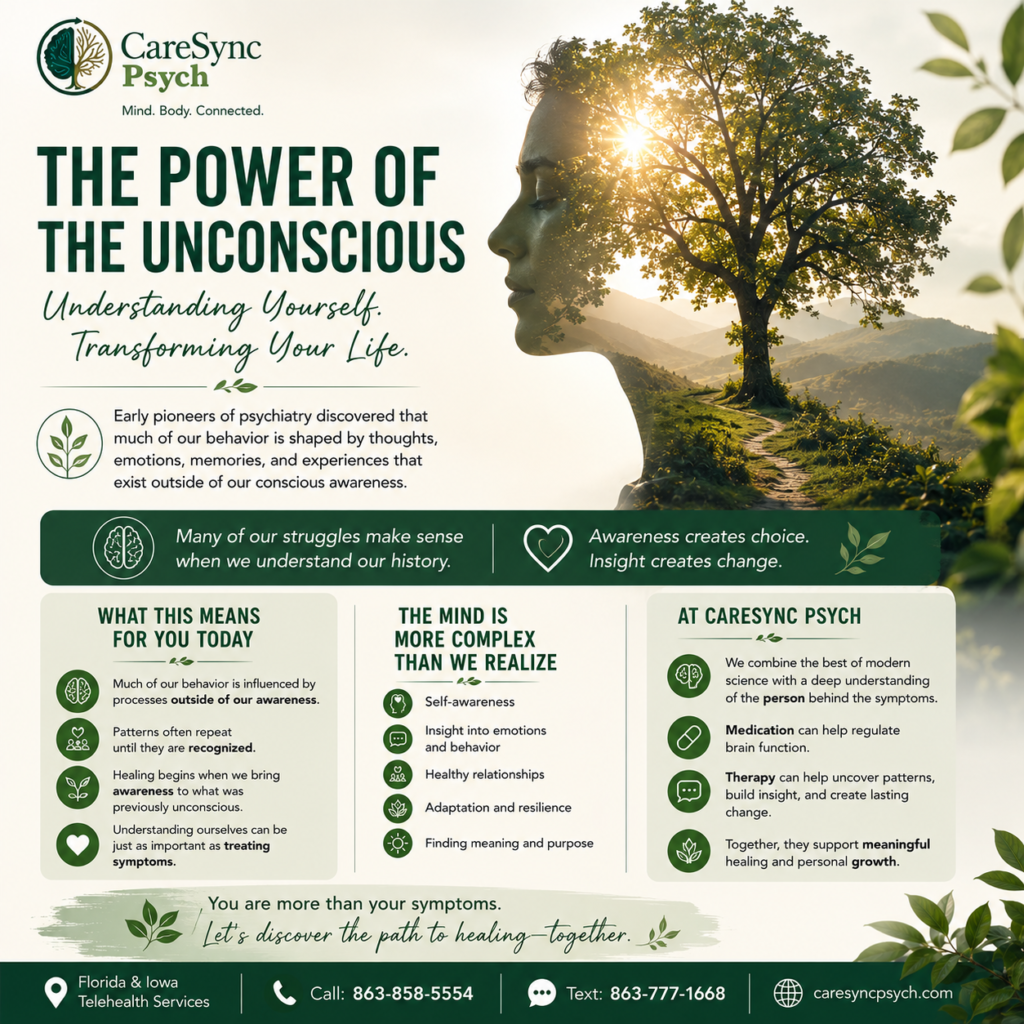
Modern psychiatry often focuses on neurotransmitters, medications, and evidence-based therapies—but long before brain scans and psychopharmacology, pioneers of dynamic psychiatry were asking a different question:

"Why do we think, feel, and behave the way we do?"

One of the most interesting themes from this work is the idea that much of human behavior is influenced by processes occurring outside of conscious awareness. Long before modern neuroscience confirmed that many brain functions occur automatically, clinicians observed that unresolved experiences, beliefs, conflicts, and emotions could shape thoughts, relationships, and even physical symptoms.

Book an Appointment Using Insurance 

Learn More About Our Services

Affordable Self-Pay Options

Telehealth Options (FL, WA, IA)

 Sometimes our reactions make sense when we understand our history.

What Does This Mean Today?

While modern psychiatry has advanced tremendously, the core insight remains relevant:

Understanding ourselves can be just as important as treating symptoms.

🧠 The Mind Remembers What We Don’t Always See

Modern psychiatry has come a long way, but one truth still matters:
healing often begins when we understand the story behind our symptoms.

✨

Your Reactions Have Roots

Sometimes the way we respond today makes sense when we understand what we’ve been through.

🔁

Patterns Repeat Until They’re Seen

Relationship struggles, anxiety loops, and coping habits often shift once we recognize them.

🌱

Awareness Creates Change

Healing begins when hidden thoughts, emotions, and experiences come into the light safely.

💚

You Are More Than Symptoms

Understanding yourself can be just as important as treating anxiety, depression, or stress.

Many people enter treatment believing they simply need to “stop feeling anxious” or “get rid of depression.” While symptom relief is important, meaningful growth often comes from discovering deeper patterns involving self-worth, relationships, attachment, trauma, and coping strategies.
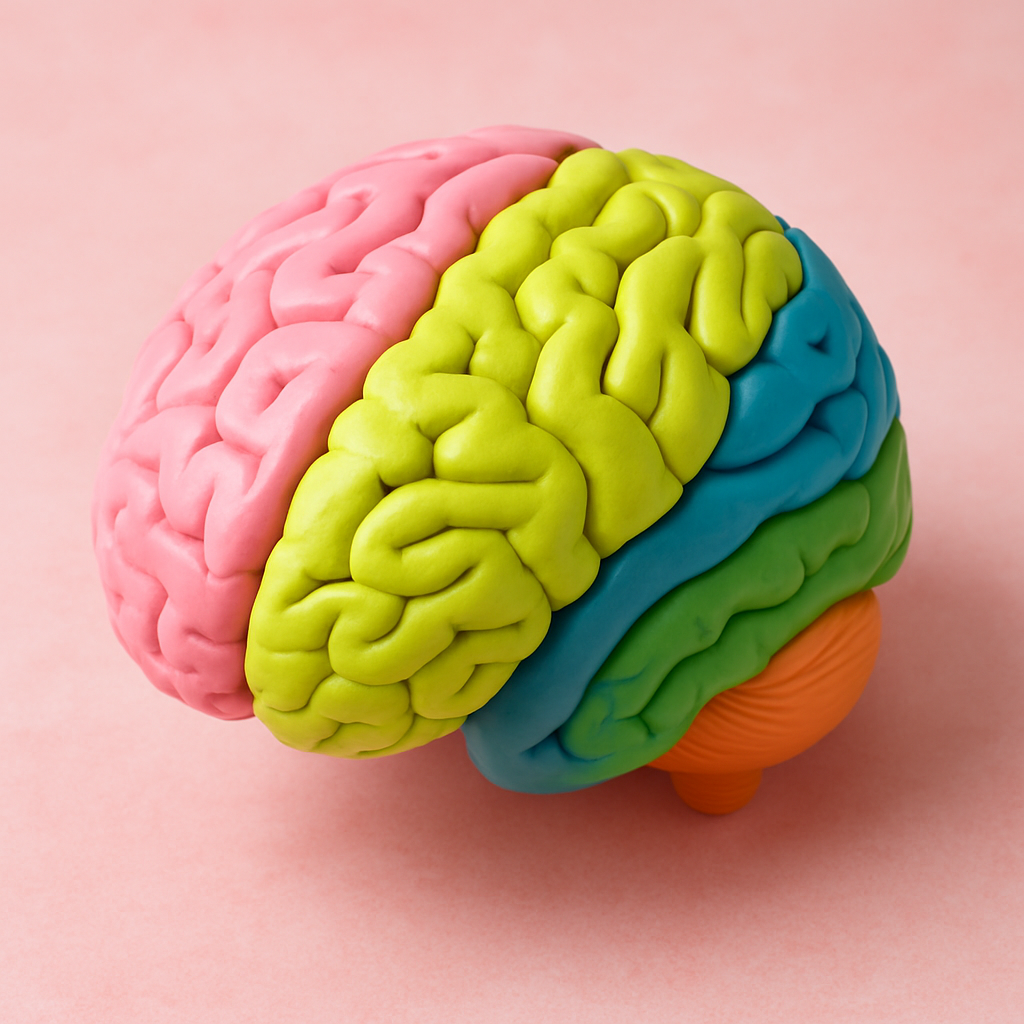
The Mind Is More Complex Than We Realize

Ellenberger’s work reminds us that mental health is not simply the absence of symptoms. It involves:

🧠 Self-awareness
💬 Insight into emotions and behavior
🤝 Healthy relationships
🌿 Adaptation and resilience
❤️ Finding meaning and purpose

 Healing begins when we bring awareness to what was previously unconscious.

At CareSync Psych

We believe effective mental health care combines the best of modern science with a genuine understanding of the person behind the symptoms.

Medication may help regulate brain function. Therapy can help uncover patterns, build insight, and create lasting change. Together, they can support meaningful healing and personal growth.

Because sometimes the most important discoveries are not made in a laboratory—they are made within ourselves.

Book an Appointment Using Insurance 

Learn More About Our Services

Affordable Self-Pay Options

Telehealth Options (FL, WA, IA)

Patterns often repeat until they are recognized.  

What if some of the most important influences on your life operate outside of your awareness?

Henri Ellenberger’s The Discovery of the Unconscious explores how pioneers of psychology and psychiatry helped uncover the hidden forces that shape thoughts, emotions, relationships, and behavior.

Many struggles aren’t signs of weakness—they may be patterns developed to adapt, survive, or cope.

Through therapy, self-reflection, and evidence-based treatment, those patterns can become opportunities for growth.

✨ Awareness creates choice.
✨ Insight creates change.
✨ Healing starts with understanding.
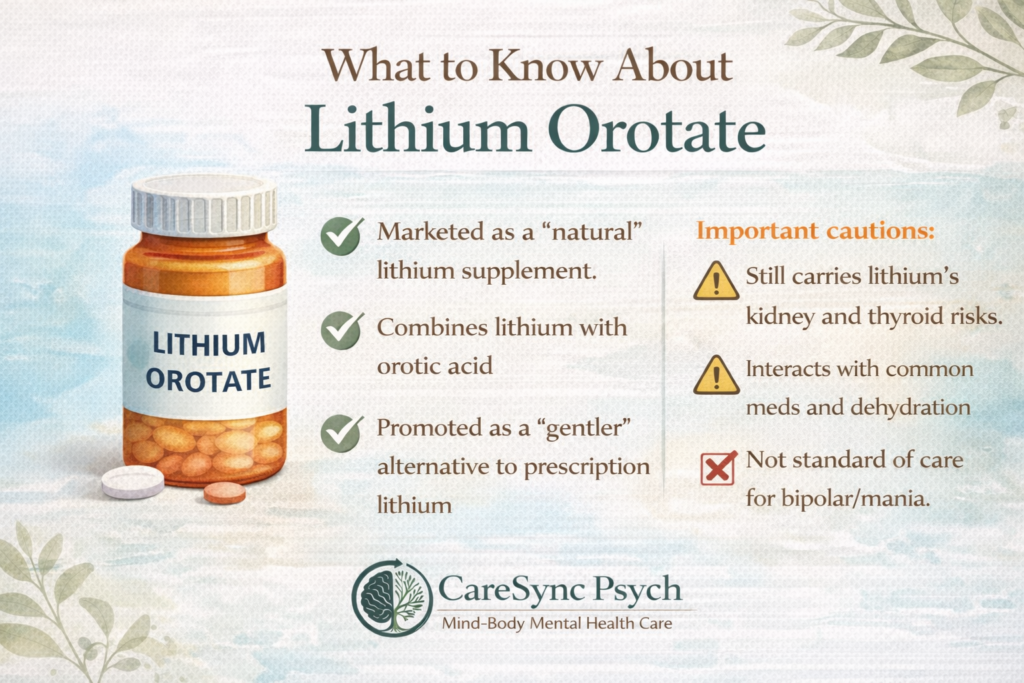
Lithium Orotate: What the New Science Suggests (and What It Doesn’t)

Lithium Orotate: What the New Science Suggests (and What It Doesn’t)

Lithium is a naturally occurring element found in the Earth’s crust, trace amounts of water, soil, and certain foods.

It is not a synthetic drug—it exists in nature as a mineral salt and has been part of the human environment for thousands of years.

In medicine, lithium carbonate (prescription) is best known for its long-standing role in psychiatry, particularly in the treatment of bipolar disorder, mood instability, and suicide prevention. Its use in modern psychiatry dates back over 70 years.

This makes lithium carbonate (prescription version) one of the most well-studied treatments in mental health.

At CareSync Psych, lithium is understood through a mind–body, metabolic psychiatry lens, where brain chemistry, inflammation, kidney health, and overall physiology are all considered together.

Lithium Orotate

Lithium has one of the strongest evidence bases in psychiatry—especially for mood stabilization and suicide risk reduction. But lately, there’s growing buzz around a supplement form: lithium orotate.

So what does the research about lithium orotate say? Let’s start with-what is lithium orotate?


What is lithium orotate?

Lithium orotate is a compound where lithium is bound to orotic acid and is sold as a an over the counter dietary supplement (not a prescription medication). However, because it’s regulated differently than prescription lithium, dose consistency and quality can vary by product—and it may not be appropriate or safe for everyone (Devadason, 2018).

Potential benefits of lithium orotate

what early evidence suggests

1) Different pharmacokinetics may change potency

Preclinical work suggests lithium orotate may distribute differently in the body compared to lithium carbonate (commonly prescribed form), potentially delivering lithium to the brain more efficiently at lower doses in animal models. (Pacholko & Bekar, 2021).

2) Anti-manic effects displayed in mice model research.

In a mouse model of mania, lithium orotate showed anti-manic–like effects at lower elemental lithium doses than lithium carbonate—raising the question of whether it could be a more “potent” option in controlled settings (Pacholko & Bekar, 2023).

Is Lithium Orotate Safe to Take?

1) Human Research Trials of Lithium Orotate Are Still Very New and Limited

There are no large, high-quality human clinical trials establishing lithium orotate as a standard treatment for bipolar disorder, mania, or depression. Current discussion in the literature is cautious and exploratory (Devadason, 2018).

2) Safety and toxicity concerns remain real

A toxicological review highlights that safety depends on dose, duration, and exposure—and that “supplement” does not mean risk-free (Murbach et al., 2021).

3) Lithium is lithium—monitoring still matters

Prescription lithium requires careful monitoring because it can affect kidneys, thyroid, hydration/electrolytes, and interacts with common medications. The core clinical challenge is always balancing mental health benefits with renal safety (Strawbridge & Young, 2022).

Medication Management for Mental Health

Potential harms & interactions to know

Lithium (including lithium orotate or supplemental forms) could become unsafe with dehydration, illness, or interacting meds.

Major interaction categories include:

  • NSAIDs (ibuprofen/naproxen) → can raise lithium levels

  • ACE inhibitors / ARBs (common BP meds) → can raise lithium levels

  • Diuretics (especially thiazides) → can raise lithium levels

  • Dehydration, vomiting/diarrhea, heavy sweating → can raise lithium levels

  • Kidney disease or reduced kidney function → higher risk

  • Pregnancy/breastfeeding → requires specialist-level risk/benefit discussion

(General lithium safety principles; reinforced by clinical emphasis on renal balance in Strawbridge & Young, 2022.)

What is Metabolic Psychiatry?

Is lithium orotate ever recommended?

In mainstream psychiatric practice, lithium orotate is not a first-line or standard recommendation for bipolar disorder/mania because:

  • robust human trial evidence is lacking

  • supplement regulation and dose reliability vary

  • lithium still carries real interaction and organ-risk considerations

That said, the preclinical findings are interesting and may justify future clinical research—but for now, decisions should be individualized and medically supervised. (Devadason, 2018; Pacholko & Bekar, 2021; Pacholko & Bekar, 2023)


CareSync Psych take

If you’re considering lithium orotate because you want a “safer lithium,” here’s the safest framework:

✅ Don’t self-prescribe or combine with interacting meds
✅ Consider baseline labs and medical history (especially kidney/thyroid)
✅ Prioritize evidence-based options first
✅ If exploring supplements, do it with a clinician who understands lithium pharmacology

Weight Loss Management & Control

Book an Appointment

We are an outpatient mental health care provider committed to integrating evidence-based treatment with a holistic, healing-centered approach to promote mental wellness. Our patient-focused services include medication management, psychotherapy, metabolic psychiatry,  and wellness optimization.

“Providing compassionate mental health care by syncing the mind and body—treating the psychological with the physiological.”

Recent Posts

  • How Nature Supports Mental Health and Stress Reduction | CareSync Psych
  • The Power of the Unconscious | Mental Health Growth and Self-Awareness | CareSync Psych
  • Group Psychology Can Change Society
  • Why Propranolol Is One of My Favorite Medications in Psychiatry
  • Evidence Over Fear: Understanding Antidepressant Withdrawal
  • Home
  • About Us
  • Services
  • Book An Appointment
  • Contact Us
  • Weight Loss Management & Control
  • Immunity & Mental Health
  • Food Addiction & Binge Eating
  • Free Mental Health Worksheets to Download

Copyright ©2026 all rights reserved
CareSync™ Health