
Client-Centered Therapy

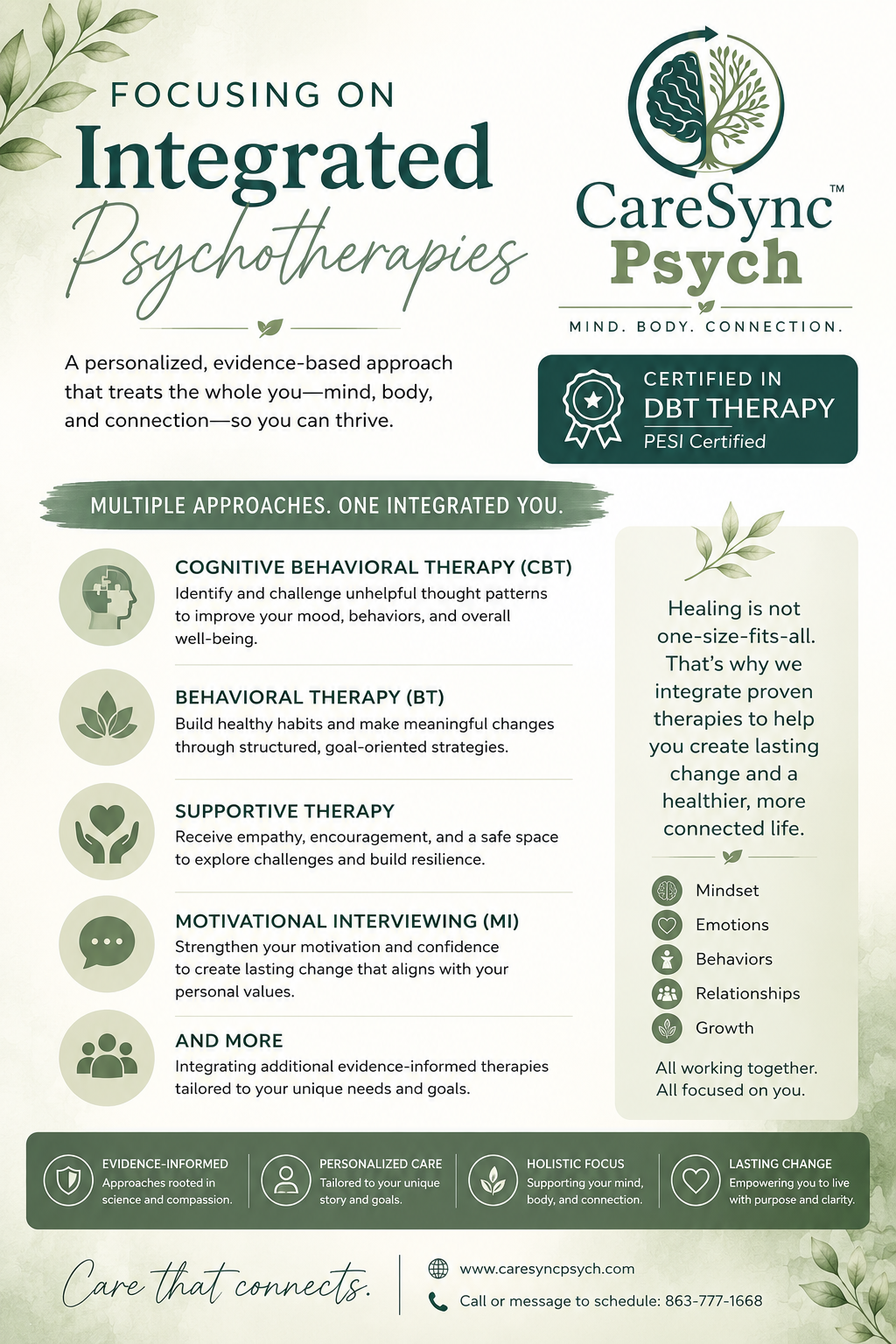
Professional CareSync Psych infographic highlighting integrated psychotherapy services including Cognitive Behavioral Therapy (CBT), Dialectical Behavior Therapy (DBT), Behavioral Therapy (BT), Supportive Therapy, Motivational Interviewing (MI), and evidence-based personalized mental health care. The design features calming sage green colors, botanical elements, and notes that the provider is PESI Certified in DBT Therapy
Personalized Psychotherapy

Therapy Should Fit You—Not the Other Way Around.

Mental health care works best when you feel heard, understood, and involved in your own treatment.

At CareSync Psych, therapy is personalized around your experiences, goals, concerns, preferences, and readiness for change. Rather than relying on one rigid method, treatment may draw from several evidence-based approaches to meet you where you are.

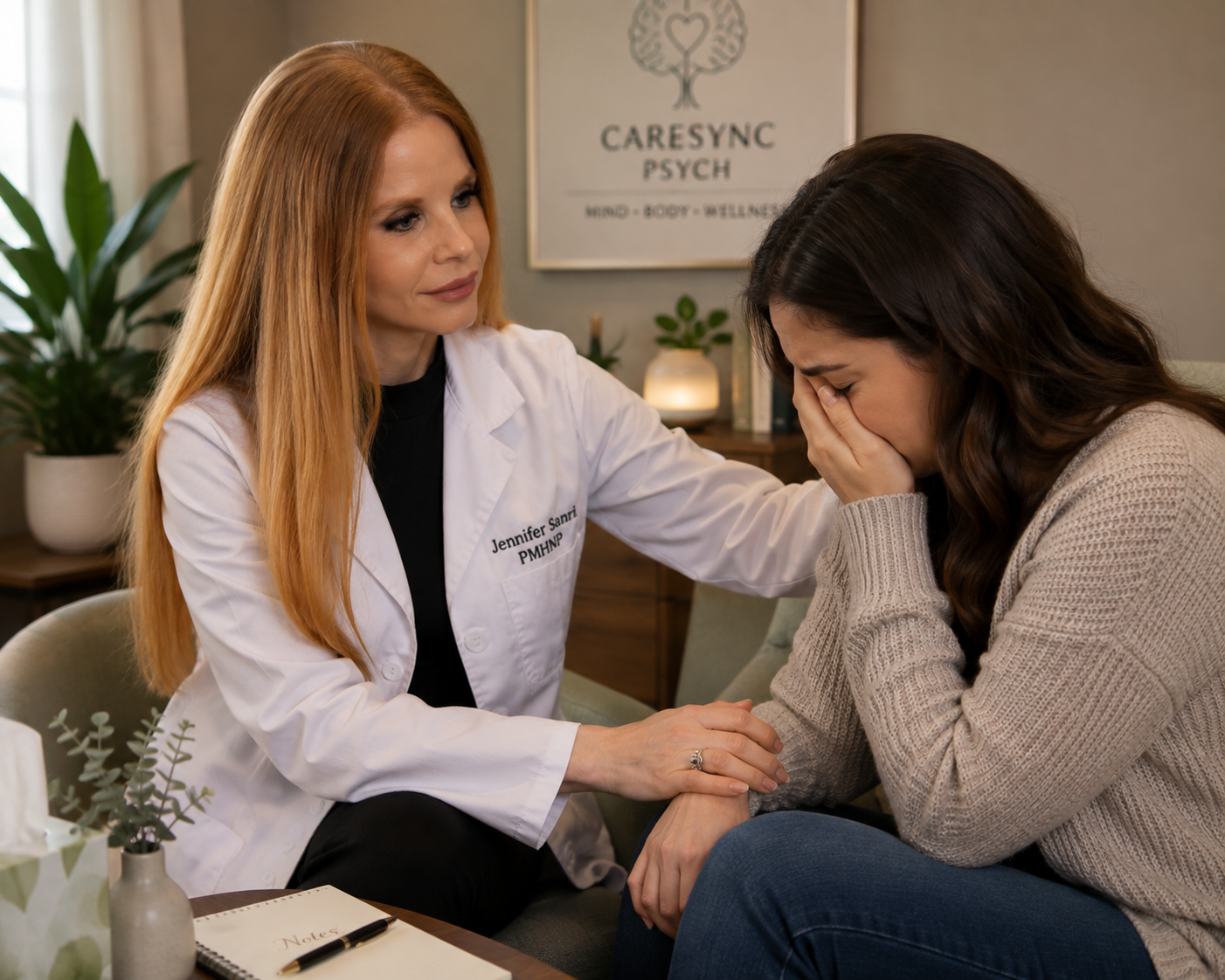
Jennifer Sanri, PMHNP, providing compassionate mental health support to a patient during a therapy visit at CareSync Psych.
Personalized Care Treatment built around your unique needs and goals.
Collaborative Approach You remain an active part of the treatment process.
Whole-Person Perspective Mind, body, relationships, and daily life can all matter.
Evidence-Informed Therapeutic approaches selected based on clinical need.
Our Approach

The relationship matters as much as the technique.

Therapy is more than talking about problems. It is a collaborative process of understanding patterns, building skills, developing insight, and finding healthier ways to respond to what life brings.

Some patients benefit most from practical tools and structured strategies. Others need a safe place to process emotions, relationships, grief, trauma, identity, or long-standing patterns. Often, effective therapy involves both.

Your treatment can evolve as your symptoms, circumstances, goals, and preferences change.

You do not need to know exactly what kind of therapy you need before you begin.
Flexible Treatment Options

Mental health care does not have to look the same for everyone.

Your plan may include therapy alone, medication management, or a combination based on clinical needs and personal preferences.

01

Therapy-Focused Care

For individuals who want to focus on emotional growth, coping strategies, relationships, behavior change, or other concerns without medication.

02

Therapy + Medication

When clinically appropriate, psychotherapy and medication management can work together within a coordinated treatment plan.

03

Medication Management

If you already have an outside therapist, CareSync Psych can focus on psychiatric evaluation and medication management while supporting continuity of care.

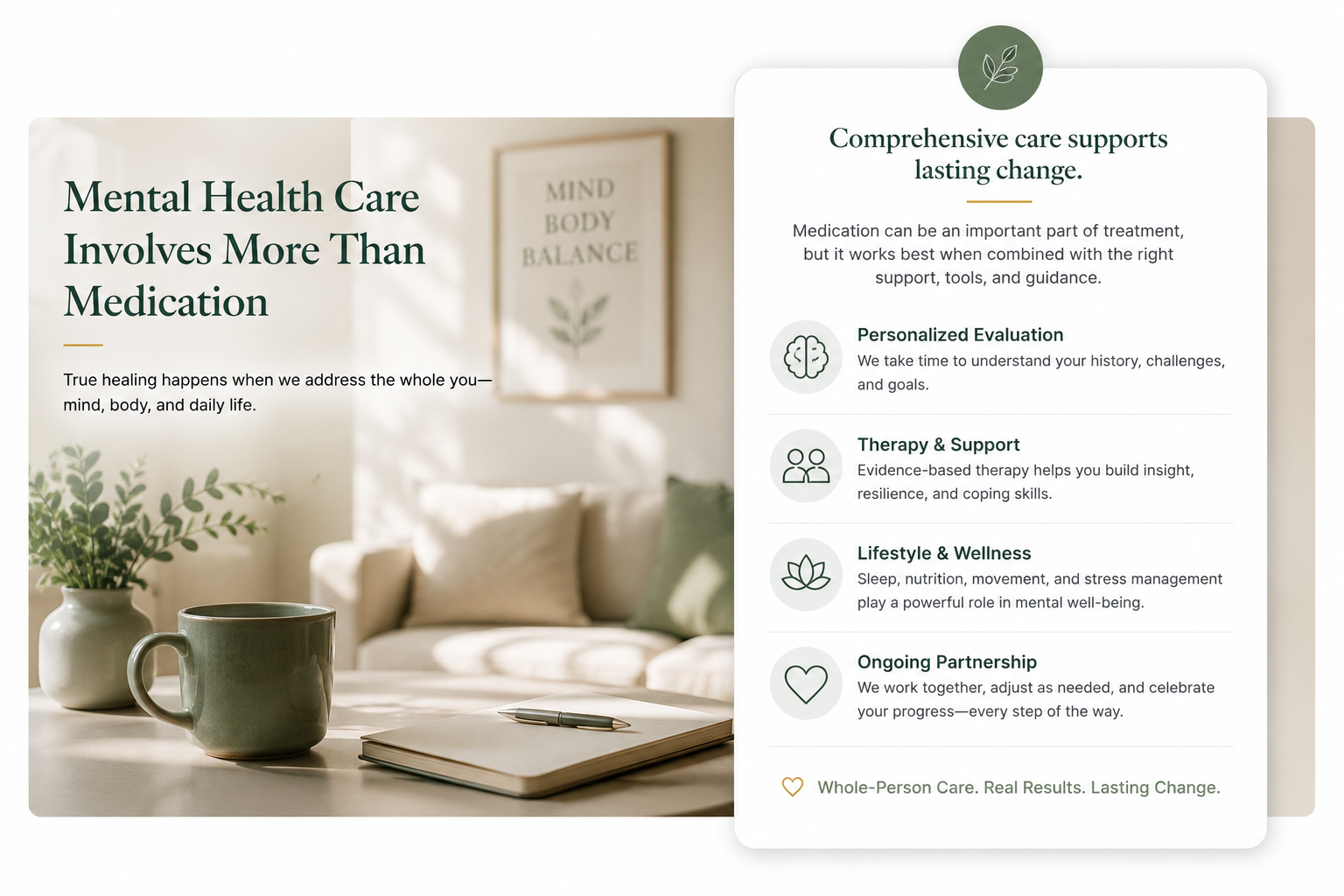
Mental health care involves more than medication, including personalized evaluation, therapy, wellness, and ongoing support.
Whole-Person Mental Health Care

Mental health care can involve more than medication.

Medication can be an important tool—but it is only one part of mental health treatment.

Depending on your needs, care may also include psychotherapy, psychoeducation, coping strategies, behavioral interventions, sleep support, stress regulation, lifestyle considerations, and ongoing collaboration.

Personalized Evaluation Understanding your symptoms, history, challenges, strengths, and goals.
Therapy & Support Developing insight, resilience, emotional flexibility, and practical coping skills.
Lifestyle & Wellness Considering sleep, stress, movement, routines, nutrition, and other relevant factors.
Ongoing Partnership Reassessing progress and adjusting care as your needs change.
Evidence-Based Approaches

Different tools for different needs.

No single therapy model is right for everyone. Interventions may be selected or blended based on your clinical presentation, goals, preferences, and response to treatment.

CBT

Cognitive Behavioral Therapy

Helps identify patterns of thinking and behavior that may contribute to distress, while building practical strategies for responding differently.

ERP

Exposure & Response Prevention

An evidence-based approach for OCD and intrusive thoughts that focuses on gradually confronting fears while reducing compulsive responses and avoidance.

IPT

Interpersonal Psychotherapy

Focuses on relationships, communication, grief, life transitions, conflict, and social support that may influence emotional well-being.

MI

Motivational Interviewing

A collaborative approach for exploring ambivalence, strengthening motivation, and supporting meaningful behavior change.

SUPPORTIVE

Supportive Psychotherapy

Provides space to process emotions, manage stress, strengthen coping, and feel supported during difficult periods.

INSIGHT-ORIENTED

Brief Psychodynamic Therapy

Explores patterns, relationships, emotions, and past experiences that may continue to influence present-day thoughts and behavior.

What Therapy May Help With

Support for the challenges that affect everyday life.

You do not need a perfectly defined diagnosis to benefit from therapy. Treatment may focus on a specific mental health condition, a stressful period of life, or simply a desire to understand yourself better.

Anxiety Depression OCD Intrusive Thoughts Panic Social Anxiety Trauma-Related Symptoms Relationship Stress Divorce & Separation Family Conflict Life Transitions Grief & Loss Burnout Self-Esteem Emotional Regulation Caregiver Stress Chronic Illness Adjustment Behavior Change Personal Growth
What Therapy Can Look Like

A process that changes as you do.

01 Understand Identify what you are experiencing, when it occurs, what may trigger it, and how it is affecting your life.
02 Recognize Patterns Explore thoughts, behaviors, avoidance, relationships, beliefs, stressors, and experiences that may be maintaining distress.
03 Develop New Responses Practice coping strategies, communication skills, behavioral changes, cognitive techniques, or other targeted tools.
04 Build Lasting Change Use insight and new skills to respond more flexibly, improve functioning, and make choices that better align with your values and goals.
Healing Takes Time

Your mind deserves care, compassion, and room to heal.

Emotional pain is real—even when no one else can see it.

Healing does not mean becoming a different person. It may mean learning to understand yourself with more compassion, responding differently to difficult thoughts and emotions, and building a life that feels more manageable and meaningful.

Progress can be quiet. Sometimes it begins with feeling heard for the first time.

Brain wrapped in a bandage symbolizing mental health healing, support, balance, and personal growth.
Common Questions

Therapy at CareSync Psych.

Do I have to take medication to receive therapy? No. Depending on clinical needs and service availability, therapy may be provided without medication management.
Can therapy and medication management be combined? Yes. When clinically appropriate, psychotherapy and psychiatric medication management may be incorporated into the same overall treatment plan.
Do you use only one type of therapy? No. CareSync Psych uses an integrative approach and may draw from several evidence-based therapeutic models based on individual needs.
What if I already have a therapist? You may continue with your established therapist while receiving psychiatric evaluation or medication management through CareSync Psych.
Is therapy available by telehealth? Telehealth psychotherapy may be available when clinically appropriate and permitted by provider licensure and applicable requirements.
You Can Start Where You Are

You do not have to have everything figured out before asking for support.

The first step is simply talking about what you are experiencing, what is getting in the way, and what you would like to feel different. From there, treatment can be built around you.

Integrated Psychotherapy Services | CBT, DBT, Behavioral Therapy & Motivational Interviewing | CareSync Psych

At CareSync Psych, we believe therapy should never be one-size-fits-all. Every person’s story is unique, which is why we use an integrative approach—drawing from several evidence-based modalities to provide care that fits your needs, values, and goals.

Crisis & Emergency Support

Need immediate help?

If you are experiencing a crisis or emergency, call or text 988, dial 911, or go to the nearest emergency room. CareSync Psych online forms and messages are not monitored 24/7.