
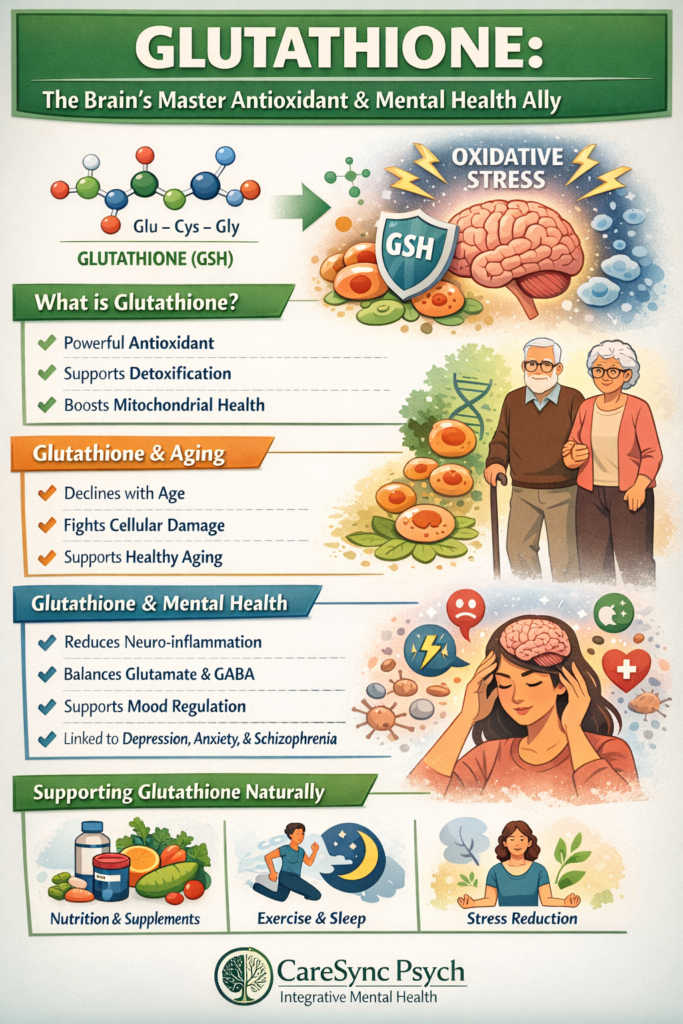
Glutathione: The Brain’s Master Antioxidant and Its Role in Aging and Mental Health
At CareSync Psych, we approach mental health through a whole-body, systems-based lens. One molecule increasingly discussed in both aging science and psychiatric research is glutathione—often called the body’s master antioxidant. Understanding what glutathione is, how it functions, and why it matters may offer insight into both successful aging and mental health resilience.
What Is Glutathione?
Glutathione is a tripeptide composed of three amino acids: glutamate, cysteine, and glycine. It is produced naturally inside cells and is especially concentrated in organs with high metabolic demand—such as the brain, liver, and immune system.
Its primary roles include:
-
Neutralizing reactive oxygen species (ROS)
-
Supporting mitochondrial function
-
Regulating cellular detoxification
-
Maintaining redox balance within neurons
Unlike many antioxidants obtained from food, glutathione works inside the cell, directly protecting DNA, proteins, and cell membranes from oxidative damage.
How Glutathione Works in the Brain
The brain consumes a disproportionate amount of oxygen and energy, making it particularly vulnerable to oxidative stress. Glutathione acts as a frontline defense by:
-
Scavenging free radicals before they damage neurons
-
Supporting glutathione-dependent enzymes (e.g., glutathione peroxidase) that prevent lipid and protein oxidation
-
Helping regulate neurotransmitter metabolism and synaptic signaling
Advanced neuroimaging techniques such as magnetic resonance spectroscopy (MRS) now allow researchers to measure brain glutathione levels in vivo, highlighting its relevance to brain health and neuropsychiatric conditions.
Glutathione, Aging, and Brain Resilience
Aging is associated with a progressive decline in glutathione availability, driven by:
-
Reduced synthesis capacity
-
Increased oxidative burden
-
Mitochondrial inefficiency
-
Chronic low-grade inflammation
Lower glutathione levels have been linked to accelerated cellular aging, impaired stress response, and reduced neuroplasticity. In contrast, preserved glutathione activity is associated with successful aging, cognitive resilience, and better metabolic health.
This aligns with gerontological research suggesting that oxidative stress is not merely a byproduct of aging—but a modifiable driver of age-related decline.
Does Glutathione Play a Role in Mental Health?
Emerging evidence suggests yes.
Research has identified altered glutathione pathways in several psychiatric conditions, including:
-
Major depressive disorder
-
Bipolar disorder
-
Schizophrenia
-
Anxiety-related disorders
Proposed mechanisms include:
-
Neuroinflammation and immune dysregulation
-
Impaired mitochondrial energy production
-
Disrupted glutamate–GABA balance
-
Increased vulnerability to stress-induced neuronal damage
Lower brain glutathione levels have been observed in subsets of patients, supporting the idea that oxidative stress may contribute to symptom severity and treatment resistance in some individuals.
At present, glutathione is not a standalone psychiatric treatment, but it is increasingly viewed as a supportive target within integrative and metabolic psychiatry frameworks.
Current evidence-informed strategies include:
1. Supporting Endogenous Glutathione Production
Rather than relying solely on direct supplementation, many approaches focus on providing precursors and reducing oxidative burden through:
-
Adequate protein intake (for cysteine availability)
-
Micronutrient sufficiency (e.g., selenium, B-vitamins)
-
Reducing chronic inflammation and metabolic stress
2. Lifestyle Interventions
Regular physical activity, sleep regulation, and stress reduction are consistently associated with improved antioxidant capacity and mitochondrial efficiency.
3. Adjunctive Use in Select Cases
In some clinical contexts, glutathione or glutathione-supportive compounds may be considered as adjuncts, particularly when oxidative stress or metabolic dysfunction is suspected. These decisions should always be individualized and clinician-guided.
The CareSync Psych Perspective
Mental health does not exist in isolation from metabolism, inflammation, or aging biology. Glutathione represents a bridge between neuroscience, psychiatry, and longevity science—highlighting how cellular health influences emotional and cognitive well-being.
At CareSync Psych, we integrate:
-
Evidence-based psychiatric care
-
Thoughtful metabolic and lifestyle assessment
-
Personalized treatment planning
Our goal is not simply symptom reduction, but long-term brain resilience and whole-person health.
References (APA)
-
Lapenna, D. (2023). Glutathione and glutathione-dependent enzymes: From biochemistry to gerontology and successful aging. Ageing Research Reviews, 92, 102066.
-
Poladian, N., Navasardyan, I., Narinyan, W., Orujyan, D., & Venketaraman, V. (2023). Potential role of glutathione antioxidant pathways in the pathophysiology and adjunct treatment of psychiatric disorders. Clinics and Practice, 13(4), 768–779.
-
Kanagasabai, K., Palaniyappan, L., & Théberge, J. (2024). Precision of metabolite-selective MRS measurements of glutamate, GABA and glutathione: A review of human brain studies. NMR in Biomedicine, 37(3), e5071.