Call us (863) 858-5554
HealthFlex
×
  • Home
  • About Us
    • Insurance & Self-pay Options
    • Crisis and After-Hours Care
    • Client-Centered Therapy
    • Privacy Policy
  • Specializing In
    • Specializing In
    • Infertility and Loss
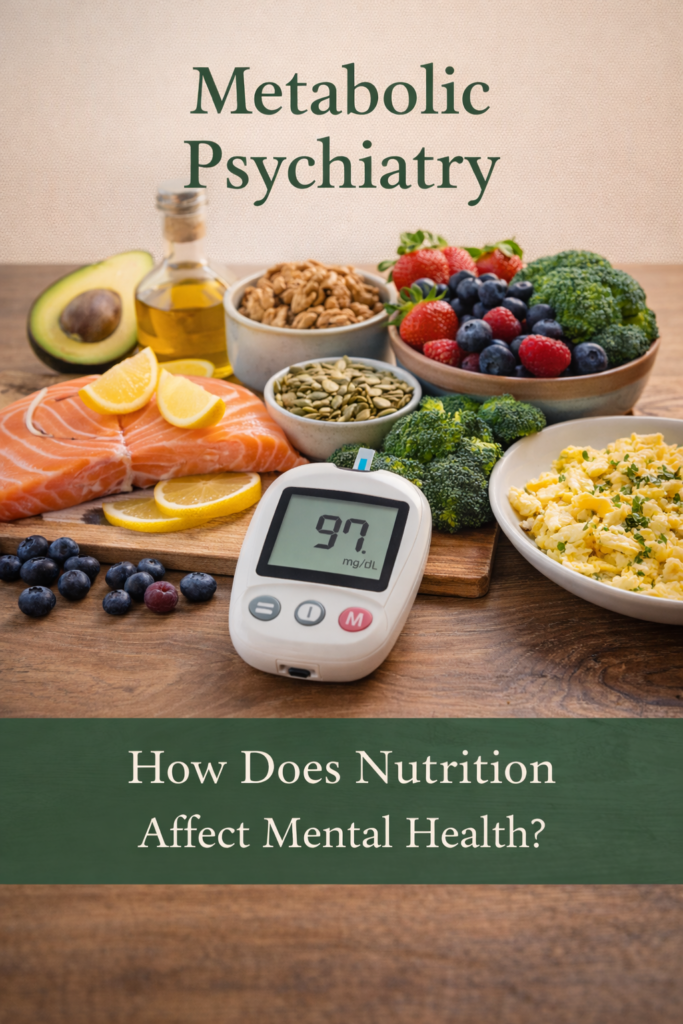
    • Metabolic Psychiatry
    • Heal your Trauma
  • Services
    • Services
    • Medication Management for Mental Health
    • Telehealth
    • Client-Centered Therapy
    • Metabolic Psychiatry
    • Weight Management & Binge Eating
  • Book an Appointment
  • Contact Us

Glutathione: The Brain’s Master Antioxidant and Its Role in Aging and Mental Health

Glutathione: The Brain’s Master Antioxidant and Its Role in Aging and Mental Health

Glutathione: The Brain’s Master Antioxidant and Its Role in Aging and Mental Health

At CareSync Psych, we approach mental health through a whole-body, systems-based lens. One molecule increasingly discussed in both aging science and psychiatric research is glutathione—often called the body’s master antioxidant. Understanding what glutathione is, how it functions, and why it matters may offer insight into both successful aging and mental health resilience.

What Is Glutathione?

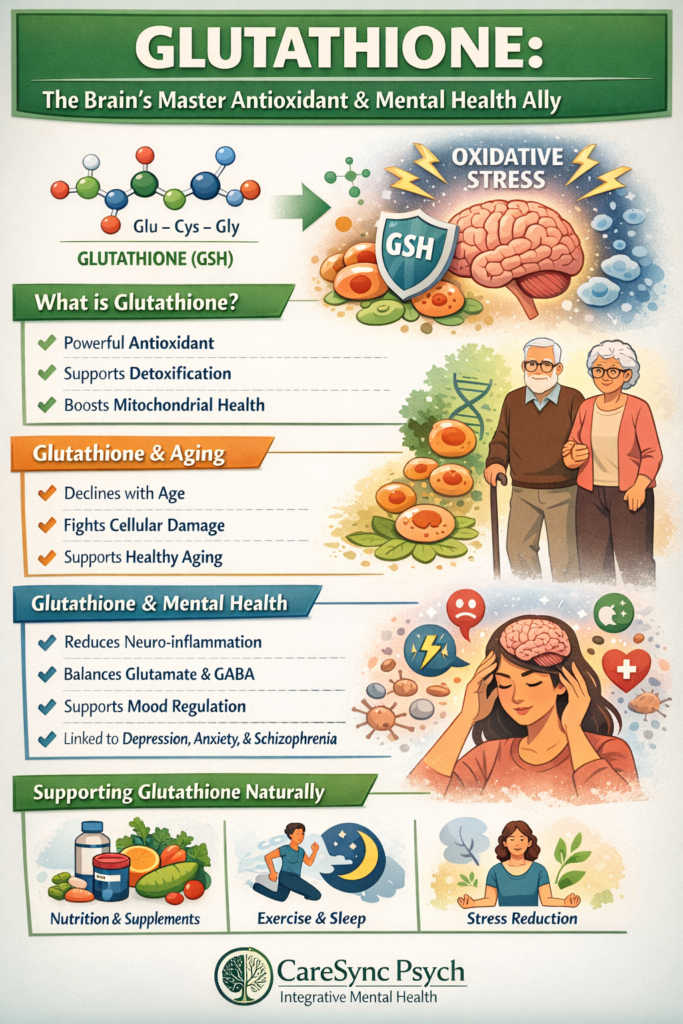
Glutathione is a tripeptide composed of three amino acids: glutamate, cysteine, and glycine. It is produced naturally inside cells and is especially concentrated in organs with high metabolic demand—such as the brain, liver, and immune system.

Its primary roles include:

  • Neutralizing reactive oxygen species (ROS)

  • Supporting mitochondrial function

  • Regulating cellular detoxification

  • Maintaining redox balance within neurons

Unlike many antioxidants obtained from food, glutathione works inside the cell, directly protecting DNA, proteins, and cell membranes from oxidative damage.

Understanding Glucose Metabolism Disorders & Inflammation

How Glutathione Works in the Brain

The brain consumes a disproportionate amount of oxygen and energy, making it particularly vulnerable to oxidative stress. Glutathione acts as a frontline defense by:

  • Scavenging free radicals before they damage neurons

  • Supporting glutathione-dependent enzymes (e.g., glutathione peroxidase) that prevent lipid and protein oxidation

  • Helping regulate neurotransmitter metabolism and synaptic signaling

Advanced neuroimaging techniques such as magnetic resonance spectroscopy (MRS) now allow researchers to measure brain glutathione levels in vivo, highlighting its relevance to brain health and neuropsychiatric conditions.

Glutathione, Aging, and Brain Resilience

Aging is associated with a progressive decline in glutathione availability, driven by:

  • Reduced synthesis capacity

  • Increased oxidative burden

  • Mitochondrial inefficiency

  • Chronic low-grade inflammation

Lower glutathione levels have been linked to accelerated cellular aging, impaired stress response, and reduced neuroplasticity. In contrast, preserved glutathione activity is associated with successful aging, cognitive resilience, and better metabolic health.

This aligns with gerontological research suggesting that oxidative stress is not merely a byproduct of aging—but a modifiable driver of age-related decline.

Does Glutathione Play a Role in Mental Health?

Emerging evidence suggests yes.

Research has identified altered glutathione pathways in several psychiatric conditions, including:

  • Major depressive disorder

  • Bipolar disorder

  • Schizophrenia

  • Anxiety-related disorders

Proposed mechanisms include:

  • Neuroinflammation and immune dysregulation

  • Impaired mitochondrial energy production

  • Disrupted glutamate–GABA balance

  • Increased vulnerability to stress-induced neuronal damage

Lower brain glutathione levels have been observed in subsets of patients, supporting the idea that oxidative stress may contribute to symptom severity and treatment resistance in some individuals.

At present, glutathione is not a standalone psychiatric treatment, but it is increasingly viewed as a supportive target within integrative and metabolic psychiatry frameworks.

Current evidence-informed strategies include:

1. Supporting Endogenous Glutathione Production

Rather than relying solely on direct supplementation, many approaches focus on providing precursors and reducing oxidative burden through:

  • Adequate protein intake (for cysteine availability)

  • Micronutrient sufficiency (e.g., selenium, B-vitamins)

  • Reducing chronic inflammation and metabolic stress

2. Lifestyle Interventions

Regular physical activity, sleep regulation, and stress reduction are consistently associated with improved antioxidant capacity and mitochondrial efficiency.

3. Adjunctive Use in Select Cases

In some clinical contexts, glutathione or glutathione-supportive compounds may be considered as adjuncts, particularly when oxidative stress or metabolic dysfunction is suspected. These decisions should always be individualized and clinician-guided.

Glucose and Neuroinflammation

The CareSync Psych Perspective

Mental health does not exist in isolation from metabolism, inflammation, or aging biology. Glutathione represents a bridge between neuroscience, psychiatry, and longevity science—highlighting how cellular health influences emotional and cognitive well-being.

At CareSync Psych, we integrate:

  • Evidence-based psychiatric care

  • Thoughtful metabolic and lifestyle assessment

  • Personalized treatment planning

Our goal is not simply symptom reduction, but long-term brain resilience and whole-person health.

References (APA)

  • Lapenna, D. (2023). Glutathione and glutathione-dependent enzymes: From biochemistry to gerontology and successful aging. Ageing Research Reviews, 92, 102066.

  • Poladian, N., Navasardyan, I., Narinyan, W., Orujyan, D., & Venketaraman, V. (2023). Potential role of glutathione antioxidant pathways in the pathophysiology and adjunct treatment of psychiatric disorders. Clinics and Practice, 13(4), 768–779.

  • Kanagasabai, K., Palaniyappan, L., & Théberge, J. (2024). Precision of metabolite-selective MRS measurements of glutamate, GABA and glutathione: A review of human brain studies. NMR in Biomedicine, 37(3), e5071.

You Might Not Be Diabetic (yet) but You Could Be Insulin Resistant

You Might Not Be Diabetic but You Could Be Insulin Resistant

You Might Not Be Diabetic but You Could Be Insulin Resistant

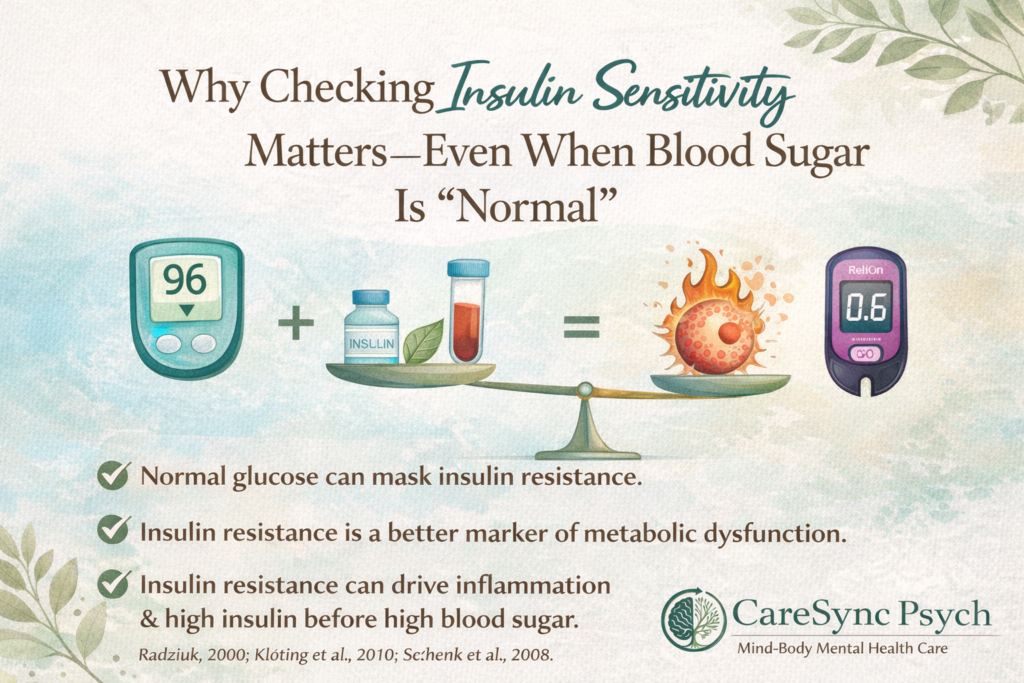
Why Insulin Resistance Matters—Even When Blood Sugar Is “Normal”

You might have insulin resistance even though your glucose levels are normal; this can impact your physical and mental health.

Many people are told their labs are “normal” and assume their metabolic health is fine—especially when fasting glucose falls within the expected range. Yet growing research shows that insulin sensitivity often declines years before blood sugar becomes abnormal. This hidden phase of metabolic dysfunction can quietly affect brain health, mood, energy, weight regulation, and inflammation, long before diabetes ever appears.

At CareSync Psych, we take a mind-body approach to mental health. Understanding insulin sensitivity is a critical part of that picture.

CareSync Psych in Lakeland Florida

-helps patients across Florida understand insulin resistance, metabolic health, and inflammation through metabolic psychiatry. Even with normal blood sugar, impaired insulin sensitivity may drive metabolic dysfunction, obesity, and prediabetes

Insulin Sensitivity vs. Blood Sugar: What’s the Difference?

Insulin Sensitivity vs. Blood Sugar: What’s the Difference?

Glucose is the sugar circulating in your bloodstream.
Insulin is the hormone that helps move glucose from the blood into cells so it can be used for energy.

  • Good insulin sensitivity = cells respond easily to insulin

  • Insulin resistance = cells stop responding well, so the body must release more insulin to keep blood sugar normal

Here’s the key point:
👉 Blood sugar can stay normal for years while insulin levels are chronically elevated.

This is why fasting glucose alone often misses early metabolic dysfunction.

You might have insulin resistance even though your glucose levels are normal; this can impact your physical and mental health.

Many people are told their labs are “normal” and assume their metabolic health is fine—especially when fasting glucose falls within the expected range. Yet growing research shows that insulin sensitivity often declines years before blood sugar becomes abnormal. This hidden phase of metabolic dysfunction can quietly affect brain health, mood, energy, weight regulation, and inflammation, long before diabetes ever appears.

At CareSync Psych, we take a mind-body approach to mental health. Understanding insulin sensitivity is a critical part of that picture.

CareSync Psych in Lakeland Florida helps patients across Florida understand insulin resistance, metabolic health, and inflammation through metabolic psychiatry. Even with normal blood sugar, impaired insulin sensitivity may drive metabolic dysfunction, obesity, and prediabetes (Radziuk, 2000; Schenk et al., 2008).

Insulin Sensitivity vs. Blood Sugar: What’s the Difference?

You might have insulin resistance even though your glucose levels are normal; this can impact your physical and mental health.

At CareSync Psych, we take a mind-body approach to mental health. Understanding insulin sensitivity is a critical part of that picture.

Glucose is the sugar circulating in your bloodstream.
Insulin is the hormone that helps move glucose from the blood into cells so it can be used for energy.

  • Good insulin sensitivity = cells respond easily to insulin

  • Insulin resistance = cells stop responding well, so the body must release more insulin to keep blood sugar normal

Here’s the key point:
👉 Blood sugar can stay normal for years while insulin levels are chronically elevated.

This is why fasting glucose alone often misses early metabolic dysfunction.

Understanding Glucose Metabolism Disorders & Inflammation

Why Insulin Resistance Is a Better Early Marker of Metabolic Health

Research consistently shows that insulin resistance develops first, while glucose abnormalities come later (Radziuk, 2000).

During this stage:

  • The pancreas compensates by producing more insulin

  • Blood sugar appears “normal” on routine labs

  • Inflammation and metabolic stress increase quietly

Why Insulin Resistance Is a Better Early Marker of Metabolic Health

Research consistently shows that insulin resistance develops first, while glucose abnormalities come later (Radziuk, 2000).

During this stage:

  • The pancreas compensates by producing more insulin

  • Blood sugar appears “normal” on routine labs

  • Inflammation and metabolic stress increase quietly

The state of metabolic stress state places strain on multiple systems, including the brain, which is highly sensitive to insulin signaling.

The state of metabolic stress state places strain on multiple systems, including the brain, which is highly sensitive to insulin signaling.

Learn More

“Insulin-Sensitive Obesity” vs. “Hidden Insulin Resistance”

Interestingly, not all metabolic dysfunction looks the same.

Some individuals with higher body weight remain relatively insulin sensitive, while others—often at a “normal” weight—develop insulin resistance (Klöting et al., 2010). This means:

  • Weight alone does not define metabolic health

  • Thin individuals can still have significant insulin resistance

  • Mental health symptoms may appear before physical signs

This is especially relevant in psychiatry, where fatigue, depression, anxiety, brain fog, and poor stress tolerance may have metabolic contributors.

Understanding Glucose Metabolism Disorders & Inflammation

How Insulin Resistance Affects the Brain and Mental Health

Insulin plays a role far beyond blood sugar control. In the brain, insulin signaling supports:

  • Neurotransmitter balance

  • Cognitive function

  • Mood regulation

  • Stress response

When insulin resistance develops, chronic low-grade inflammation increases and brain signaling becomes less efficient (Schenk et al., 2008).

This inflammatory state has been linked to:

  • Depression
  • Anxiety
  • Cognitive slowing
  • Increased stress sensitivity
  • Difficulty regulating appetite and energy
This is one reason metabolic psychiatry looks upstream—before symptoms become entrenched.

Glucose and Neuroinflammation

Why “Normal Labs” Don’t Always Mean Optimal Health

Standard labs often focus on fasting glucose or A1C, which detect problems only after insulin resistance has progressed significantly. Earlier markers may include:

  • Elevated fasting insulin

  • HOMA-IR

  • Triglyceride-to-HDL ratio

  • Signs of systemic inflammation

By the time glucose rises, insulin resistance has often been present for years.

A Metabolic Psychiatry Perspective

At CareSync Psych, we believe mental health care works best when it addresses underlying physiology, not just symptoms. Measuring insulin sensitivity helps us:

  • Identify early metabolic stress

  • Personalize treatment plans

  • Support mood, cognition, and energy more effectively

  • Integrate lifestyle, nutrition, and medical strategies thoughtfully

This approach does not replace psychiatric care—it enhances it by treating the whole person.

What is Metabolic Psychiatry?

CareSync Psych in Lakeland Florida helps patients across Florida understand insulin resistance, metabolic health, and inflammation through metabolic psychiatry.

Even with normal blood sugar, impaired insulin sensitivity may drive metabolic dysfunction, obesity, and prediabetes.

Metabolic Psychiatry

What should you keep in mind?

  • Insulin resistance often appears before blood sugar abnormalities

  • Normal glucose does not guarantee metabolic health

  • Insulin sensitivity is a more sensitive early marker of dysfunction

  • Metabolic health and mental health are deeply interconnected

By identifying these patterns early, we can support long-term mental and physical well-being—before disease develops.

CareSync Psych in Lakeland Florida helps patients across Florida understand insulin resistance, metabolic health, and inflammation through metabolic psychiatry. Even with normal blood sugar, impaired insulin sensitivity may drive metabolic dysfunction, obesity, and prediabetes


Mind-Body Mental Health Care


🌴 Telehealth across Florida
📍 In-person visits in Lakeland, FL
💳 Insurance & Affordable Self-Pay Options


🔗 caresyncpsych.com

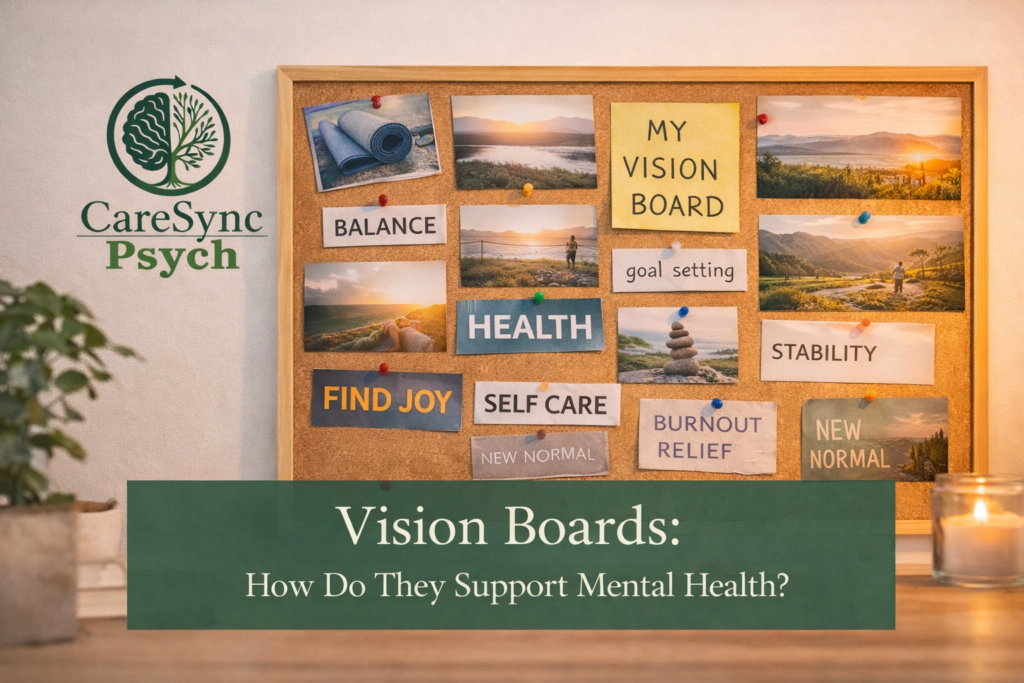
Vision Boards and Mental Health: The Psychology, Science, and How to Make Them Actually Work

Vision Boards and Mental Health: The Psychology, Science, and How to Make Them Actually Work

Vision boards are often dismissed as trendy or superficial—something associated with wishful thinking rather than real psychological change. Yet research in psychology, behavioral science, and therapeutic practice suggests that visualization tools like vision boards can be effective when grounded in intention, reflection, and action.

At CareSync Psych, we take a science-informed approach to tools that support mental health, motivation, and sustainable behavior change. Vision boards are not magic—but when used correctly, they can support clarity, hope, and goal-directed behavior.

Vision boards don’t create change on their own—but they can help you see what you’re working toward.

Home

What Is a Vision Board (Psychologically Speaking)?

A vision board is a visual representation of goals, values, and desired states, typically created using images, words, and symbols that reflect what an individual wants to cultivate in their life.

From a psychological standpoint, vision boards are not about “manifesting” outcomes without effort. Instead, they function as:

  • A self-reflection tool

  • A cognitive priming mechanism

  • A way to externalize goals and values

  • A support for motivation and emotional regulation

Burton and Lent (2016) describe vision boards as a therapeutic intervention that can facilitate insight, emotional processing, and goal clarity—particularly when integrated into structured therapeutic work.


Sometimes, making goals visible is enough to help you move forward.

How to Use Vision Boards Effectively (Without the Hype)

1. Start With Reflection, Not Images

Before creating a vision board, reflect on:

  • What feels missing or misaligned

  • What values matter most right now

  • What kind of life feels supportive—not just impressive

This aligns with PCC’s (2023) framework of moving from reflection to visualization.


2. Focus on Feelings and Values

Include images or words that reflect:

  • Calm

  • Stability

  • Connection

  • Health

  • Balance

Not just achievements or external markers of success.


3. Make Goals Visible—but Grounded

Place your vision board somewhere you’ll see it regularly, but pair it with:

  • Small, realistic goals

  • Flexible timelines

  • Compassion for setbacks

Visibility supports awareness—but action creates change.


4. Use Vision Boards as a Check-In Tool

Revisit your vision board periodically:

  • What still fits?

  • What no longer aligns?

  • What feels unrealistic or pressure-based?

Vision boards should evolve as you do.

Client-Centered Therapy

Vision boards don’t create change on their own—but they can help you see what you’re working toward.

A CareSync Psych Perspective

At CareSync Psych, we view vision boards as one possible tool within a broader mental health and behavior-change framework. When combined with therapy, medication management, lifestyle support, and self-compassion, visualization can help reinforce clarity and direction.

Mental health–informed change is not about forcing positivity.
It’s about supporting the nervous system, reducing overwhelm, and creating environments that make healthy choices easier.

Anxiety Treatment at CareSync Psych

Sometimes, making goals visible is enough to help you move forward.

Final Takeaway

Vision boards work best when they are:

  • Grounded in reflection

  • Paired with action

  • Flexible rather than rigid

  • Used as support—not pressure

You don’t need to manifest a perfect future.
You need clarity, support, and small steps in the right direction.

New Year, New Me? The Psychology of Making Habits Stick

References Used in this Post

Burton, L., & Lent, J. (2016). The use of vision boards as a therapeutic intervention. Journal of Creativity in Mental Health, 11(1), 52–65.

Kharbanda, K. (2025). Exploring the relationship between optimism and hope among individuals using vision boards. International Journal of Interdisciplinary Approaches in Psychology, 3(3), 295–306.

PCC, J. H. (2023). From reflection to visualization: A framework for goal setting and strategic planning. Journal of Financial Planning, 36(12), 44–47.

Read More
Dec 2025 by Jennifer Sanri
New Year, New Me? The Psychology of Making Habits Stick
Read More
Read More
Dec 2025 by Jennifer Sanri
Anxiety Treatment at CareSync Psych
Read More
Read More
Dec 2025 by Jennifer Sanri
When the Holidays Feel Heavy: Understanding Seasonal Sadness

mD

Read More
Read More
Oct 2025 by Jennifer Sanri
Food Addiction: Why It’s Real, Why We Feel Out of Control, and How Healing Begins
Read More

Why New Year’s Resolutions Fail—and How to Build Mental Health Habits That Stick

Why New Year’s Resolutions Fail—and How to Build Mental Health Habits That Stick

Every January, people set New Year’s resolutions with the best intentions—only to feel discouraged weeks later when motivation fades. This isn’t a personal failure. Psychology shows that most resolutions fail because they are designed incorrectly, not because people lack willpower.

New research in behavioral psychology explains how to create habits that actually stick, improve mental health, and lead to real, lasting change.


The Psychology Behind New Year’s Resolutions

Research shows that successful resolutions rely on how goals are framed and structured, not how motivated someone feels on January 1st.

A large-scale study by Oscarsson et al. (2020) found that people who set the “right kind” of goals were significantly more successful at maintaining behavior change over time. Similarly, Höchli et al. (2020) demonstrated that resolutions stick when daily habits are connected to deeper personal meaning.


Why Most Resolutions Fail

1. They Focus on What to Avoid

Many resolutions are framed negatively:

  • “Stop being anxious”

  • “Don’t overeat”

  • “Quit procrastinating”

These are called avoidance-oriented goals, and psychology shows they are harder to maintain. The brain responds better when it knows what to move toward, not just what to escape.

2. They Rely on Motivation Instead of Habits

Motivation fluctuates with stress, mood, sleep, and mental health. Habits, on the other hand, become automatic over time. When resolutions depend on constant motivation, they rarely survive real life.

3. They Lack Meaning

When goals are disconnected from personal values, they feel like chores. Without a meaningful “why,” persistence fades quickly.


What the Research Says About Goals That Stick

Approach-Oriented Goals Work Better

According to Oscarsson et al. (2020), people are more successful when goals are framed as actions to build rather than behaviors to eliminate.

Examples of approach-oriented goals:

  • “Build calmer mornings”

  • “Practice mindful eating”

  • “Create a consistent sleep routine”

These goals activate reward pathways in the brain and improve follow-through.


Connect Habits to a Bigger Purpose

Höchli et al. (2020) found that lasting change happens when small daily habits (subordinate goals) support a larger personal purpose (superordinate goals).

Superordinate goal (the why):

  • Better mental clarity

  • Emotional stability

  • Being present for family

  • Feeling healthier in your body

Subordinate habit (the what):

  • Taking medication consistently

  • Practicing a 3-minute breathing exercise

  • Walking for 10 minutes

  • Journaling one sentence at night

When habits serve something meaningful, the brain is more willing to repeat them.


How to Build Mental Health Habits That Last

1. Start Smaller Than You Think

Habits should feel almost “too easy” at first. Small actions repeated consistently are more effective than big changes done inconsistently.

2. Anchor Habits to Existing Routines

Habits stick best when tied to cues you already have:

  • After brushing teeth → brief grounding exercise

  • After coffee → medication check-in

  • Before bed → one-line reflection

3. Focus on Progress, Not Perfection

Psychology shows that self-compassion improves persistence. Missing a day doesn’t erase progress—it’s part of learning.

Book an appointment at CareSync Psych today!


Using Psychology to Become Better—Not Perfect

Psychology doesn’t encourage rigid self-discipline. Instead, it helps you design systems that support you, especially during stress.

Sustainable mental health improvement comes from:

  • Goals aligned with values

  • Habits that fit your real life

  • Compassion during setbacks

  • Consistency over intensity

The goal isn’t to “fix” yourself—it’s to support the version of you you’re becoming.


How CareSync Psych Supports Habit-Based Change

At CareSync Psych, we integrate habit science into psychiatric care, therapy, and metabolic psychiatry. We help patients:

  • Translate goals into realistic daily habits

  • Shift from avoidance-based thinking to approach-oriented growth

  • Reduce mental and metabolic barriers to change

  • building Build routines that support mood, energy, and resilience

  • Stay accountable through structured follow-ups and support

Change works best when it’s supported—not forced.

Services


Final Takeaway

New Year’s resolutions succeed when they are:

  • ✔ Approach-oriented

  • ✔ Habit-based

  • ✔ Meaning-driven

  • ✔ Compassionate

  • ✔ Sustainable

Psychology doesn’t ask you to try harder—it teaches you to try smarter.


Looking to build habits that support your mental health this year?

Contact CareSync Psych to learn how evidence-based psychiatry, therapy, and metabolic support can help you create lasting change.

About Us

We are an outpatient mental health care provider committed to integrating evidence-based treatment with a holistic, healing-centered approach to promote mental wellness. Our patient-focused services include medication management, psychotherapy, metabolic psychiatry,  and wellness optimization.

“Providing compassionate mental health care by syncing the mind and body—treating the psychological with the physiological.”

Recent Posts

  • Glutathione: The Brain’s Master Antioxidant and Its Role in Aging and Mental Health
  • Lithium Orotate: What the New Science Suggests (and What It Doesn’t)
  • You Might Not Be Diabetic but You Could Be Insulin Resistant
  • Vision Boards and Mental Health: The Psychology, Science, and How to Make Them Actually Work
  • New Year, New Me? The Psychology of Making Habits Stick
  • Home
  • About Us
  • Services
  • Book an Appointment
  • Contact Us
  • Weight Loss Management & Control
  • Sample Page

Copyright ©2026 all rights reserved
CareSync™ Health