
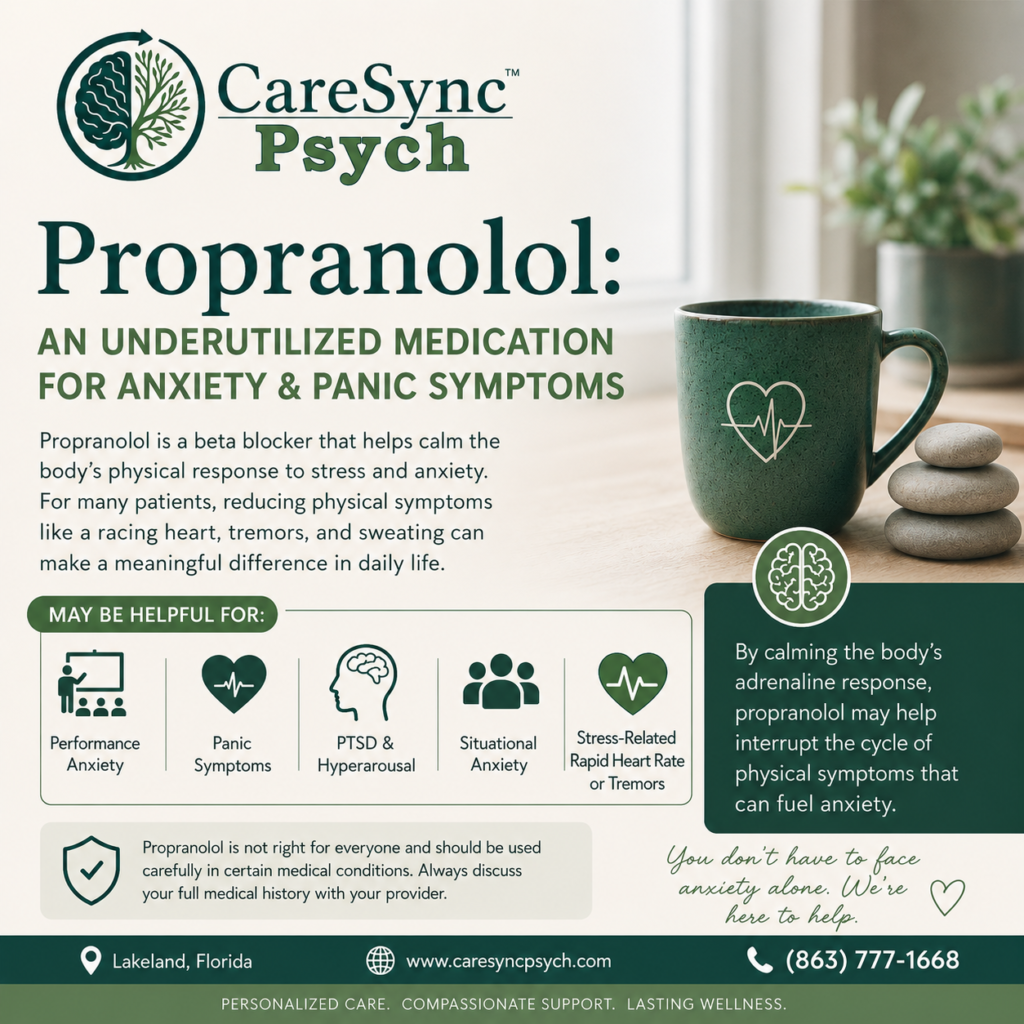
At CareSync Psych, one medication I frequently discuss with patients is Propranolol—a medication that has actually existed for decades, yet many people are surprised to learn it can play a role in psychiatric treatment.
At CareSync Psych, one medication I often find surprisingly underutilized is Propranolol.
Many people think anxiety is only emotional—but for a lot of patients, anxiety feels intensely physical:
• Racing heart
• Shaking or trembling
• Sweating
• Chest tightness
• Feeling “on edge”
• Panic symptoms before presentations, social situations, or stressful events
Propranolol works differently than many traditional psychiatric medications. Instead of directly targeting mood, it helps calm the body’s adrenaline response. For some patients, this can make a huge difference in reducing the physical sensations that fuel anxiety and panic.
When most people think of anxiety, they think of excessive worrying, overthinking, or feeling emotionally overwhelmed. But anxiety is often just as physical as it is mental.
For many individuals, anxiety can feel like:
- A racing or pounding heart
- Trembling or shaky hands
- Sweating
- Chest tightness
- A sensation of adrenaline surging through the body
- Feeling “frozen” during social situations or public speaking
- Panic attacks that seem to come out of nowhere
- Difficulty calming down after stress
It may be helpful for:
✔ Performance anxiety
✔ Panic symptoms
✔ PTSD-related hyperarousal
✔ Situational anxiety
✔ Stress-related rapid heart rate or tremors
What Is Propranolol?
Propranolol is classified as a beta blocker, meaning it blocks the effects of adrenaline (epinephrine) on certain receptors in the body.
Originally developed for cardiovascular conditions, propranolol has long been used for:
- High blood pressure
- Rapid heart rate
- Tremors
- Migraine prevention
- Cardiac conditions
Over time, clinicians also recognized that it could help reduce the physical symptoms associated with anxiety.
Unlike many psychiatric medications, propranolol does not primarily work by increasing serotonin or changing mood directly. Instead, it helps reduce the body’s fight-or-flight response.
Why Physical Anxiety Matters
One of the most overlooked aspects of anxiety treatment is the connection between the body and the brain.
Physical symptoms can actually reinforce emotional anxiety. For example:
- A stressful situation triggers adrenaline
- The heart begins racing
- The patient notices the racing heart
- The body interprets this as danger
- Anxiety escalates further
- Panic symptoms intensify
This cycle can become exhausting.
By reducing some of the body’s adrenaline response, propranolol may help interrupt that feedback loop in certain patients.
For some individuals, simply decreasing the intensity of the physical symptoms allows them to think more clearly and feel more in control.
Panic Symptoms
For some individuals with panic attacks, propranolol may reduce:
- Heart pounding
- Trembling
- Internal shaking
- Physical hyperarousal
It is not typically considered a first-line standalone treatment for panic disorder, but it may be helpful as part of a broader treatment plan.
PTSD and Hyperarousal
Patients with trauma-related disorders sometimes experience chronic hypervigilance and heightened physiologic arousal.
Emerging research has explored propranolol’s possible role in trauma-related symptoms and autonomic overactivation.
Some patients describe constantly feeling:
- “On edge”
- Easily startled
- Physically tense
- Unable to relax
If you are struggling with anxiety, panic symptoms, or stress-related physical symptoms, know that there are multiple evidence-based treatment options available—and treatment should be tailored to your unique needs.
Some reasons I appreciate propranolol include:
- It directly targets physical anxiety symptoms
- It is generally non-habit forming
- It may avoid some sedation seen with other medications
- It can sometimes reduce reliance on more sedating agents
- It may work relatively quickly for situational symptoms
- Some patients feel empowered when they understand the body’s stress response
Of course, no medication is perfect, and propranolol is not a cure-all.
Important Safety Considerations
Propranolol is not safe or appropriate for everyone.
Patients should discuss their medical history thoroughly with a qualified healthcare professional because propranolol may not be appropriate in individuals with:
- Asthma or certain lung diseases
- Low blood pressure
- Certain heart rhythm conditions
- Diabetes (can mask low blood sugar symptoms)
- Certain circulation problems
- Some medication interactions
Possible side effects can include:
- Fatigue
- Dizziness
- Low heart rate
- Cold hands/feet
- Lightheadedness
This is why individualized assessment matters.
Anxiety Treatment Should Be Personalized
Important Safety Considerations
One of the most important things I try to remind patients is that mental health treatment is highly individualized.
Some people benefit most from:
- Therapy
- Lifestyle changes
- Trauma work
- Sleep optimization
- SSRIs or SNRIs
- Nervous system regulation strategies
- Mindfulness techniques
- Medication combinations
- Or sometimes medications like propranolol that are not discussed as often
Final Thoughts
Sometimes the most effective psychiatric tools are not always the newest or most talked about.
Propranolol continues to stand out to me because of how impactful it can be for certain patients struggling with physical manifestations of anxiety
One of the most important things I try to remind patients is that mental health treatment is highly individualized.
Some people benefit most from:
- Therapy
- Lifestyle changes
- Trauma work
- Sleep optimization
- SSRIs or SNRIs
- Nervous system regulation strategies
- Mindfulness techniques
- Medication combinations
- Or sometimes medications like propranolol that are not discussed as often