
Evidence Over Fear: Understanding Antidepressant Withdrawal
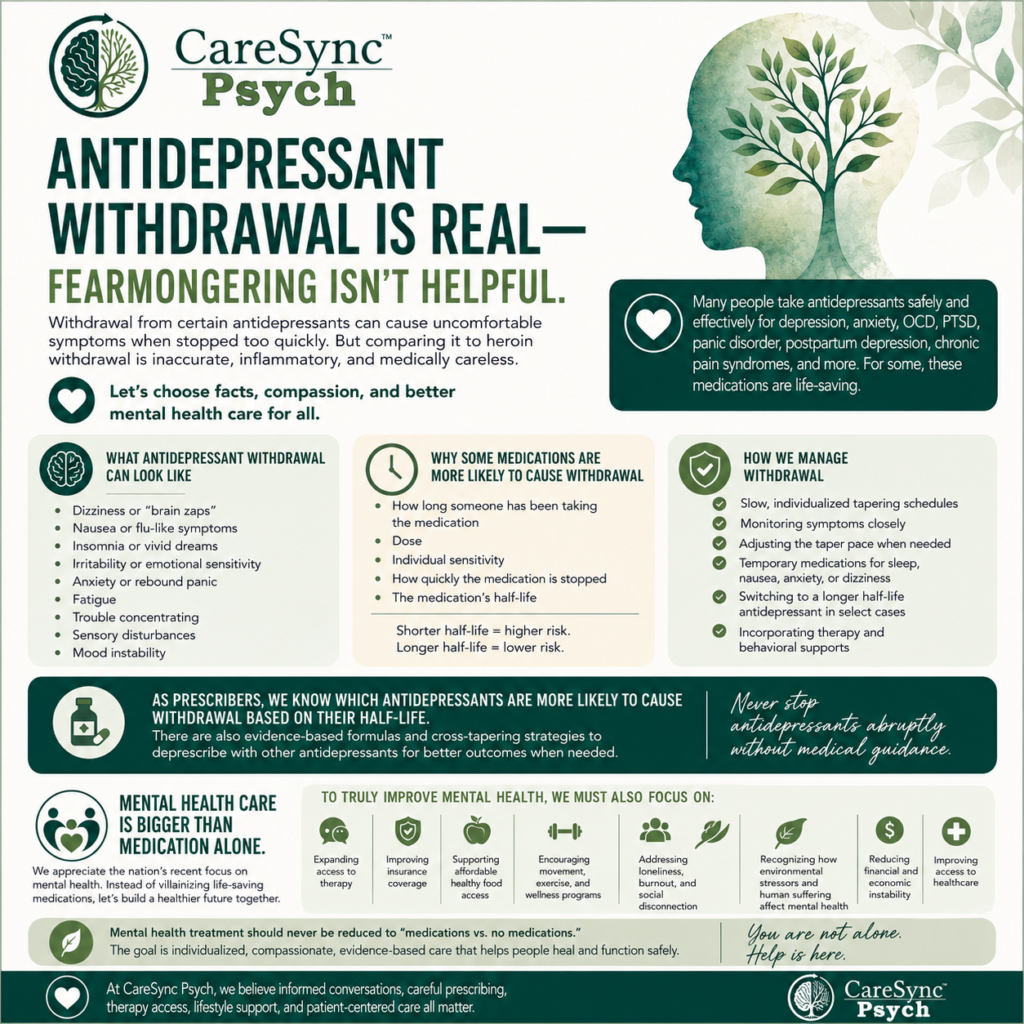
Antidepressant withdrawal is real, clinically recognized, and something responsible prescribers take seriously. Research over the last several years has shown that stopping certain antidepressants too quickly can lead to significant discontinuation symptoms in some individuals, especially with medications that have shorter half-lives.
At the same time, comparing antidepressant withdrawal to heroin withdrawal is medically inaccurate, inflammatory, and potentially harmful. These are fundamentally different substances with different mechanisms, risks, and patterns of dependence. Oversimplified comparisons can increase fear, stigma, and misinformation — especially for patients who genuinely benefit from treatment.
Many people take antidepressants safely and effectively for depression, anxiety, OCD, PTSD, panic disorder, postpartum depression, chronic pain syndromes, and other conditions. For some, these medications are life-saving.
What antidepressant withdrawal can look like:
- Dizziness or “brain zaps”
- Nausea or flu-like symptoms
- Insomnia or vivid dreams
- Irritability or emotional sensitivity
- Anxiety or rebound panic
- Fatigue
- Trouble concentrating
- Sensory disturbances
- Mood instability
Withdrawal risk often depends on:
- How long someone has been taking the medication
- Dose
- Individual sensitivity
- How quickly the medication is stopped
- The medication’s half-life
As prescribers, we know some antidepressants are much more likely to cause discontinuation symptoms than others. Medications with shorter half-lives are generally associated with higher withdrawal risk, while medications with longer half-lives tend to leave the body more gradually and may be easier to taper. Evidence-based deprescribing strategies, cross-tapering approaches, and individualized taper schedules can significantly reduce discomfort and improve outcomes.
This is why antidepressants should never be abruptly stopped without medical guidance.
In clinical practice, withdrawal is commonly managed by:
- Slow, individualized tapering schedules
- Monitoring symptoms closely
- Adjusting the taper pace when needed
- Temporary supportive medications for sleep, nausea, anxiety, or dizziness
- Switching to a longer half-life antidepressant in select cases
- Incorporating psychotherapy and behavioral supports during medication transitions
Mental health care deserves nuance — not fear-based headlines.
We appreciate the growing national focus on mental health and the broader conversation happening across the country. But improving mental health outcomes means addressing the full picture, not vilifying medications that help many people survive and function.
Medication is only one piece of care for those who need it.
If we truly want better mental health outcomes in America, we should also focus on:
- Expanding access to therapy
- Improving insurance coverage for mental health treatment
- Supporting affordable healthy food access
- Encouraging movement, exercise, and wellness programs
- Reducing financial and economic instability
- Improving access to healthcare
- Addressing loneliness, burnout, and social disconnection
- Supporting families and communities under chronic stress
- Recognizing how environmental stressors and human suffering affect mental health