Mental Health Awareness
Mental Health Awareness Month 2026: Where We Started, Where We Are, and Where We’re Going
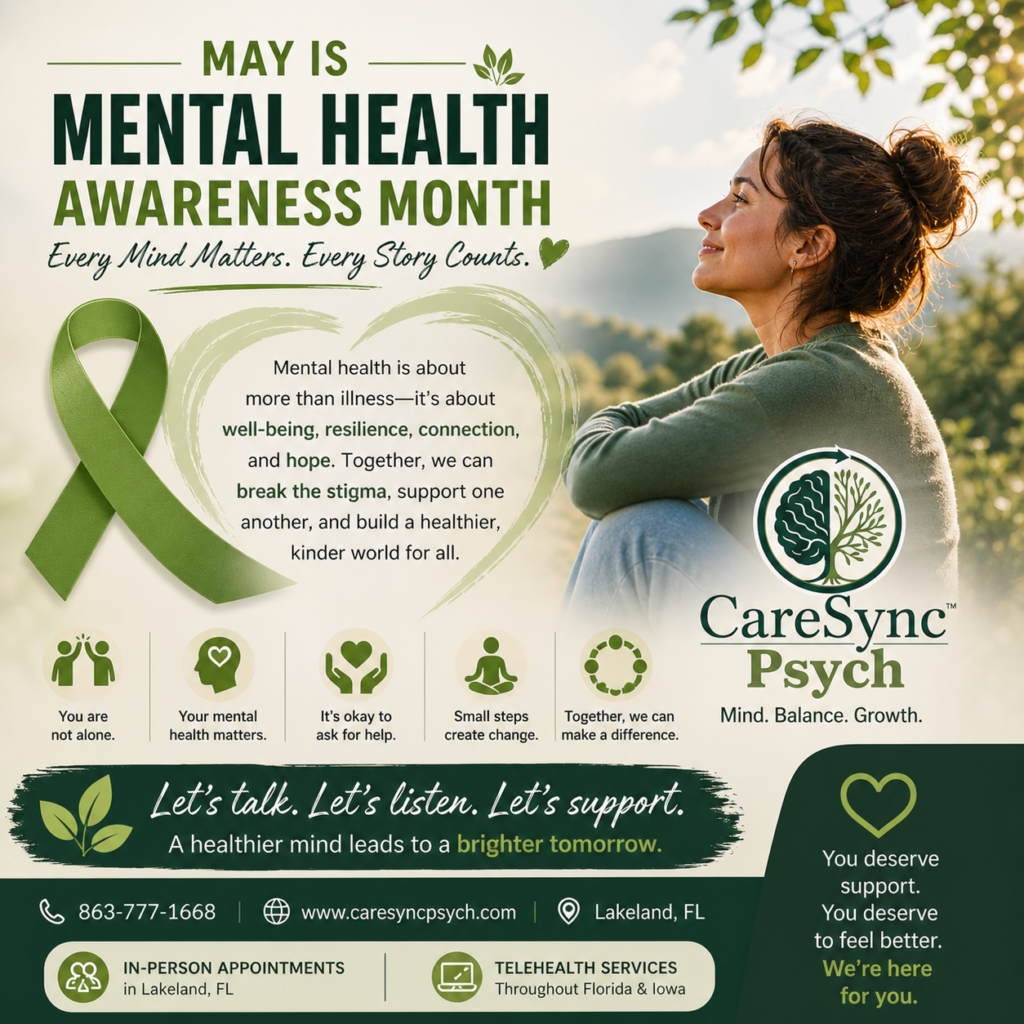
Each May, we recognize Mental Health Awareness Month—a movement that began in 1949, initiated by what is now the Mental Health America. The goal was simple but powerful: reduce stigma, educate the public, and promote mental wellness for all.
Where We Are Now
Fast forward to 2026, and mental health has become a central part of overall health. The World Health Organization emphasizes that mental health is essential to well-being, yet millions worldwide still lack access to care (WHO, 2022).
At CareSync Psych, we believe mental health care should be accessible, personalized, and free of judgment. Mental Health Awareness Month is more than a campaign—it’s a reminder that seeking support is a sign of strength, not weakness.
You don’t have to wait until things feel overwhelming.
You deserve support, clarity, and a path forward—every single day.
Some important realities:
-
1 in 8 people globally live with a mental health condition (WHO, 2022)
-
Anxiety and depression remain among the most common disorders
-
Access to care continues to be a major barrier, especially in underserved communities
At the same time, we’ve made some progress:
- Increased openness in discussing mental health
- Integration of mental health into primary care
- Expansion of telehealth and digital services
- Greater use of social media to spread awareness and education
Research shows that social media can be used for wellness andsignificantly improve awareness, reduce stigma, and encourage help-seeking behaviors when used responsibly (Latha et al., 2020).
Interesting Shifts in Mental Health Awareness
- Mental health is now viewed as part of whole-person care, not separate from physical health
- Younger generations are more likely to seek help and talk openly about struggles
- Preventative mental health (stress management, therapy, lifestyle changes) is gaining attention—not just crisis care
How We Can Improve as a Society
-
1. Normalize Mental Health Conversations
Talking about mental health should feel as natural as discussing physical health. Reducing stigma starts with everyday conversations.2. Improve Access to Care
Expanding affordable, accessible services—including telehealth—can help reach more individuals in need.3. Focus on Early Intervention
Addressing symptoms early can prevent worsening conditions and improve long-term outcomes.4. Use Social Media Intentionally
Social platforms can be powerful tools for education, connection, and support—but should promote accurate, evidence-based information.5. Embrace a Whole-Person Approach
Mental health is influenced by biology, environment, relationships, and lifestyle. Effective care considers all of these factors.
A Message from CareSync Psych
At CareSync Psych, we believe mental health care should be accessible, personalized, and free of judgment. Mental Health Awareness Month is more than a campaign—it’s a reminder that seeking support is a sign of strength, not weakness.
You don’t have to wait until things feel overwhelming.
You deserve support, clarity, and a path forward—every single day.
References
Latha, K., Meena, K. S., Pravitha, M. R., Dasgupta, M., & Chaturvedi, S. K. (2020). Effective use of social media platforms for promotion of mental health awareness. Journal of Education and Health Promotion, 9(1), 124.
World Health Organization. (2022). World mental health report: Transforming mental health for all.
Mental Health America. Mental Health Awareness Month.